As Automation Accelerates the Sea of Sameness, the Biggest Risk to Brands is Blending In
PARLOR Executive Creative Director Rodd Chant says human-led creativity and strategic oversight are crucial to standing out and avoiding costly mistakes.
Make brandbeat one of your go-to sources on Google

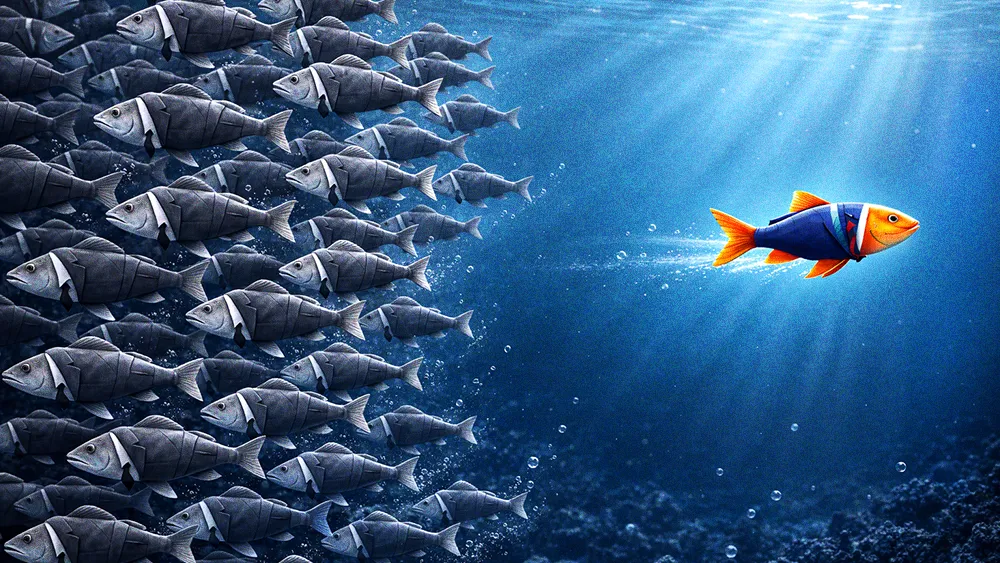
Not taking a chance to stand out is a dangerous thing. The biggest risk a brand can take is blending into the background.

Rodd Chant
In an attempt to play it safe, many brands risk becoming forgettable, and the problem is only amplified by artificial intelligence. As AI becomes mainstream, the massive surge in output volume can overshadow the need for distinction, creating an accountability gap where over-reliance on technology threatens creativity and leaves brands exposed when errors inevitably occur.
Rodd Chant is urging brands to change course. As the Founder and Executive Creative Director of the creative and production studio PARLOR, he has decades of experience leading campaigns for some of the world’s most recognized brands in New York, Singapore, and Bangkok. A LinkedIn Top Voice and judge for the AICP Awards, Chant has a front-row seat to the industry’s AI-driven identity crisis. He says strategic blandness is one of the biggest existential risks facing modern brands.
"Not taking a chance to stand out is a dangerous thing. The biggest risk a brand can take is blending into the background." From Chant’s perspective, the foundational danger stems from what he sees as a brand's deep-seated fear of taking a stand.
Invisibility trap: The common strategy of trying to please everyone, he warns, often backfires, causing brands to become invisible in their attempt to avoid offending anyone. "The moment you try to appease every single person, you start ignoring your actual audience and your fans." Instead of building a loyal community, the brand becomes interchangeable with any competitor and easily ignored by a distracted consumer base. "If everything looks the same, how do you differentiate?"
The self-made bottleneck: AI, Chant asserts, acts as an accelerant for this problem. The volume of machine-generated work is exploding amid promises of efficiency, but the human capacity for approvals can't keep pace. "You're going to have brands churning out a massive volume of work, but the question nobody is asking is 'Who's approving it all?' The biggest delay in our industry is approvals."
The resulting bottleneck creates a dangerous paradox. Just as the need for experienced human oversight is growing, some agencies are shedding the very senior talent required to provide it. That experience, he notes, is often the last line of defense against costly mistakes. "I once had a team show me a finished ad of a car speeding around a corner, but they missed one thing. There was nobody behind the steering wheel. We're losing the people with the training to spot what's missing and identify what could get the agency in trouble." While an agency might face a difficult client meeting over such a gaffe, Chant says it's the brand that suffers a much more permanent wound in the form of damaged credibility. "If a brand puts something out and it has a mistake, the brand is going to blame the agency, but the consumer is going to blame the brand."
Ghosts of bandwagons past: Chant cautions that agencies drawn toward full automation risk ignoring the lessons from a recent graveyard of industry bandwagons. He sees a direct parallel between the current AI fervor and the overblown promises that surrounded a selection of recent tech trends. "I was ridiculed for saying Google Glass would fail. Then came the NFT bandwagon, and then the Metaverse. I think agencies that go all-in on AI are going to regret it."
What AI can't fake: He says the missing ingredient in the machine-learning recipe is the messy, unpredictable intuition that can turn a data point into a cultural moment. While AI can predict the most likely next word or pixel, it cannot predict the radical departure that defines a breakthrough. "There are things AI simply cannot do. It cannot give you great insights, strategy, gut feel, or taste. All of that is lacking."
Chant notes that his critique isn't a rejection of technology, pointing out that AI is great for tasks like organizing and planning. Instead, he says, it's a call for its proper application. His advice for brands in the next 12–24 months is one of deliberate restraint, with decisive investments in human-led creative oversight and resistance against the urge to chase hype. "Don't put all your eggs in one basket. The agencies that are going full-tilt boogie on AI are making a massive mistake."