Hearts On Autopilot: What YouTube's Latest Creator Tools Signal for Brands
YouTube is giving creators new tools to engage at scale, raising fresh questions about where efficiency ends and authenticity begins.
Make brandbeat one of your go-to sources on Google


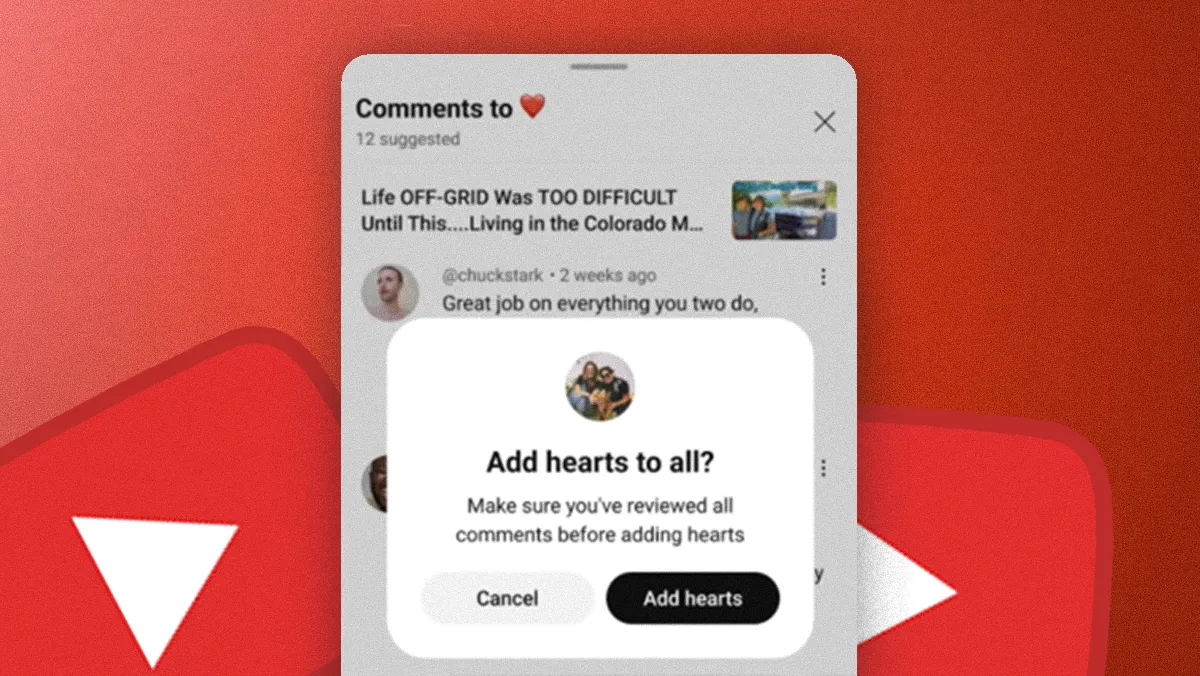
YouTube has been on a steady roll of creator-focused updates in 2026, and the latest batch is telling. The platform recently introduced Comments to Heart, a feature that lets creators automatically like comments YouTube's system identifies as positive, no manual review required. It also expanded its Jewels in-app currency to additional global markets and opened up its Effect Maker tool to all creators worldwide.
Each update helps creators manage growing audiences more efficiently. But taken together, alongside YouTube's parallel push to automate the brand side of creator marketing, they raise a question advertisers should be paying attention to: what happens when the signals audiences use to gauge authenticity start being generated by algorithms?
Auto-love and the authenticity gap
The creator heart has historically carried specific weight on YouTube. Unlike a standard like from another viewer, a heart from the creator signals direct, personal acknowledgment. Recent research found that creator hearts function as positive reinforcement, driving repeat engagement and helping shape community norms, values rooted in the assumption that the creator chose to give it.
Comments to Heart changes that dynamic. By letting YouTube's AI identify and bulk-like positive comments, the feature removes the manual step entirely. For creators managing thousands of comments per video, the efficiency gains are real. But industry commentary has been pointed, with critics warning that automating this kind of engagement risks diluting the very thing that made it valuable: the sense that someone real saw your comment and appreciated it.
The comments section: If hearts and likes increasingly reflect automated systems rather than intentional creator behavior, engagement metrics become a less reliable proxy for community strength. Advertisers should be asking creator partners how they're using these tools and whether their strategy still includes genuine, manual interaction alongside automated features.
The fandom economy
YouTube's Jewels system, now expanding to markets including Canada and Korea, follows a model established by TikTok and adopted across platforms from Twitch to Roblox. Viewers purchase Jewels, use them to send animated Gift stickers during vertical live streams, and creators earn Rubies (valued at $0.01 each) based on the gifts they receive.
The layered currency structure creates distance between the viewer's real money and the creator's earnings. As platform analysts have noted, this abstraction is by design: when spending is denominated in virtual tokens rather than dollars, people tend to spend more freely. For creators, Jewels open up a meaningful new revenue stream. For the ecosystem, it adds another layer of monetization that rewards real-time interaction.
The comments section: Jewels create new engagement touchpoints: sponsored gifts, branded sticker integrations, or live-stream partnerships built around the gifting mechanic. But the virtual currency model introduces complexity around transparency. Brands exploring live-stream creator partnerships should understand how Jewels revenue works and how the gifting dynamic shapes creator behavior and audience expectations during a broadcast.
Creator marketing's matchmaker era
These creator-facing updates aren't happening in isolation. At its 2026 NewFronts presentation, YouTube unveiled its Brand Partners Suite, a centralized system that lets marketers define campaign parameters once and distribute briefs to matched creators automatically. Creators can accept, counter, or pass without email chains, reducing average partnership setup time from two weeks to under 48 hours. The suite also introduced branded Shorts revenue-sharing, new in-stream ad formats, and a unified measurement dashboard connecting creator content to downstream business outcomes.
The direction is consistent across the platform: reduce friction, increase speed, and scale what used to require hands-on relationship management. YouTube CEO Neal Mohan's 2026 annual letter confirmed the platform has paid out more than $100 billion to creators, artists, and media companies, with plans to keep expanding monetization through shopping integrations, fan funding, and e-commerce.
The risk is that as more interactions become automated on both the creator and advertiser side, audiences begin to sense the difference, and the perceived authenticity that makes creator marketing effective starts to erode. The creators and brands that stand out long-term will be the ones who use automation strategically while preserving the personal elements that built their communities in the first place.
The comments section: YouTube is making it easier for brands to find, brief, and measure creator partnerships at scale, which is a genuine advantage. But efficiency and authenticity can pull in different directions. The brands best positioned to navigate this shift are the ones treating creator partnerships as relationship-driven, with clear expectations around how engagement is managed on both sides. As automation expands, the premium on creators who maintain genuine community connections will only increase.