Creator-Led Marketing Works When Brands Stop Treating It Like Legacy Advertising
Sara Rezaee, Head of Creator Marketing North America at Edelman, says creators are the CEOs of their own brands, and involving them early lets companies learn directly from the community and make stronger decisions.
Make brandbeat one of your go-to sources on Google

The organizations that are going to win are not viewing creators as a pragmatic, turnkey media buy. They're rooting it in deep relationships and back-and-forth dialogue, because those thought leaders know what their audience wants. Tap into that.

Sara Rezaee
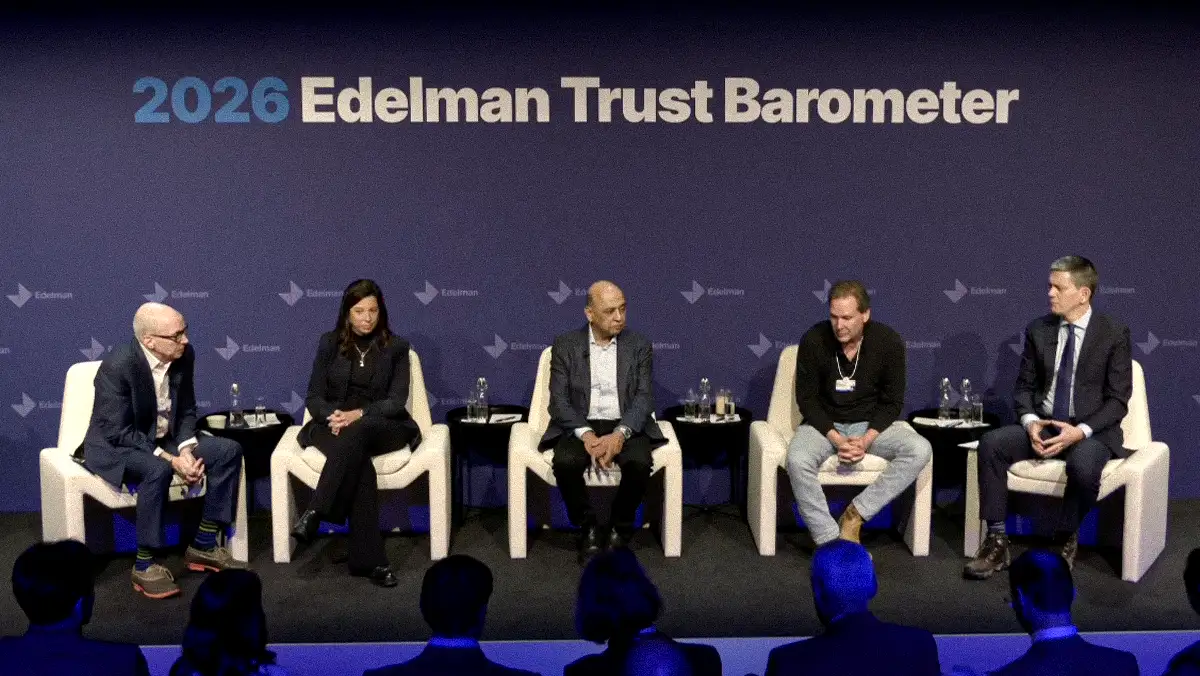
The B2B creator marketing playbook is due for a reset. As trust consolidates around familiar voices, brands still treat creators like transactional campaign assets instead of long-term partners. The 2026 Edelman Trust Barometer makes the shift clear: decision-makers are tuning out executive messaging in favor of trusted third-party experts. Yet most B2B organizations haven’t caught up to how influence works today.
Sara Rezaee, Head of Creator Marketing North America at Edelman, is actively mapping the new playbook for professional markets. She leads 150 specialists across New York, Toronto, and Los Angeles, driving creator-led strategies in technology, health, CPG, and corporate sectors for both B2C and B2B. Her role sits at the intersection of Edelman's trust research and the brands operationalizing it, especially in B2B, where many are still figuring out where creators fit.
"The organizations that are going to win are not viewing creators as a pragmatic, turnkey media buy. They're rooting it in deep relationships and back-and-forth dialogue, because those thought leaders know what their audience wants. Tap into that," Rezaee says. That relationship begins with understanding who these voices are: anyone with expertise and a strong following. In B2B, this usually means thought leaders, subject matter experts, and key opinion leaders. "Creators have this ability to reach decision-makers in a way that traditional advertising cannot," she says. But the approach has to be fundamentally different from consumer playbooks.
Show and tell: "In B2B, the runway to a decision is much longer. You're not just selling a product and saying, 'Just try it and talk about it.' It's much more than that," Rezaee says. She calls it a crawl, walk, run approach, with the crawl phase focused on education and opening doors. "A thought leader or subject matter expert needs to understand your values, vision, roadmap, and how the product works to gain their trust. Bring them into our world as an employee, even." Once the foundation is set, formats like podcasts, sponsored content, and conference can be tested, with longer-term partnerships following proven alignment.
Depth over dispatch: "It's much more than a simple, 'Here's a sheet with my message.' They need to understand what went into it, the product roadmap, the benefits to the end user, and why decision-makers should care. That takes time," Rezaee emphasizes. This level of understanding forms the foundation for a genuine, long-term collaboration. "A partnership rooted in authenticity, where the thought leader is fully invested, will yield better results than paying creators, spray and pray, and hoping for results." But even the best partnerships can fall flat on the wrong stage, since where the content lives matters as much as who creates it.
Never post alone: "People don't want to hear from an exec alone. It's more effective when their voice, message, and opinion comes alongside others on the platform. A B2B exec shouldn't go on LinkedIn by themselves, but instead sit down with a thought leader, bringing that trust element and having a two-way dialogue," she says. Real results come from showing up where trusted voices already engage their audiences.
"There are channels where thought leaders have built strong following, diving deep in podcasts and Substacks, emerging media platforms where these conversations happen. B2B organizations should be turning to them," she adds. Knowing who to partner with and where to show up is only half of the equation. The other half is proving it works. "Organizations need to be clear on their end performance and business goals. Is it educational awareness, lead generation, or conversion and sales?" Clarity on objectives is the starting point; but these partnerships move on a timeline beyond a standard campaign.
Power of persistence: "You can track share of voice over time and tie it to lead generation, revealing a qualified pool that may convert three to nine months later. B2B organizations can't expect immediate results; it's a long-tail win that takes time," Rezaee explains. That patience pays off in more places than one. Rezaee sees the lines between B2B and B2C audiences blurring, and the data backs it up. She points to a Match.com campaign for The League using LinkedIn creators to drive consumer engagement as proof of audience overlap. "If you penetrate the B2B market effectively, you can also boost B2C impact. Organizations need to be deeply connected." Brands must involve creators early, letting them help shape strategy and messaging.
King of the feed: "A creator, a thought leader, they are the CEO of their own brand online. They know what their audiences want and where they're being followed. Bring them in early and consult with them," she emphasizes. The philosophy inspired the Edelman Creator Lab, a global network of creator consultants working alongside brands. "There's power in learning directly from the community to inform strategy, creative, and go-to-market plans, something a brand alone could never do."
Success in B2B creator marketing depends on building genuine relationships and involving creators early in strategy. Brands that prioritize collaboration and authenticity will see their influence grow across both professional and consumer audiences. "We are living in a 'court of creator opinion,' no longer a nice-to-have. B2B, B2C, or employee advocacy, creators need to be central to your strategies because it just works," Rezaee concludes.