From Trend-Chasing To Behavior-Backed: Cultural Strategy Gets More Intentional In 2026
Errick Page, former Associate Director of Social Media Strategy at Ogilvy, argues IRL activations work best when the audience leads.
Make brandbeat one of your go-to sources on Google

You can read the conversations on Reddit, you can browse through the comments on Instagram or TikTok, and those comments will give you a lot of insights into the core DNA of the trend.
Errick Page
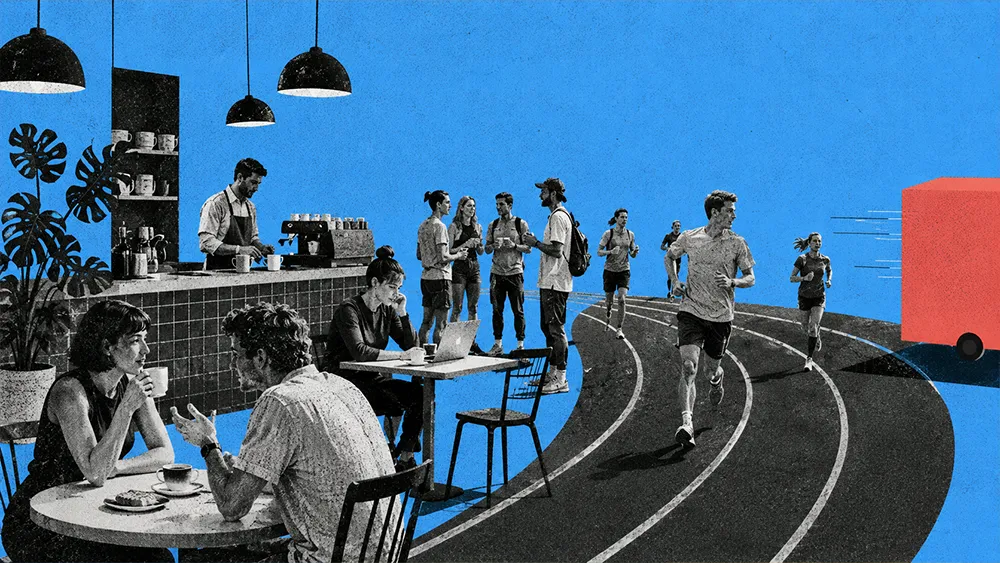
Brands are catching on to digital fatigue and answering with cafes, run clubs, and pop-ups that the audience can actually walk into. Marketers are using these physical touchpoints to turn online attention into active offline participation. Streetwear labels like Kith, ALD, and Uniqlo have opened permanent cafes. Even digital-first companies like AI startup Perplexity are testing pop-ups to meet people in person. Heritage brands have joined the move. Ralph Lauren's permanent cafes and restaurants treat the dining room as another room in the brand's house, and the company is expanding the hospitality footprint further with a new Polo Bar slated for London in 2028.
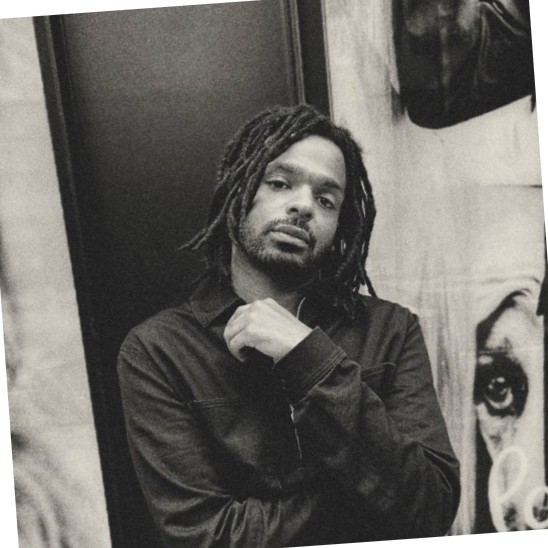
Errick Page is the former Associate Director of Social Media Strategy at Ogilvy, a New York–based cultural strategist who has spent his career figuring out which online conversations are worth turning into physical rooms. His track record spans the Clio Award-winning campaign for FX's Atlanta at The Cashmere Agency, the launch of Netflix's Strong Black Lead, social leadership for Colin Kaepernick's Know Your Rights Camp, Jennifer Lopez's digital presence, and Peacock's Bel-Air series. His read is that the activation worth funding is the one that already has an audience showing up for it on the platforms.
"I think a lot of brands are looking for those opportunities to create moments where people can come together in a traditional sense and leverage mediums like cafes to merge the two worlds and create those in real-life experiences. It really creates that opportunity for people to engage with the brand, be a part of the lifestyle that the brand represents, and be a part of the world that the brand is building," Page says.
The audience picks the activation before the brand does
The most useful signals for these opportunities come directly from existing audience habits. Page highlights the Gunna 5K Wunna Run as a case study of authenticity preceding the brand deal. The rapper publicly embraced a holistic health overhaul well ahead of his partnership with Under Armour for community-based fitness events.
"He changed how he was eating, he changed how he was working out, he changed his entire environment to really focus on health and wellness," Page says.
The authenticity came first. The brand deal came second. That personal evolution ultimately translated into a physical race series hosted in the cities where Gunna's Instagram data showed the highest concentration of fans. Identifying behavioral patterns means tracing trends upstream through active social listening.
"You can read the conversations on Reddit, you can browse through the comments on Instagram or TikTok, and those comments will give you a lot of insights into the core DNA of the trend," he says.
The audience picks the activation before the brand does. The strategist's job is to read the picking and bring back something the brand can build, the same way behavior-led product teams watch consumers in physical environments and design around the friction they already work around.
Tight budgets are putting intentionality back in the brief
Budgets are tight in 2026, and cultural plays face intense internal scrutiny as leaders grow cautious with their spend. The latest consumer data from McKinsey shows net spending intent is negative across most discretionary categories, with consumers planning to spend selectively rather than pull back across the board. Financial constraints force marketers to justify exactly why an IRL activation exists at all. Page notes that when creators execute IRL activations, the physical space often works best when it serves as a genuine platform that offers value to the community. To demonstrate how broadly the rule applies, he cites a logistics giant rather than a lifestyle label.
"UPS is all about supporting small businesses. When they operate in this space of creating an in-real-life experience, that experience is usually tied to their mission," Page says. "That activation would more than likely be a platform for small businesses in a way that those businesses wouldn't typically have the resources to produce."
The cost of getting an activation approved through the budget meeting has increased. "It's very hard to get a brand to invest money right now," he says. "When money is being spent, especially on a significant scale, that intentionality is definitely going to be woven into the DNA of the activation."
The teams winning under those constraints are the ones treating the brand's role as a host, not a headliner. CVS Pharmacy is running the same play with its U.S. Soccer and NWSL deals, investing in local fields and community programming rather than buying broadcast logo placement. A platform built for someone else returns coverage and goodwill; a sponsored backdrop never will.
The origin matters more than the aesthetic
Borrowing a trend's aesthetic without doing the homework is a massive brand-safety risk. Page uses the briefly announced and swiftly canceled Atlanta Hawks-Magic City partnership as a practical stress test. The most successful activations hinge on alignment between the cultural energy of a specific moment and the company's own history.
"It's important to understand the origin, not just the feeling, because where they were going was the feeling, the vibe, and the aesthetic," Page explains. "The NBA did their research and quickly identified the origin of Magic City and what the implications would be of associating the NBA with the venue."
A brand cannot rewrite its own history by activating in 2026. "Just because you're this super absurd and fun brand on social media in 2026, that doesn't necessarily erase who you've been for the past 20 or 30 years," he says. "Having a strong understanding of the historical origin is super crucial in the strategy of it all."
The brands clearing that internal bar are the ones treating the cultural fit as a research question, not a creative one. The aesthetic is the easy part. The origin check determines whether the activation ships or is killed during legal review.
Sustaining the activation means activating the entire ecosystem
A pop-up will not survive in a vacuum. For many teams, sustaining the momentum of a physical event means plugging it into a larger network. To get more out of an experiential drop or a micro-creator partnership, marketers are activating a wider set of media channels. The activation that builds real brand equity is the one running alongside out-of-home and ambush marketing, paid amplification, and B2B validation that travels separately. The Super Bowl 2026 playbook showed the same logic at scale, with Levi's, Skittles, and Avocados From Mexico designing for the full ecosystem instead of betting everything on the broadcast. Page points out that peers sharing work on LinkedIn can be just as valuable to sustaining an activation as consumers sending content in private group chats.
"Social media lives in an ecosystem, and that ecosystem is massive," Page says. "If brands want to sustain a trend, a moment, or a campaign, they have to fully activate the entire ecosystem, not just one wing of it. It can't just be a TikTok creator partnership. What is the paid social doing to support that creator, especially if it's a micro-creator?"
The conversation has moved to the group chat, and the dashboard cannot follow along. "Instagram doesn't provide insights on how many times your post was engaged from a text message or a group chat," Page says. "Followers aren't as important as they used to be, because nowadays a post can go viral and get a million views, and you only get 10 followers out of that."
Ecosystem activation turns a single physical drop into a campaign that compounds across channels. The SXSW 2026 activation pattern showed brands building entire experiences with content extension baked into the architecture from day one. The teams treating each channel as a separate workstream are the ones whose pop-ups fade in a week.
RSVPs are the new reach
The pivot toward dark social means many organizations are evolving how they evaluate offline engagement. Vanity metrics have stopped being the lens, and real attendance is.
"We have to get away from the idea that KPIs are the same from campaign to campaign," Page advises. "As marketers, we have to be comfortable picking the most appropriate KPIs. The KPI isn't always going to be external link clicks or email subscriptions. We have to consider how many shares that post got, how many comments it got, and how many people actually showed up versus how many people RSVP'd."
The internal alignment problem is what kills most measurement reframes. "When it comes to buy-in from marketers, strategists, and partners, everyone has to really be clear on what the main objective is," Page concludes. "A lot of times we lean too heavily on what we've become accustomed to, without really thinking about the reality of how audience behaviors are going to impact the campaign."
The measurement reframe matters more for activations built to travel across markets, where the attribution model must span platforms, channels, and conversations the brand cannot directly track. Cultural strategy in 2026 lives in the comments before it lives in the venue. The brands that read the audience first are the ones whose cafes get named in the Reddit thread the next morning. The brands that skip that step are paying for a venue and praying the right people show up.