How Jiffy Lube Turned Fan Curiosity Into A Pre-Launch Marketing Engine
Berk Wasserman, Executive Creative Director at BarkleyOKRP, and Suzanne Clerkin, Chief Marketing Officer of Jiffy Lube International, used fan speculation, nostalgia, and staged "sightings" to build campaign momentum.
Make brandbeat one of your go-to sources on Google

We wanted to sort of prime the pump before the campaign started. By getting ideas out there and starting to seed through community management, let’s start to tease this and build conversation before we go live.
Berk Wasserman
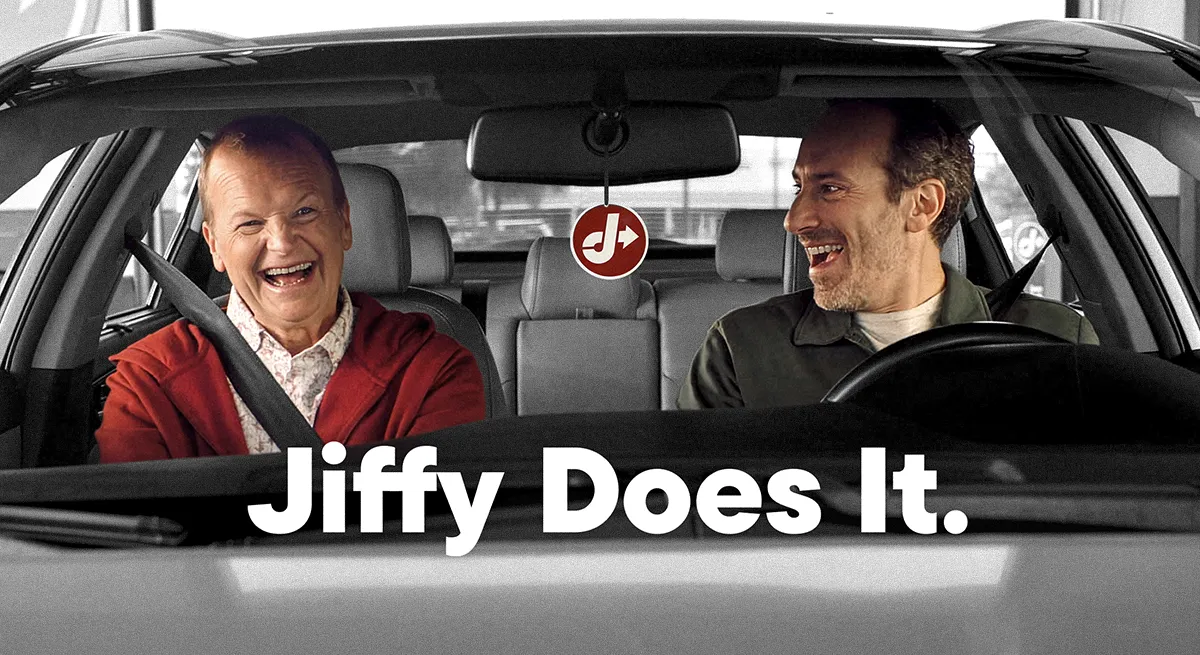
When cultural memory is strong enough, the talent itself becomes the media placement. Jiffy Lube made that bet with the rollout of its new Jiffy Does It campaign, bringing back the iconic Sonic drive-in duo TJ and Pete after a years-long absence. The brand seeded grainy photos of the two actors at hotels, gas stations, and on roadsides with maps, turning them into a distributed out-of-home ambush marketing play weeks before any commercial aired. By feeding the existing fan petitions and online mysteries already in circulation, Jiffy Lube let raw fan speculation carry the pre-launch entirely. The campaign is a textbook example of how leaked photos and online chatter can extend a campaign long before the actual spots hit the air.
Behind the rollout were Berk Wasserman, Executive Creative Director at BarkleyOKRP, and Suzanne Clerkin, Chief Marketing Officer of Jiffy Lube International. Wasserman brings more than two decades of agency experience, including formative years at Crispin Porter + Bogusky, while Clerkin previously spent 22 years at Shell shaping brand strategy across its automotive portfolio. Together, the two executed a straightforward plan: tap into fan demand, turn TJ and Pete into a real-world presence, and let the official work follow. From the first leaked sighting through the campaign's full unveil, the team treated familiar talent as a media channel in its own right.
"We wanted to sort of prime the pump before the campaign started. By getting ideas out there and starting to seed through community management, let's start to tease this and build conversation before we go live," says Wasserman. The cultural memory around the characters did most of the audience-building. Fans had spent years asking online where TJ and Pete went, and the team built the entire pre-launch around that existing curiosity. Staged sightings became the opening creative, functioning as non-traditional physical billboard placements that lived simultaneously in real-world locations and social feeds. "We took shots of them at the hotel and on the side of the road with a map, really having fun with that backstory so we could get everybody online talking and speculating," Wasserman notes.
Familiar faces, fresh angles
For legacy companies like Jiffy Lube, the marketing challenge often moves past awareness-building and into the harder work of driving active consumer preference. The quick-lube market is notoriously crowded, with most competitors offering nearly identical services and similar price points. For Clerkin, breaking through that sameness starts with treating the brand's relationship with drivers as a two-way conversation rather than a one-way pitch. "At Jiffy Lube, we really like to listen to our drivers, so we're constantly engaged online and really want to interact and hear what's going on," she says.
From the agency side, the question became how to make that listening actually translate into work people noticed. Nostalgia offered a natural lever, and the deeper insight came when Wasserman's team realized the duo's entire 20-year television run had taken place inside a car. That detail unlocked the creative platform, giving the team a way to connect Jiffy Lube's core promise of fast, easy service to characters audiences already had genuine affection for. By tapping into how brand characters evolve with entertainment and culture, the campaign turned a familiar premise into a fresh narrative hook. "They were so iconic, and they never left their car," says Wasserman. "What if we were able to tell the other side of the story? How were they able to be in their car for so long? It's because they've been getting the easiest oil changes ever for the last twenty years."
Structured spontaneity
The fan-driven rollout mirrored the way the commercials themselves were made. The team applied a philosophy of structured spontaneity to the production, building out the scenarios and locking in the brand messages first, then trusting the actors to push the comedy further once cameras rolled. That balance gave the work a loose, conversational quality, joining a wave of unexpected, out-of-the-box comedic executions showing up in modern advertising. By the time the official commercials hit television screens, the line between script and improvisation had become practically invisible, with Wasserman estimating the final cut was roughly fifty-fifty scripted to ad-libbed. "We write all those scripts out and come up with the scenarios," he explains. "Then there's usually a jumping-off point within the script where we just let the actors make it their own."
The leaked images were just the opening act of a broader rollout that depended heavily on active community management. The brand's social team came in with pre-planned responses to anticipated questions, then stayed nimble enough to engage with fans in real time as speculation built across platforms. That approach aligns with how many brands now blend experiential and out-of-home tactics for consumer engagement, treating comment sections as a two-way creative space rather than a one-way broadcast channel. The model required the team to coordinate quickly across a campaign that was effectively writing itself in real time. "We pre-game what questions or comments might come up," Wasserman notes. "But some of the best stuff is just when we're responding to fans in real-time and figuring out how we want to react."
A campaign with mileage
While TJ and Pete delivered an outsized initial hook, the campaign is built to extend well beyond this particular wave of work. Jiffy Lube has serviced vehicles for over 45 years, and the platform is designed to carry that core promise of fast, easy, no-appointment car care into future campaigns and partnerships. Clerkin sees the duo as just one entry point, with room for other voices to interpret the same idea down the line, while Wasserman views the campaign's reception as a creative provocation rather than a finish line. "Part of what we like so much about this campaign is it's a challenge in a fun way. Who's going to beat that?" says Wasserman. "TJ and Pete are great, and we want to figure out ways we can bring them back in unexpected ways."
For Clerkin, the broader takeaway is that conversations like the ones TJ and Pete sparked fit naturally into Jiffy Lube's positioning as a brand that removes friction from drivers' lives. The timing of the rollout was deliberate too, aimed at building consideration across the company's 2,000 U.S. service centers heading into the peak summer driving period. Looking ahead, the platform gives Jiffy Lube a sandbox to keep showing up in culture without ever drifting from its founding promise of approachable, low-friction preventive maintenance. "Life has so many complexities and demands. Car care doesn't have to be another speed bump," Clerkin concludes.