Rising Super Bowl Prices Push Brands Toward Multi-Week Media Strategy to Maximize Return
David Richard, Founder and CEO of BIG FISH PR, explains why the real return on Super Bowl ads comes from earned media strategies that extend a single moment into weeks of cultural conversation.
Make brandbeat one of your go-to sources on Google

For the amount of money that brands are spending on these ads, you want to get as many bites out of the apple as possible and amplify it as much as possible. That’s why having a digital and earned media strategy alongside the ad just makes really good sense.

David Richard
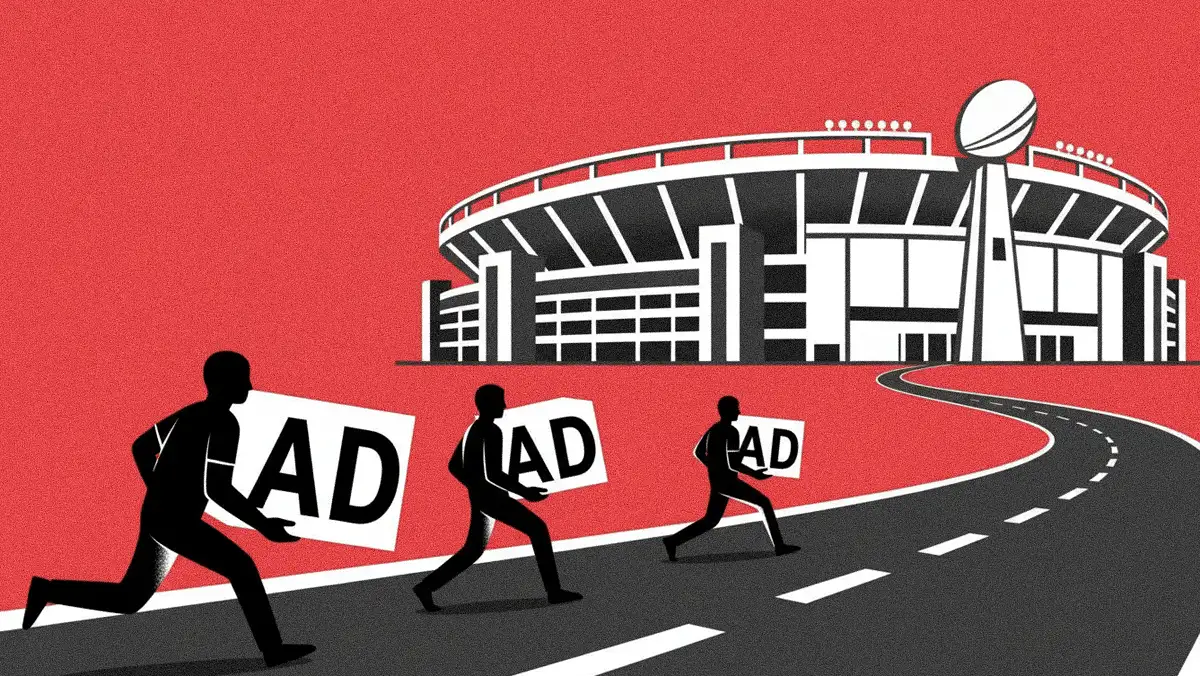
At $8 to $10 million for 30 seconds, a Super Bowl ad must deliver more than a viral moment. Brands now face pressure to prove sustained return, not just creative impact. The emerging playbook treats the broadcast spot as the opening move in a multi-week earned media strategy designed to extend attention, deepen engagement, and maximize every dollar spent.
David Richard, CEO and Founder of BIG FISH PR, has built his career around helping brands turn high-profile moments into sustained attention. Alongside his agency work, he serves as a Professor of public relations, marketing, and digital media at Emerson College and a Partner at GreatPoint Ventures. Drawing on his background and expertise, Richard outlines a strategy for amplifying an ad well beyond its initial airing.
"For the amount of money that brands are spending on these ads, you want to get as many bites out of the apple as possible and amplify it as much as possible. That’s why having a digital and earned media strategy alongside the ad just makes really good sense," says Richard. In his view, without that support, an ad is just a fleeting and expensive moment. This smarter, more targeted effort transforms the broadcast spot into a conversation that lasts for weeks.
The long game: Richard’s playbook begins long before kickoff with an early ad release. It leverages a unique pause in media noise and a rising number of viewers who actively hunt for Super Bowl ads online ahead of kickoff. "Leading into the big picture, there's this quiet period of two weeks that exists between the last playoff game and the Super Bowl," he explains. "There's a lot of talk on injuries and how the two teams match up, but not much else is going on. There's so much interest and hype, so it makes sense to tap into that, where people are looking for anything surrounding the big game, even the ads."
Details that deliver: From there, Richard drills down, matching each creative element of the ad to defined audience segments and media verticals. For a campaign like Ring’s Lost Dog, this meant targeting outlets covering everything from pet-related stories to homeownership news. This approach fuels the media outlets that rank the ads as outlets build buzz to prime the audience. "It's really about picking apart the ad in every way: the music that's being used, what genre that is, how that ties into the outlets that might be interested. It's literally drawing a line from every aspect you can to the various audiences that would care, and then injecting the right narrative and storytelling to bring that out."
According to Richard, validating the playbook requires moving beyond impressions and relying on more sophisticated tools that quantify how audiences actually feel about an ad. Platforms like iSpot.tv make that response measurable, translating emotion into data. He highlights the Ring ad as proof, pointing to its eventual number-one ranking on iSpot.tv’s likability leaderboard.
Heartstrings vs. headliners: Winning Super Bowl ads usually fall into one of two camps: big-name celebrity lineups or authentic emotional resonance. Richard observes that ads built on subtle emotion often outperform louder ones by relying on story over star power. "Volkswagen's The Force is one of the best examples," he notes. "A little kid dressed as Darth Vader is amazed when he remotely starts the Passat. That was back when remote start was a big deal. That ad won the Super Bowl because of the tie-in to the music, the humor, and the nostalgia. Most importantly, there was no celebrity in it."
Humanity's homework: In the current media environment, amplification has become a central part of the playbook, with paid influencers commonly used to scale attention. Richard argues that the expansion of AI has introduced a paradox that increases the value of genuine human response. "This is like asking ChatGPT what the best ads are in the Super Bowl. Well, ChatGPT can't watch the Super Bowl and it can't watch the ads, so it really depends on the feedback that it's pulling from. And that's the earned media."
At its core, Richard's Super Bowl playbook provides a blueprint for engaging with moments that capture widespread attention. It prioritizes staying meaningfully involved in the cultural conversation over scoring a fleeting win. According to him, one brand consistently embodies this philosophy by leaning into risk for the chance to create a standout hit: Pepsi. "I can't say they've hit the nail on the head every time, they've had some really big misses. But they pick themselves up, dust themselves off, and aren't afraid to try again. Maybe we'll hit, and maybe we won't, but that's going to be our thing," Richard concludes.