Brand Relevance Replaces Reach As The Primary Metric In 2026 Creator Marketing
For brands in 2026, relevance is the new reach. Brian Salzman, CEO of RQ, unpacks his framework for speed, tonality, and values to deliver results in the creator economy.
Make brandbeat one of your go-to sources on Google

Relevance should be the most important metric we use when it comes to the creator economy. Relevance drives everything, from purchase to talkability to endorsement to social posts.

Brian Salzman
Brands' decade-long obsession with reach and impressions could be coming to an end. Instead, relevance is the new marker of success, driving both immediate purchases and long-term brand health. In a booming creator economy, authentic, relevant partnerships more effectively connect brands with their audiences and create lasting impact.
Brian Salzman, a 20-year industry veteran and the Founder and CEO of the creative agency RQ, is a champion of relevance as a core brand metric. A member of the Forbes Agency Council, Salzman planted his flag in relationship marketing years ago, challenging the industry’s often transactional nature of influencer partnerships. His agency uses a proprietary AI-powered tool, the Reaction Engine™, to help global brands move beyond outdated models and understand the conversations their customers are having.
Brands, he believes, must rethink their entire approach to building trust with consumers in 2026. "Relevance should be the most important metric we use when it comes to the creator economy," he says. "Relevance drives everything, from purchase to talkability to endorsement to social posts.”
Building trust: Relevance is even more crucial in a market where inauthentic partnerships erode consumer trust. "Back when influencer marketing first started, brands used to pay people to pretend to like them," Salzman says. "I saw that if you're trying to change behavior, asking someone to pretend to like something doesn't work. There has to be trust."
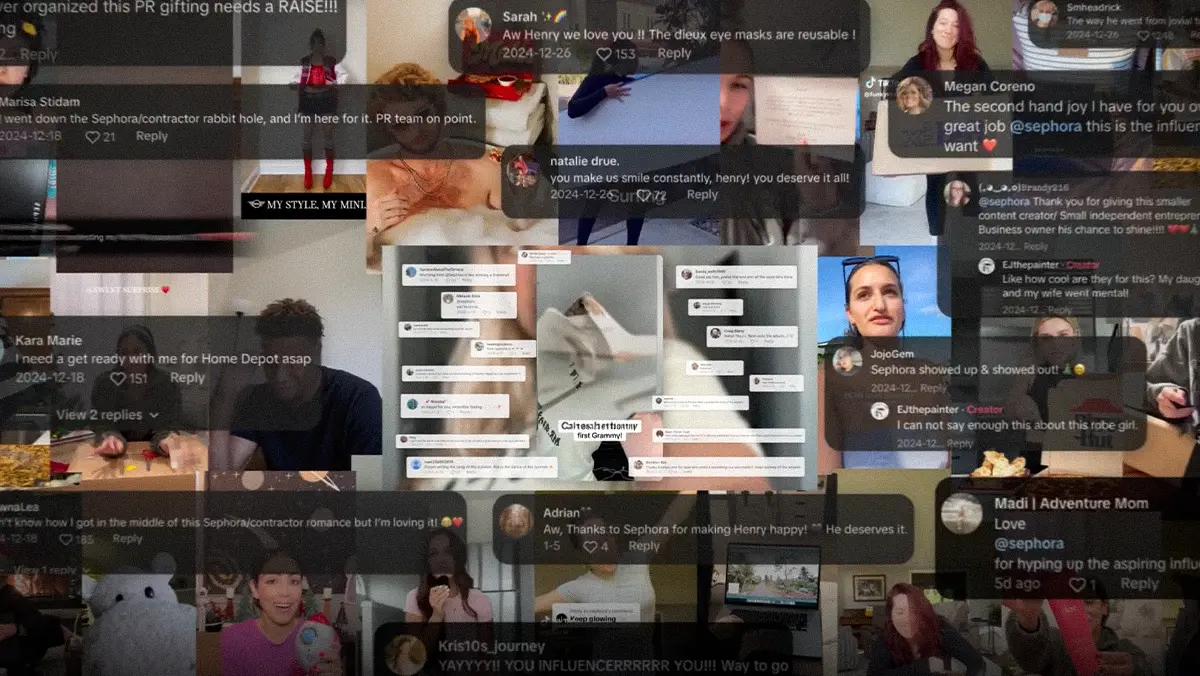
From moment to movement: To put the new model of influencer marketing into practice, RQ focuses on social listening and responding at speed. He credits their success to a clear methodology, harnessing the power of joining a conversation already in progress. "We saw a small TikToker say 'Sephora's for the boys' in one of his videos. We loved that line, and overnight, we custom-made him merch with that phrase on a shirt. Months later, 'Sephora for the boys' became a campaign that Sephora invested in with people on red carpets saying it," he explains.
Salzman distills his strategy into three core components. Combined, these help brands put relevance into practice. "The things that are critical are speed, tonality, and brand values," he outlines. "Brand values fuel relevance." For Salzman, the brand values pillar shouldn't be a vague mission statement, but a way to practically filter for brand safety. "There are a million creators out there," he cautions. "It just takes one person on social media to point out that a creator said something controversial 10 years ago, and the world will just blow up. Brand safety is so important, and that is the one place I would never risk as a brand."
Building block: With H&R Block, RQ applied their model to reshape even traditionally "uncool" categories. Set to be a sponsor of the first-ever TikTok Awards, Salzman pitched an idea to the H&R Block team: engage creators before the awards, building relationships without an immediate ask. The team hosted key creators at a get-ready-with-me event pre-show and built an immersive experience at the awards. "We got so many organic posts from these huge creators who would never talk about H&R Block otherwise," he recalls. "We were able to create something where the brand was so relevant to them that they got all of this great coverage online."
Dialing down the speed: The framework's value, he explains, also benefits heavily regulated or traditionally slow-moving industries. The model adapts to these environments. Finding credible partners becomes the primary focus, even if speed is less realistic. On his work with health-tech clients like Abbott, he notes: "It still takes a little bit of time, but it's about identifying that right person who has that trust and credibility in their community."
Ultimately, Salzman sees relevance as more than a marketing trend. He envisions a fundamental change in the navigation of influence and customer connection in the age of AI, making creators central to a brand's entire marketing mix, from PR to out-of-home advertising. "The creator economy becomes almost like a rudder for brands in terms of which direction to go in," he predicts. "So many clients default to big events like Coachella, but their creators are telling them they don't even go anymore. These creators will tell brands where to show up and how to show up to best reach their target audience."