In a Fragmented Media World, Brand Mascots Are Becoming the Throughline
From Netflix integrations to first-ever character debuts, brands are investing in mascots as long-term strategic assets, and the results are making the case for character-led marketing in 2026.
Make brandbeat one of your go-to sources on Google


Brand mascots have always had a way of sticking around. In 2026, the strategy behind them is evolving fast, from nostalgic holdovers to fully integrated brand assets designed to move across platforms, formats, and cultural moments. The latest proof point arrived this week when State Farm announced that Jake from State Farm would make his first-ever scripted television appearance in Netflix's hit sports comedy Running Point. It's a milestone for the character and a signal of where mascot marketing is heading: deeper into entertainment, more embedded in culture, and built for a longer shelf life than any single campaign.
Jake gets a storyline: State Farm's collaboration with Netflix around Running Point goes beyond a standard media buy. Jake appears both in a co-branded spot alongside stars Kate Hudson and Chet Hanks and within an actual episode of the show's second season, a first for the brand character. The campaign ties into State Farm's With The Assist basketball platform and positions Jake as a steady, reliable presence in the show's fictional front office. The Netflix deal also represents a deepening relationship between the two companies: the collaboration helped both sides understand how to work together more effectively going forward. Meanwhile, State Farm recently brought Jake into EA Sports FC 26, where the character will be dynamically inserted into key moments in the soccer video game ahead of this summer's FIFA World Cup, another example of a mascot moving seamlessly between physical and digital touchpoints.
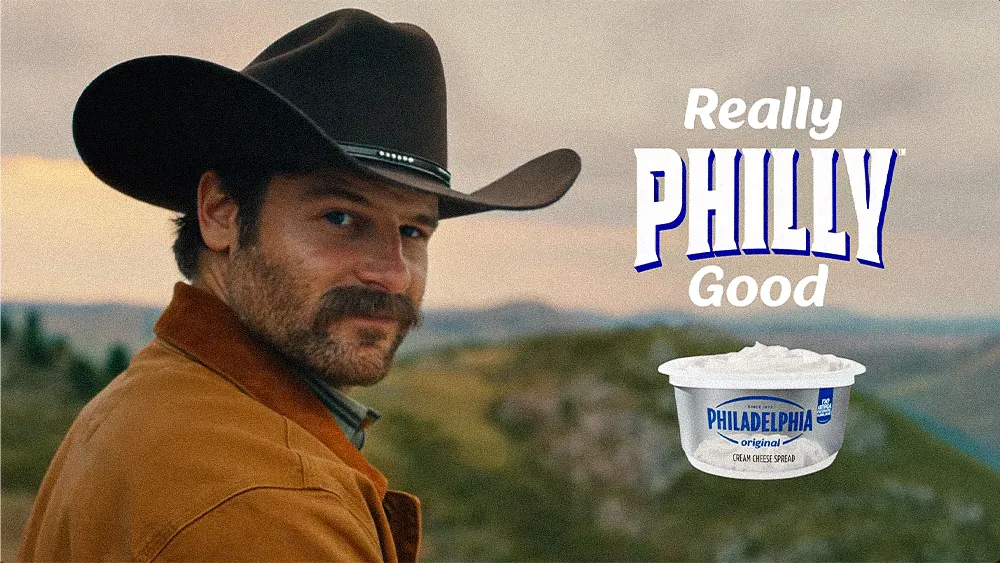
Phillyboy enters the chat: Philadelphia Cream Cheese is taking a different approach to the same underlying strategy. After 150 years without a mascot, the brand introduced Phillyboy as the centerpiece of its new Really Philly Good platform, backed by a 63% increase in marketing spend and a stated goal of becoming a $2 billion brand. The cowboy-hat-clad character made his debut in an origin story spot that traces the brand's heritage from farm fields to kitchen counters. Kraft Heinz described Phillyboy as a way to build emotional connection and expand how consumers think about using cream cheese beyond the morning bagel. The campaign spans TV integrations with The Bachelorette, digital placements in The New York Times, and an AI-powered meal planning tool on Allrecipes, giving the character a 360-degree presence from day one.
The timing of these moves isn't coincidental. Brand mascots are experiencing a broader resurgence as marketers look for assets that can cut through an increasingly fragmented media landscape. Characters offer something a logo or tagline can't: personality that travels across platforms, adapts to cultural moments, and builds cumulative recognition over time.
Retiring, reviving, and going viral: The mascot playbook isn't one-size-fits-all, and some of the most notable recent moves have involved dramatic pivots. Burger King officially "fired" its long-running King mascot during the Oscars as part of its There's A New King And It's You campaign, a guest-centric repositioning tied to the brand's broader Reclaim The Flame turnaround. Duolingo took the opposite approach in 2025 by staging the viral "death" of its beloved owl mascot Duo, reportedly driving a 25,000%+ surge in mentions and a measurable lift in subscriptions. Meanwhile, HI-CHEW debuted its first-ever mascot, Chewbie, and KFC's Colonel is dancing in new ads tied to affordability messaging. Whether brands are introducing, retiring, or reinventing their characters, the underlying signal is the same: mascots are being treated as active strategic assets that deserve investment and attention.
Nostalgia numbers: The renewed interest in mascots is supported by performance data. Research shows that campaigns featuring mascots consistently outperform those without them on key business metrics, including market share growth, profitability, and new customer acquisition. Additionally, recognition rates for top brand mascots like the GEICO Gecko exceed 95%. On social media, mascot-led content consistently outperforms standard branded posts on engagement, driven by the character's ability to participate in trends, react to cultural moments, and generate shareable content that feels more personal than corporate. Sports mascots like the Indianapolis Colts' Blue and the Chicago Bulls' Benny the Bull have built massive TikTok followings by leaning into exactly this dynamic, proving that character-driven content resonates across audiences and platforms.
The thread connecting Jake from State Farm's Netflix debut, Phillyboy's kitchen counter entrance, and Duolingo's viral owl funeral is the same one: brands are recognizing that a well-built character can do things a campaign can't. Characters accumulate equity over time, adapt to new formats without losing recognition, and give audiences something to connect with on a level that goes beyond the product. In a media environment where attention is fragmented and ad fatigue is high, that kind of built-in familiarity is increasingly hard to come by, and increasingly valuable when you have it.