OOH Is Reclaiming Attention By Working With The Real World Instead Of Against It
Josh Gurgiel, Head of Creative at oOh!, is rethinking out-of-home advertising around contextual relevance, public-space creativity, and long-term visibility.
Make brandbeat one of your go-to sources on Google

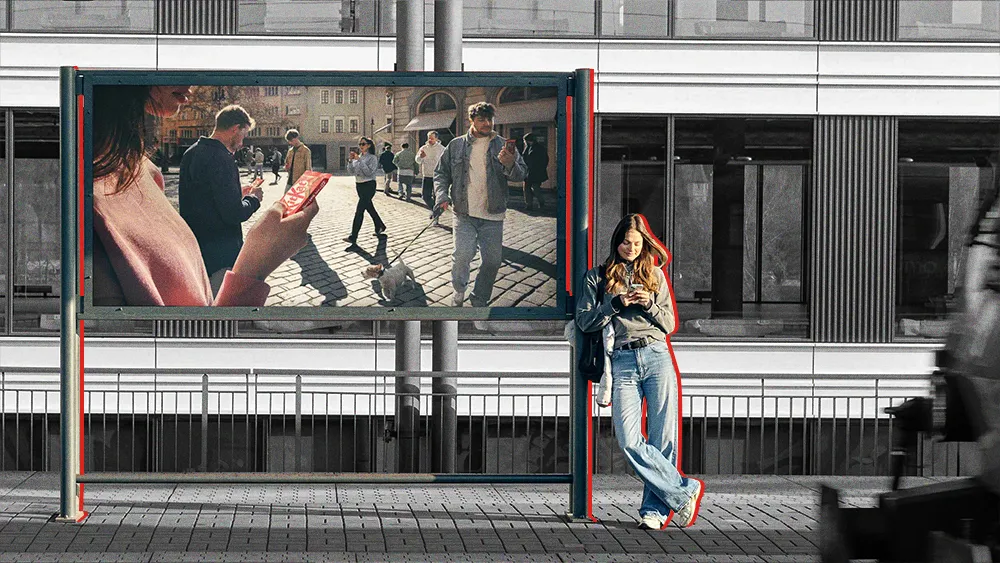
Out-of-home doesn’t interrupt the content, it is the content. From a creative perspective, I refer to out-of-home as public space art that’s sponsored by your brand.

Josh Gurgiel
Digital advertising spent the last decade trying to follow people from screen to screen. OOH is evolving by paying closer attention to the spaces people actually move through instead. The change comes as brands look for ways to make advertising feel more relevant without adding to the fatigue consumers already feel from hyper-personalized digital experiences. As the medium gets smarter, campaigns can react to conditions like traffic, weather, or even pollen counts to make broad messaging feel more connected to the moment without relying on one-to-one tracking.
For Josh Gurgiel, Head of Creative at oOh!media, the future of OOH depends on using data without inheriting the worst habits of digital advertising. The former lawyer oversees a national network of tens of thousands of physical and digital signs across Australia, giving him a front-row seat to how the medium is evolving. Rather than treating public-space media as another channel for aggressive targeting, Gurgiel says the format works best when brands create something people naturally engage with as part of their environment, whether that means utility, entertainment, or timely contextual relevance.
"Out-of-home doesn't interrupt the content, it is the content. From a creative perspective, I refer to out-of-home as public space art that's sponsored by your brand," says Gurgiel. His philosophy shapes how campaigns are planned across the medium’s expanding network of roadside billboards, rail stations, retail centers, office towers, universities, and airports. While programmatic capabilities allow brands to activate screens based on specific conditions or audience triggers, Gurgiel says the real advantage often comes from sustained visibility within the same environment over time.
The power of "positive frequency"
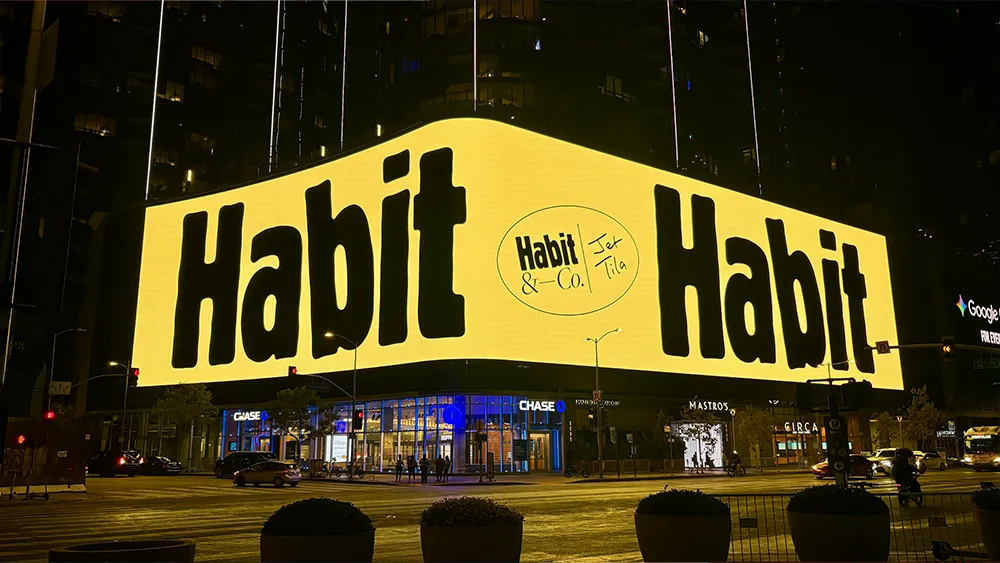
Gurgiel believes the strongest OOH campaigns earn attention by becoming part of a person’s routine rather than competing against it. Campaigns that remain active within the same environment for weeks can create what he describes as "positive frequency," where repeated exposure builds familiarity instead of fatigue. Office towers are one example, creating multiple touchpoints with the same audience throughout the day, each tied to a different mindset or behavior. As OOH networks become more connected, brands can increasingly adapt those moments using signals tied to the physical world itself, from traffic flow to environmental conditions.
Drawing on analysis conducted with banking and supermarket partners at oOh!, Gurgiel says campaigns built around a consistent creative territory repeatedly outperformed brands that constantly changed direction. He linked that finding to Mark Ritson’s work challenging the idea of "creative wear-out," pointing to Uber Eats’ long-running menu-item campaign as proof that repetition can strengthen engagement when the execution continues rewarding attention. "If you want my eyeballs, if you want me to take notice, you're not interrupting my day. You're inviting me in to consume," Gurgiel notes. "If I'm going to give you those eyeballs, you have to give me something in return."
Sometimes the smartest campaigns ignore data feeds altogether and use the physical billboard itself as the trigger. Specsavers, the optometry chain known for its long-running Should’ve Gone to Specsavers platform, regularly manipulates ad infrastructure as part of the joke by placing work sideways, cutting off copy, or intentionally misusing portrait panels. "Specsavers is using the format itself as the mode to capture that entertainment, provide that engagement, that comedy," Gurgiel explains. "It's not forced, it's organic, it's really smart."
Smarter reach, bigger impact
In Gurgiel’s view, the future of OOH is not about turning billboards into another form of hyper-targeted digital media, but making broadcast communication smarter and more precise. As new attribution and audience-measurement systems emerge, including Australia’s MOVE platform that maps audience movement in greater detail, marketers are gaining better tools for planning campaigns around context, timing, and placement while still operating at mass scale. "We can be a one-to-better-many medium," he says. "We can make sure that we're putting the right placements in the right places to reach the right people, but ultimately, we are a broadcast medium, and the power is at scale."
That emphasis on scale also reinforces something harder to quantify: the credibility that comes from occupying physical public space. Unlike digital impressions that can appear instantly and disappear just as quickly, OOH campaigns require visible investment, operational coordination, and permission to exist within the real world. Gurgiel argues that permanence still carries psychological weight for audiences surrounded by endless streams of disposable content. "Anyone can be Insta-TikTok famous right now, but when you're on a billboard in public space, there is an intangibility to it, there's a credibility to it," he concludes. "That level of fame is not democratized, and shouldn't be."