Cultural Speed And Idea Protection Are Anchoring The Move Toward Lean Creative Shops
Highlanders Creative co-founders Michael Mendieta and Ed McCulloch walk through how the agency's diagnostic, singularity-driven approach is winning over today's biggest brands.
Make brandbeat one of your go-to sources on Google

What you’re getting in a small agency is focus and singularity. A great idea can get diluted when it passes through too many teams. We like to hold on to that core idea and see it all the way through.

Michael Mendieta
The advertising industry is in a heavy season of consolidation, with holding companies absorbing legacy players, cutting jobs, and merging ad agencies in turnaround plans after massive M&A activity in the space. As corporate structures grow heavier, the reorganization has opened doors to a different path. Modern brand leaders are now exploring alternatives to consolidated agencies, searching for partners capable of bridging the gap between high-level brand strategy and physical production without the traditional bloat.
Highlanders Creative, an independent agency launched in October 2025, is stepping into that space. Co-founded by CEO Ed McCulloch and CCO Michael Mendieta, the firm has won pitches for brands like Nike and Hennessy by stripping out layers of process. McCulloch brings more than 15 years of execution expertise as an internationally represented commercial director and photographer. Mendieta brings a decade of brand-building strategy from Ogilvy, Interbrand, and CIRCUS MAXIMUS, where he served as Executive Creative Director when the agency won 2021 Ad Age Small Agency of the Year.
"What you're getting in a small agency is focus and singularity. A great idea can get diluted when it passes through too many teams. We like to hold on to that core idea and see it all the way through," says Mendieta. The founders built Highlanders around protecting ideas from the structural drag that often slows larger networks down, with one concept carried by the same small team from first conversation through final execution. For Mendieta, big agencies are not short on good ideas. The harder question is whether a strong concept survives every team it touches on the way out the door.
Diagnose, then design
A diagnostic approach shapes how Highlanders works with clients, replacing standardized programs with prescriptions tailored to what each brand actually needs. Mendieta describes it as a refusal to default to the agency's biggest hammer regardless of the job. "I'm not just going to throw the 16-step brand program at them. I'm not just going to sell them on a video that I want to do. I'm going to be very diagnostic in advising that you need these three levers, and you don't need these three," he explains.
For McCulloch, the receptiveness is there because the alternative feels riskier than experimenting. "Marketing executives know culture is moving so quickly. They're really looking for people and agencies that can capture that culture as it's happening, move quickly, understand the need, and find gaps," he notes. "They're more receptive to ideas that may have made them uncomfortable just a few years ago. They're all looking to diversify and add some space between them and their competitors."
The clearest example of how that diagnosis turns into work is Highlanders' recent It's Henny Season campaign for Hennessy's Very Special Cocktails. Tasked with moving the brand out of nightclub settings and into daytime visibility, the team built a content engine around the rhythm of how people actually drink, with out-of-home as the physical anchor flexing across lifestyle, social, content, and experiential. Strategy and production lived under one roof, letting one anchoring idea travel cleanly across every touchpoint without bloated programs in the way. "It brings Hennessy out of the clubs and into the light and into seasonality, and gives you a huge campaign platform," Mendieta notes. "The whole thing is built around the seasonality of your life. When do you want to turn up? When do you want to not?"
The permanence premium
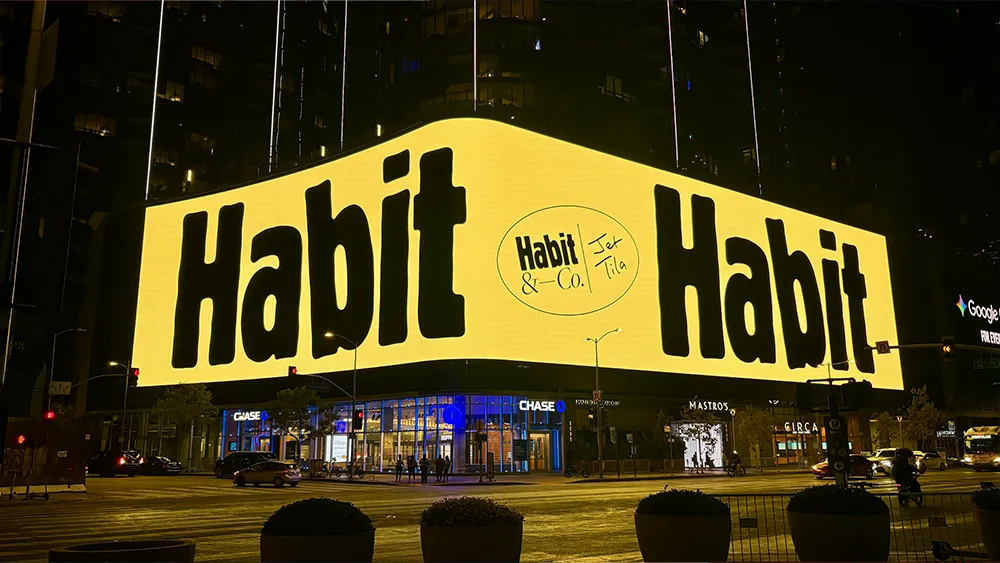
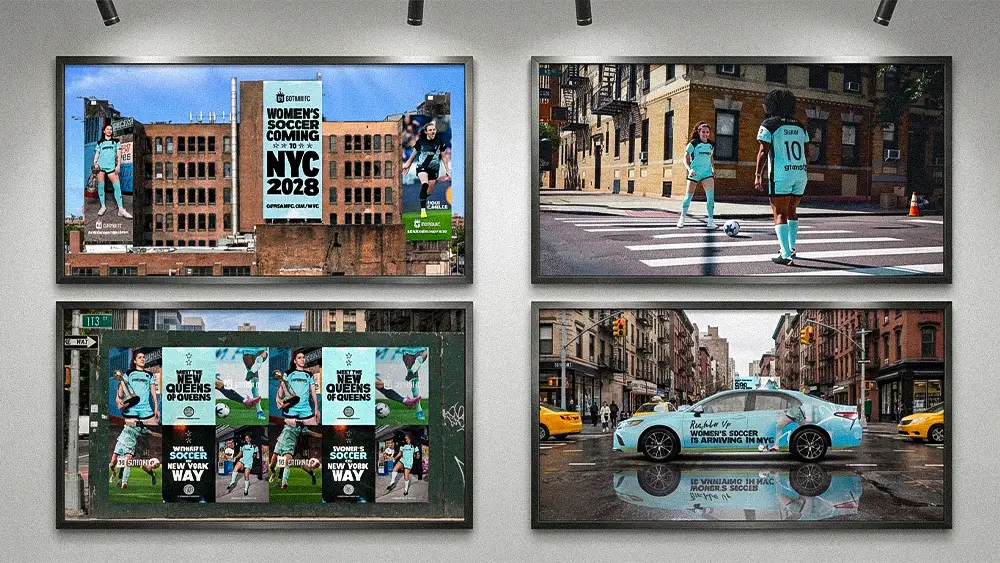
OOH revenue has climbed to record levels, but for Mendieta and McCulloch, the appeal goes beyond the spend. They see the medium as a tactile counterweight to digital saturation, where a single physical placement can carry the weight of a campaign in a way no feed-level impression can. The team treats billboards as installations rather than standard ad placements, building campaigns around targeted liquor store buys, programmatic networks, and high-visibility transit hubs. "Out-of-home is almost like an art piece," says McCulloch. "Something painted on the side of a brick building in New York City becomes more special and more important than the millions of visuals we see on social media."
Inside the Hennessy campaign, that permanence shaped the creative itself. Liquor advertising is a category that flattens easily, with bottle shots and pour visuals reading the same across every brand on the shelf. Highlanders pushed the team to photograph the liquid swirling inside a glass and pair it with high-end fashion portraiture, so the billboards carried the visual weight of a fashion campaign. "No one stands out in liquor. It's really difficult to shoot the bottle in a fresh way," notes Mendieta. "Dedicating half of the billboard to a face and making it much more of a lifestyle was what the clients and our team really fought for. There is a level of epicness that's needed for out-of-home if you're trying to drive that impact."
That conviction extends to how Highlanders wins the work in the first place. The agency often bypasses traditional RFPs entirely, sending fully resolved unsolicited pitches that arrive with the creative already done, including the cold pitch the team built proactively for Nike. Mendieta credits the team's Utah base for that operational clarity, with the distance from major advertising hubs giving them room to think a campaign all the way through. For the founders, the model is part of a larger moment in the industry. "I think our story is one that's capturing a cultural moment. A moment for Utah, a moment for this macro trend of agencies. A moment where clients want something simpler, they want something better, and they want to actually make good ideas," Mendieta concludes.