How eBay Live Transforms Sports Commerce From Product Listings to Participatory Fan Experiences
eBay VP Ashish Chhabra and Former USMNT Captain Landon Donovan on how community, trust, and emotional connection are reshaping live sports commerce ahead of the 7s v 10s Showdown.
Make brandbeat one of your go-to sources on Google

Content and community, when they come together alongside commerce, can turbocharge commerce in a very significant way.

Ashish Chhabra
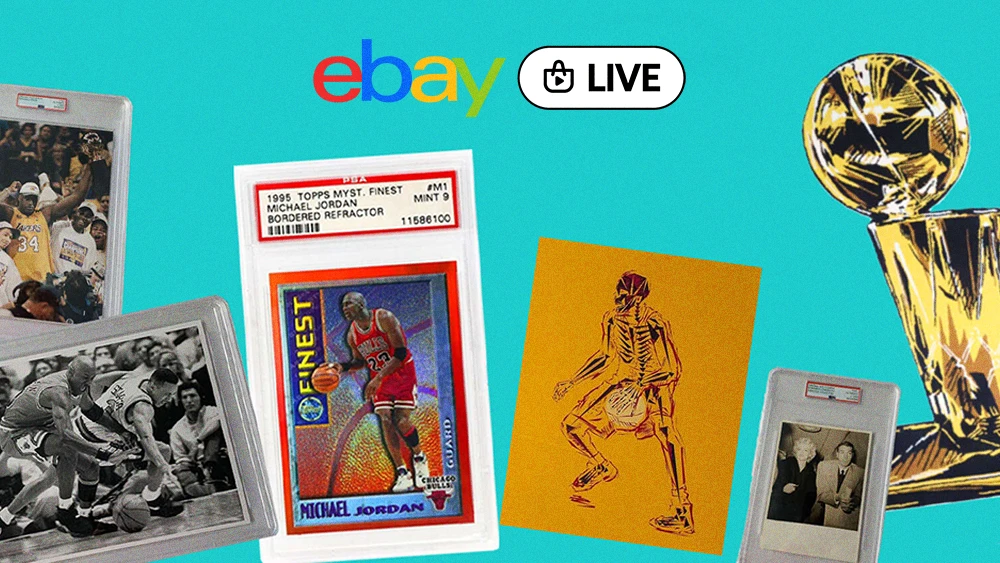
Live shopping has been building momentum since 2020, but most of what passes for live commerce still operates like a storefront with a camera pointed at it. The formats that are pulling ahead look more like fan rooms, with people debating teams, discovering collectibles through one another, validating their passion in public, and buying because the cultural moment and the emotional connection outweigh the friction of a traditional product listing. Case in point: eBay Live's 'Showdown: 7s v 10s', featured 22 curated items spanning legendary number 7s and 10s, from Cristiano Ronaldo and Lionel Messi cards to signed Beckham and Pelé jerseys, with a live scoreboard tracking which side generates the most fan engagement.
Spearheading the event is Ashish Chhabra, Vice President and General Manager of eBay Live, who oversees the platform's strategy for bringing enthusiast categories to life through interactive, community-driven commerce. Landon Donovan, the all-time leading scorer in US Men's National Team history and one of the most decorated players in MLS history, co-hosted the June 28 showdown alongside former Arsenal and England midfielder Jack Wilshere.
In Chhabra's view, using a livestream to build lasting brand engagement hinges on two things: whether the audience trusts the environment enough to participate openly, and whether the content gives them a reason to stay beyond the next item. "Content and community, when they come together alongside commerce, can turbocharge commerce in a very significant way," Chhabra says.
Donovan sees it as the natural extension of our new always-connected world. "In the past, if you were discussing something or buying something, it would take time and it would take face to face interactions. It was still enjoyable, it was just much slower. Now we have the opportunity to do it constantly," he says.
The Showdown is one proof point inside a broader shift that's rewriting how brands, platforms, and athletes think about what makes commerce work.
Community drives discovery before the transaction
eBay has operated as a destination for sports enthusiasts for 30 years. What has changed with eBay Live is where the discovery happens. In the old model, a fan searched for a specific item. In the live model, fans discover items they didn't know existed by watching what other fans engage with, something Chhabra experienced himself when he first started getting into sport memorabilia. "I started to learn about the logoman trading cards and you go, 'Wait, there's a jersey patch in there, that's amazing,'" Chhabra recalls. "I was a novice collector, and from there I started to learn. There is a lot of that participatory dynamic where you learn from other fans."
The learning compounds because the streams create spaces where fans recognize each other, ask sellers about trends, and validate their own collecting instincts through the group. The social validation and the competition dynamic happen alongside the commerce, not before or after it.
The data supports the cultural timing. eBay search volume for players who have worn the iconic 7 and 10 jerseys surged in May 2026 ahead of the World Cup, with searches for Luis Diaz up more than 400%, Lionel Messi up more than 150%, and Cristiano Ronaldo up more than 110% compared to the prior year. World Cup-related collectible sales spiked even more sharply, with sold items up more than 840% compared to the start of the year.
Trust is the infrastructure that makes live commerce scale
The reason eBay Live can host these moments credibly while newer platforms struggle to build the same confidence comes down to trust infrastructure that took decades to build. The money-back guarantee, the authenticity guarantee, and partnerships with professional graders all carry over from eBay's core marketplace. "Our 30 years of trust, currency, and equity is really invaluable in this participatory environment. Making sure it remains a highly trusted environment for buyers and sellers alike is really critical," Chhabra says.
Donovan sees the same dynamic from the athlete side. Trust is what determines whether a partnership feels authentic or transactional, and fans can tell the difference immediately. "When it's real and you want to do it together and make it work, it resonates more with the consumer. When it's fake, the consumer knows it," he says.
Memorabilia carries emotional weight because it represents identity
The commerce layer in sports collecting works differently from other retail categories because the products carry personal meaning that outlasts the transaction. Donovan's most striking example has nothing to do with soccer stardom. "My dad passed away six months ago. And when he passed, I went almost immediately on eBay because I wanted to feel connected to him. I bought a coffee mug with the Cape Breton Oilers logo. I bought some little pins. I bought a jersey, because I wanted to feel connected."
That emotional anchor is what makes sports memorabilia resistant to commodification. A Michael Jordan card is valuable because Michael Jordan carries decades of shared cultural memory. A game ball from a World Cup match represents a moment millions of people experienced together. The emotion makes the object worth collecting, and the collecting makes the community worth participating in. "Sports are so emotional. We are all emotionally tied to it. It creates tribalism, where you are either your city, your state, your country, or a player who you resonate with," Donovan explains.
The 'Showdown: 7s v 10s' format channels that tribalism directly. The Messi-versus-Ronaldo debate, the greatest number 7 versus the greatest number 10, is a conversation fans have been having for years. The stream gives it a live format, a scoreboard, and curated items that let fans put their fandom into action.
The format works when it feels like fandom, not promotion
The broader marketing lesson from eBay Live is that live commerce succeeds when it operates as community media rather than transactional media. The streams that perform best are the ones where sellers cultivate returning audiences, fans show up for each other as much as for the products, and the cultural moment gives the whole experience a reason to exist beyond the next sale. Fans should tune into future streams, and review the complete list of upcoming World Cup Lives.
"People show up not just for the host, not just for the seller, but for each other," Chhabra points out. "There's that shared hobby, shared passion. The commerce and the host, all of that together, creates a desire to come back and check in again and again."
Donovan frames the same point from the talent side. The partnerships that work are the ones that feel like participation rather than performance. "How do we make something unique, fun, and interactive for the fans? I just think of myself in their shoes, if I were a kid and had the opportunity to participate in something like that, how much fun that would be. Being part of it was as simple as that."