Mondelēz Starts Sports Partnerships With Fandom And Ends With Retail Conversion
Jennifer Ballou, Senior Partnerships and Portfolio Manager at Mondelēz International, is helping the company connect sports fandom directly to retail conversion, loyalty, and personalized consumer engagement.
Make brandbeat one of your go-to sources on Google

Fandom is very emotional. It really does tie back to your identity. When people identify with a team, an athlete, or a cultural moment, they're choosing to be a part of that community.
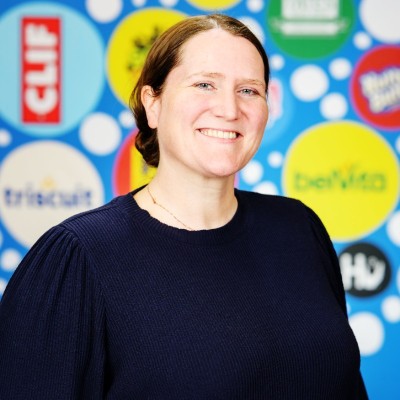
Jennifer Ballou
Reach has always been the easiest metric to sell internally, and often the hardest one to tie back to business results. For years, sports marketing operated on a relatively simple equation: more impressions meant more value. Logos on stadiums, television exposure, and media reach were enough to justify significant investments. Today, that equation is changing. As the sports ecosystem matures and marketing budgets face increasing scrutiny, brands are asking a different question: not how many people saw a partnership, but whether it changed consumer behavior.
Few marketers sit closer to that shift than Jennifer Ballou, Senior Partnerships and Portfolio Manager at Mondelēz International. Ballou oversees partnerships across some of the company's largest cultural platforms, including the NCAA, NBA, Nintendo, and Disney. Her team's responsibility extends far beyond awareness. Every investment is expected to drive measurable commercial impact, whether through retail conversion, consumer engagement, first-party data acquisition, or retailer relationships. At the center of Ballou's approach is a belief that fandom is one of the most powerful forces in modern marketing.
"Fandom is very emotional. It really does tie back to your identity," Ballou says. "When people identify with a team, an athlete, or a cultural moment, they're choosing to be a part of that community." That emotional connection serves as the starting point for every partnership evaluation. Ballou assesses opportunities through three lenses: cultural relevance, ecosystem integration, and measurable business impact.
From culture to commerce
For Mondelēz, success isn't simply about showing up in culture. It's about creating a connected journey from fandom to purchase. "The strongest partnerships don't interrupt fan behavior," Ballou says. "They become part of it."
For Ballou, what ultimately justifies an investment is the path from cultural relevance to commercial impact. Visibility alone isn't enough. The goal is to create a seamless connection between the moments consumers care about and the decisions they make at shelf, and athlete talent plays a critical role in that equation. Talent helps transform sponsorships from brand associations into something consumers can genuinely connect with, creating a bridge between fandom and purchase behavior. "Bringing in our athlete talent gives us authenticity and helps bring the brand to the front of consumers' consideration sets," Ballou explains. "Then, when they're shopping in the store, we have big point-of-sale units that reinforce that messaging and act as a point of disruption that reminds them to purchase."
Scrapping the script
One of the most important lessons Ballou learned came during Mondelēz's first companywide Name, Image, and Likeness (NIL) program. Like many brands entering the space, the team's initial instinct was to approach athlete content the same way they would a traditional commercial production: carefully scripted, tightly controlled, and highly managed. It didn't work well. Consumers immediately recognized when content felt overly produced, making it less engaging. The experience forced a shift in mindset. "We've gotten to the point where it's not just an endorsement deal," Ballou says. "It's much more of a creator mindset."
Rather than treating athletes like actors, Mondelēz began selecting athletes whose personal brands naturally aligned with its portfolio and allowing them to communicate in ways that felt authentic to their audiences. The results reinforced a broader industry trend: relevance often outperforms control. For Ballou, NIL isn't simply about borrowing an athlete's audience, but about creating content that feels native to the communities brands are trying to reach. When athletes engage with fans in their own voice, the brand becomes part of the conversation rather than the subject of it. That same philosophy extends to Mondelēz's experiential strategy.
At events like the NCAA Final Four Fan Fest, the objective isn't simply sampling products or generating impressions. The focus is creating experiences that deepen engagement and give consumers a reason to interact with the brand in meaningful ways. "We're very intentional," Ballou says. "Is there a game they can play? Are they having fun? Are they creating memories with their friends and family?" The goal is not to insert the brand into an experience. It's to enhance an experience consumers have already chosen to participate in.
Building the loyalty engine
Those experiences serve another purpose beyond engagement. They create opportunities to build ongoing consumer relationships. Ballou views loyalty less as a rewards program and more as a relationship engine. Every activation, sweepstakes, and fan interaction creates an opportunity to better understand consumer preferences and deliver more relevant experiences in the future. "If you're thinking about it from a consumer standpoint, what consumers really want is access and personalized messaging," she says. "Being able to have enough information on someone to personalize that message so that it's relevant for the consumer is key."
For Ballou, the future of loyalty is rooted in relevance. Consumers increasingly expect brands to understand their interests, preferences, and behaviors rather than delivering one-size-fits-all communications. One of the biggest misconceptions in sports marketing, according to Ballou, is assuming that league rights alone create consumer connection. They don't. League partnerships create access. Talent creates emotional relevance. Fans don't build relationships with contracts, sponsorship agreements, or media packages. They build relationships with players, teams, and stories. That's why Ballou believes brands need to think differently about partnership economics. "When you're partnering with a league, it's important to understand exactly what you're buying," she explains. "A league investment is one thing. A talent investment is another."
The distinction matters because each serves a different purpose within the ecosystem. League partnerships provide credibility, scale, and access to assets. Athlete partnerships bring authenticity, relatability, and cultural relevance. The strongest programs combine both. As sponsorship strategies continue to evolve, Ballou believes the future belongs to brands that build complete fandom ecosystems to connect content, talent, retail activation, loyalty, and data into a single consumer journey rather than treating them as separate initiatives.
The value Venn diagram
Measurement remains a critical part of that conversation. While awareness and engagement remain important, Ballou's team ultimately evaluates success through a commercial lens. Programs need a clear path to conversion, whether through retail activation, first-party data capture, consumer engagement, or repeat purchase behavior.
For Ballou, the strongest partnerships create value for both sides. She often visualizes partnership strategy as a Venn diagram. One circle represents the brand. The other represents the partner. Most marketers focus on the overlap: the shared values, audiences, and attributes that create authenticity. Ballou believes that's only half the equation. "The overlap is where authenticity lives," she says. "But the white space is where growth happens."
In her view, the true value of a partnership isn't reinforcing what a brand already owns. It's accessing audiences, capabilities, and opportunities that would otherwise be out of reach. Because the future of partnerships isn't about sponsorships. It's about building fandom ecosystems that convert cultural relevance into lasting consumer relationships.