Blueair Structures Its Sports Strategy Around Layered, Purpose-Built Partnerships
Lara Kerbaj, Chief Marketing & Growth Officer at Blueair, is building a layered sports strategy that balances authenticity and scale.
Make brandbeat one of your go-to sources on Google

We really wanted to do two things: build an authentic story that brings humanness into these products and to reach mass crowds in pop culture, but in a way that still feels true to the brand.

Lara Kerbaj
Sports marketing comes with a high price tag, and for mid-sized brands, buying into standard arena placements can burn budget without delivering meaningful impact. Blueair, a Unilever brand, approached the space differently. As it expands from air purifiers into a full sleep and wellness portfolio, the brand needed a smarter way in. The answer was rooted in utility: athletes depend on controlled environments to recover and perform. This insight now anchors a broader activation strategy, where out-of-home, in-arena, social, and experiential channels are layered differently depending on the partnership.
At the center of the strategy is Lara Kerbaj, Blueair's Chief Marketing & Growth Officer. Kerbaj has spent more than a decade managing global portfolios at Unilever, including Dove Men+Care and the Axe/Lynx masterbrand. Her background informs her approach to sports marketing, which favors precision over scale. Rather than buying into a standard sponsorship package, she built a phased model of targeted partnerships designed to create distinct positioning.
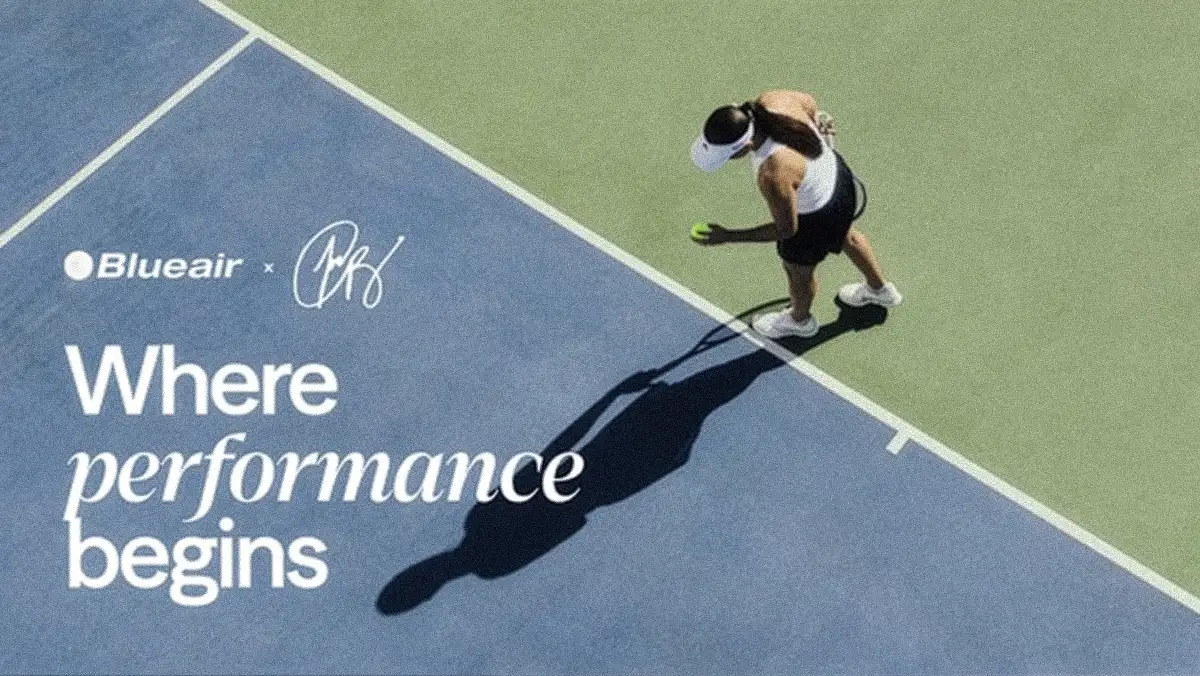
"We really wanted to do two things: build an authentic story that brings humanness into these products and to reach mass crowds in pop culture, but in a way that still feels true to the brand," says Kerbaj. The brand's collaboration with tennis player Jessica Pegula is designed as a content-led storytelling vehicle, using cinematic assets shot at her home to drive social performance and build emotional connection. By contrast, its partnership with the New York Knicks is built for scale, combining out-of-home, concourse activations, a suite takeover during the April 9th Celtics matchup, LED signage at Madison Square Garden, and integration into the team’s digital ecosystem through the "Game On" series. Together, they form a layered activation model, with each partnership serving a distinct role.
Serving up authenticity: Already a product user on tour, Pegula brought a clear use case to phase one of the strategy: while match conditions are unpredictable, recovery environments are not. Instead of relying on traditional ads, Blueair followed her schedule, activating at events like the BNP Paribas Open and extending into moments around the US Open. The brand supported her routine in real time, shipping purifiers and humidifiers as needed, while anchoring the narrative with a cinematic hero film shot at her home in Boca Raton. Short-form video, social content, and behind-the-scenes moments translated into stronger engagement and improved results. "When we would shoot her organically, it would just perform well," Kerbaj notes. "Our customers also reacted really well to it because we're in the news, athletes are getting our product. Our search and Amazon ads started working better because the content was very authentic."
With the Pegula partnership proving its impact, Blueair moved into phase two. The shift required a different approach, trading intimacy for scale and expanding into physical presence and broader visibility. The brand evaluated multiple teams before selecting the New York Knicks, a choice driven by both market fit and operational strength, including a strong presence in New York, an existing creator network, and the cultural reach of Madison Square Garden. "I spoke to every NFL, NHL, NBA, and soccer team in the US to find our voice," explains Kerbaj. "When we got to the Knicks, it made sense because New York is one of our top markets in terms of sales, pollution, humidity, dryness, and people wanting to experience fragrances to help them sleep better."
Clearing the air: Blueair didn’t try to outspend the competition, it changed the terms. The brand announced their role as the official Air Care Partner of the New York Knicks, carving out a defined role inside Madison Square Garden without competing directly with big-name sponsors. In-arena activations, a suite takeover during a Celtics–Knicks matchup, and concourse presence are paired with CTV, Amazon Prime, and citywide visibility to extend the story beyond the venue. "When you're talking to the Knicks, you're competing with huge brands like Lexus and Chase that pay millions and have been with them for ages," Kerbaj says. "Approaching the partnership from an air care point of view shows the team cares about the air their players breathe, and it gives us the awareness that we need."
Cruise control: In moving from an outdoor, individual sport to an indoor team game, the practical through-line remained exactly the same. With Pegula, the message was "control what you can” the night before a match. With the Knicks, it evolved into "control your conditions" in the environments where players train, rest, and recover. With the Knicks, the team leaned harder into social amplification, arena signage, and OOH, recognizing that the team’s brand already enjoys massive name recognition. "The whole idea of Jess's story was about control what you can, and we continued that story with the Knicks," Kerbaj explains. "We took it to the next level with control your conditions, because the Knicks is all about controlling the environment and the conditions you're in to play your best."
Looking ahead, Kerbaj is defining a third phase focused on emerging talent and underrepresented segments, including increased investment in women’s sports. The move aligns with a broader shift in the market, where women’s sports advertising is moving from cultural momentum to measurable performance. At the same time, Blueair is building its sports strategy with a global lens. While North America remains its largest market, partnerships in tennis and basketball provide international reach, allowing campaigns to extend across Asia and EMEA. Activations are being adapted into a repeatable global model, with plans to show up around major moments like Wimbledon, even in markets without full-scale local programs.
Across partnerships, the approach stays consistent: integrate into the environments where athletes actually live, train, and recover, rather than relying on traditional sponsorship visibility. "Sports is the right approach for us," Kerbaj concludes. "Performance, recovery, and sleep are working really well. Now it's about continuing what's working and expanding our portfolio into more."