Instead of Leading With Listings, StreetEasy Is Selling the Experience of Being a 'Forever New Yorker'
StreetEasy and Mother built the 'Reserve Your Future' campaign around New York’s reservation culture, using 2046 bookings to transform emotional belonging into a participatory brand experience.
Make brandbeat one of your go-to sources on Google

We recognize these iconic neighborhood businesses play as much of a role in New Yorkers’ real estate decisions as StreetEasy has over the last 20 years. This city has a way of making you choose it over and over again.

Bridget Sullivan
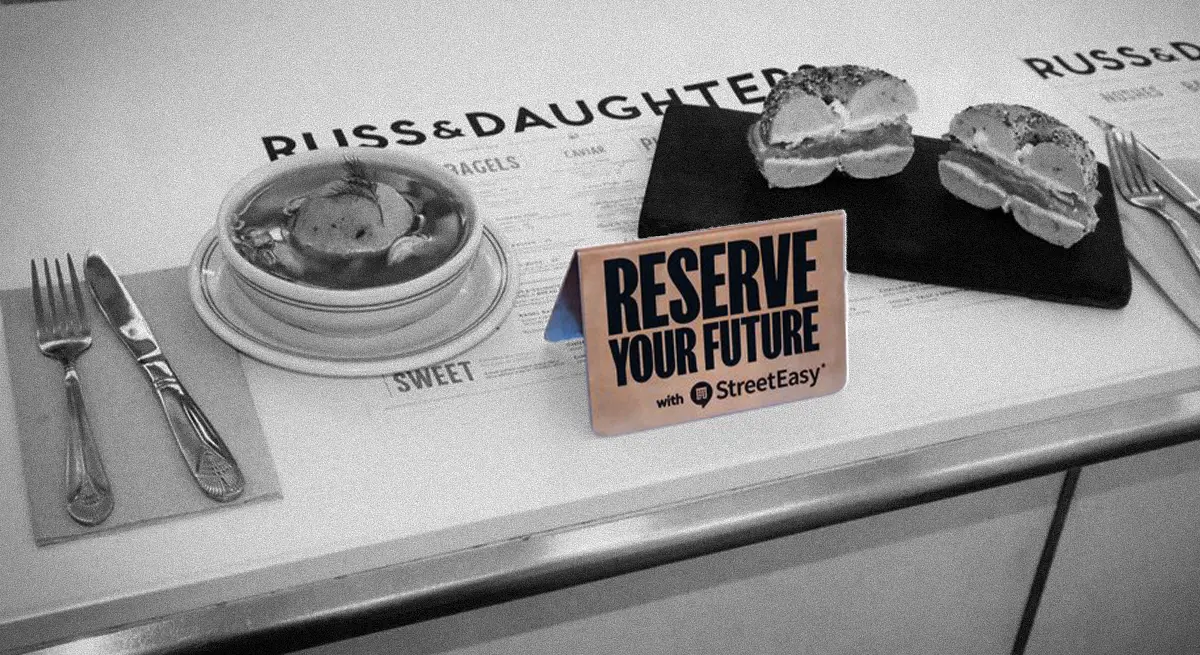
Booking a reservation in New York is its own kind of sport, complete with alarm drops, refresh strategies, and group-chat coordination over hard-to-get tables. StreetEasy, the NYC real estate marketplace, built its 20th anniversary campaign around that familiar ritual, stretching it 20 years into the future. The Reserve Your Future campaign teamed up with neighborhood institutions like Roberta's, Russ & Daughters, the Guggenheim, and Playwrights Horizons to let locals book reservations dated 2046, asking New Yorkers to picture a version of their life here two decades from now. Notably, the campaign never shows a single listing, rate, or square footage figure, an unusual choice for a category built on exactly those details.
Behind the campaign is Bridget Sullivan, Director and Head of Brand and Integrated Marketing at StreetEasy, whose background at SoulCycle and ELOQUII centers on building brands through culture rather than campaigns alone. Working alongside her is the Mother New York team responsible for concept and execution, including Evan Carpenter, Group Strategy Director, Nicole Rousseau, Business Lead, and Eric Mouton, Creative. Together, the group decided the 20th anniversary was the right moment to find out what would happen if a major New York real estate brand barely talked about real estate at all.
"When you're choosing where to call home, you're also choosing where to build a life. We recognize these iconic neighborhood businesses play as much of a role in New Yorkers' real estate decisions as StreetEasy has over the last 20 years. This city has a way of making you choose it over and over again," says Sullivan. Competing on rational search tools alone was never going to be where StreetEasy carved out distinction as a single-city platform. Its New York-only focus opened up a different lane entirely, letting the brand speak to what it actually feels like to stay in the city rather than just how to find an apartment in it.
A reservation worth the wait
For many New Yorkers, choosing a home in the city is also a choice about the kind of life they want to build around it. StreetEasy's 20th anniversary campaign anchored itself in one of the more universally recognizable behaviors of that lifestyle, namely the reservation scramble for the city's hottest tables. Tying the brand's anniversary to a ritual New Yorkers already organize their weeks around gave the work an entry point that felt instantly familiar. "We know that these restaurants, bars, and cultural institutions are the places New Yorkers organize their lives around," Sullivan notes. "Setting an alarm specifically to get a reservation at the hottest spots is almost a universal experience in NYC at this point, and so this concept felt spot-on for our audience."
While much of real estate advertising tends to lean into urgency and scarcity, with countdowns on open houses and FOMO around fast-moving listings, Reserve Your Future runs in the opposite direction by leaning into anticipation. The 2046 date had real potential to feel heavy, weighed down by mortgage timelines and life decisions, so the team worked to keep the idea playful instead. The sweepstakes mechanic was the lever that pulled the concept back down to earth. "We wanted Reserve Your Future to be a declaration of your commitment to being a forever New Yorker, but we didn't want the idea of committing to the next 20 years to feel daunting or aspirational," Sullivan explains. "We didn't want it to feel entirely future-facing either. Every reservation enters a sweepstakes, and the winners get access to these places now, so there's an immediate payoff alongside the long-term promise."
Reserve Your Future is the interactive follow-up to StreetEasy's Be a Forever New Yorker platform, a creative through-line Mother has helped develop across other brand work. The February launch introduced the line, and the 2046 reservations gave New Yorkers a tangible way to act on it. Pairing the platform's emotional promise with a real-world ritual turned a sentiment into participation. "Reserve Your Future really brings Be a Forever New Yorker to life," says Sullivan. "We're celebrating our 20th anniversary, and committing to another 20 was the natural extension of the platform. You're not just watching someone else claim their place in this city, you're claiming your own. That's who StreetEasy is, and that's who this campaign is for: the New Yorkers going all in and never looking back."
The Forever New Yorker roster
The same thinking guided how the team approached its partner selection. Roberta's, Russ & Daughters, the Guggenheim, and Playwrights Horizons earned their spots not for name recognition alone but for the kind of staying power StreetEasy wanted to stand next to. Each had outlasted multiple eras of the city's evolution, making them living proof of the campaign's central idea. "We intentionally chose partners that have become these icons in New York City," Sullivan notes. "These are businesses that have survived economic cycles, cultural shifts, neighborhood changes, and they're still here, still packed, and still worth the wait. That staying power is its own kind of declaration."
On the agency side, Rousseau says those relationships were rooted in genuine admiration. The institutions were never positioned as backdrops for the brand's storytelling, but rather as collaborators who saw themselves reflected in the premise. The mutual recognition is what gave the activation its credibility. "Our partnerships in Reserve Your Future were all great, from our initial conversations onward," she notes. "We sought out institutions that genuinely embody the spirit of the campaign, places woven into the fabric of New Yorkers' daily lives. In a sense, we felt that the commonality among all these partners is that they, too, are committed to being Forever New Yorkers, not just the people who booked a reservation."
For Carpenter, the partner roster also gave StreetEasy a way to frame its own two-decade tenure as part of the same lineage. By aligning the brand with institutions that had already proven themselves to the city, the campaign positioned its anniversary as evidence of belonging rather than a marketing milestone. "As an iconic New York City institution ourselves, StreetEasy has the opportunity to create an activation that doesn't just make the case for buying in the greatest city on earth, but helps every New Yorker imagine themselves here for the long term, decades from now," he says.
Bot check, local edition
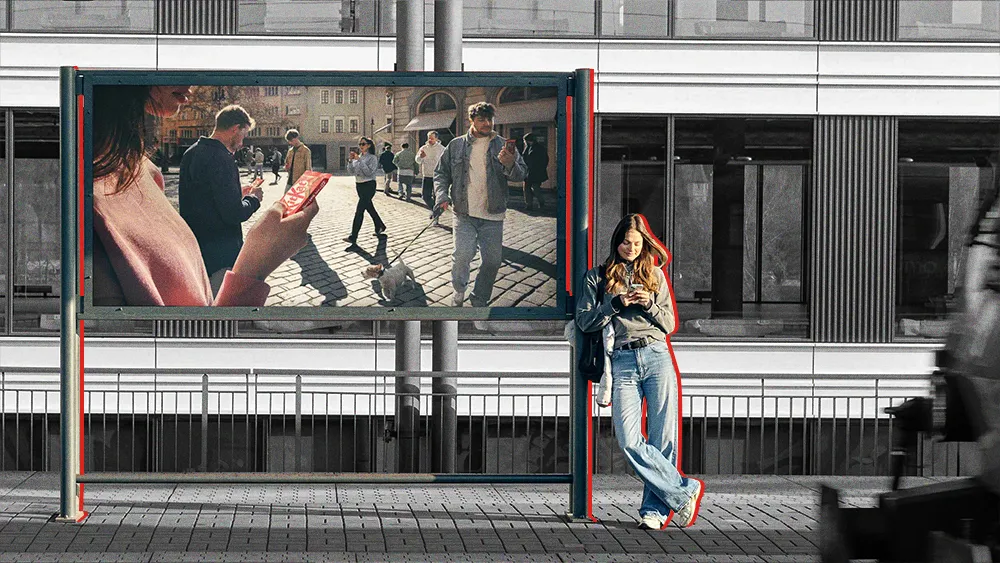
Turning a conceptual platform into a working site raised its own design challenge. The team needed reserveyourfuture.nyc to feel as familiar and frictionless as the reservation apps New Yorkers already use, while keeping the experience grounded in StreetEasy's visual world and broader OOH footprint across the city. The timing also coincides with a broader moment where OOH is starting to function like a localized operating system for urban storytelling, making the connection between digital and physical environments even more important to get right. "The story we're telling had to fit into the broader Be a Forever New Yorker campaign while also expanding on it, so the website's design language intentionally references the campaign's out-of-home," Rousseau explains. "Beyond that, we kept simplicity at the core of every decision, with an interface that feels intuitive, clean, and uncluttered, so nothing gets in the way of the idea."
Stripping the experience down put more weight on the smaller interaction moments. With the real payoff of a 2046 reservation living decades away, the sign-up flow itself had to carry some of the emotional load that future-tense rewards typically cannot. The team approached the form fill as an experience in its own right, designed to give users something to feel in the present. "The absurdity of booking a reservation for 2046 is part of the point. Leaning into that with some self-awareness is what actually invites the consumer in to feel it," says Sullivan. "It would've been really easy to just make a branded form that people fill out and click submit, and it's over, but if you're going to make people wait 20 years for the payoff, we wanted the sign-up to be an experience in itself. The CAPTCHA and pledge are little moments that catch you off guard and make you smirk, but they also reinforce the message we're communicating: you're not just a human, you're a New Yorker."
On the UX side, Mother treated every required field as another chance to reinforce the campaign's identity-driven premise. The CAPTCHA became the clearest example, transforming a familiar anti-bot mechanic into a tongue-in-cheek check of New Yorker bona fides, a small flourish in the spirit of experiential details that drive emotional ROI in out-of-home and digital work. "When we thought about the reservation booking process, we considered the steps you need to complete, like filling in your name, your email, your phone number, and proving you're not a robot," Rousseau notes. "Naturally, we thought, how about you have to prove that you're a Forever New Yorker instead? We also wanted the site to be self-aware of the absurdity of booking a reservation for 2046, and we looked for every opportunity to let that playfulness come through, especially in copy and design."
Letting the city talk
Skipping the standard category playbook works when you're already the default choice in a market, and StreetEasy's anniversary brief reflected exactly that position. The team could focus on deepening meaning rather than building basic awareness, in step with current pushes toward community-driven growth and hyper-local OOH plays. The team is tracking a mix of measurable signals and a harder-to-quantify question about brand standing as the campaign rolls out. "We're looking at a combination of factors like reservation volume, social engagement, and sentiment," Sullivan says. "The bigger-picture metric that's harder to quantify and more important is: does StreetEasy come out of this feeling more essential to New York, not just more visible? What we want is for them to feel that StreetEasy truly understands what it actually means to live here, and that we're as committed to this city as they are."
For Mother, the willingness to skip listings entirely came out of years of shared work with the brand, not a single campaign brainstorm. The agency points to the longstanding StreetEasy relationship and the earlier Forever New Yorker hero campaign as the foundation, backed by the brand's continued treatment of OOH as infrastructure rather than just media spend. "StreetEasy has always understood the value of brand work that connects authentically with its audience," says Rousseau. "Over the years we've worked together, we've pushed toward genuine New Yorker insights rather than surface-level gestures. An activation like this celebrates and builds on the hero campaign we launched in February, deepening that connection with the community." For Mouton, the work felt closer to a unified team than a traditional agency-client setup. "Ultimately, it came down to sharing the same vision and the same heartfelt intention: bringing this idea to life as a love letter to New York," he notes.
In the end, Reserve Your Future is StreetEasy handing the mic to the institutions New Yorkers already care about and seeing what comes back. The inversion gave the brand a way to demonstrate its place in the city without ever having to declare it, letting the surrounding cultural world carry the emotional weight that listings and rates simply cannot. For other category brands watching, the real lesson is the kind of brand confidence required to step back and let the world around you do the talking. "From the moment we shared the idea, StreetEasy grasped the power of reaching New Yorkers from a place of sincerity, and of being a little 'out there' when the idea called for it," Rousseau concludes. "We trusted that the message would resonate in whatever form it needed to take."