Physical and Digital Collide In Experiential OOH, Unlocking Emotion, Culture, and ROI
Siobhan Hardacre, Marketing Consultant and Cultural Translator at Moment & Meaning Consulting, says experiential campaigns work when audiences actively engage, turning viewers into participants and driving measurable results.
Make brandbeat one of your go-to sources on Google

Out-of-home is no longer just a broadcast channel. It's becoming a stage for shared cultural experiences, where brands move from being seen to being felt to being shared.
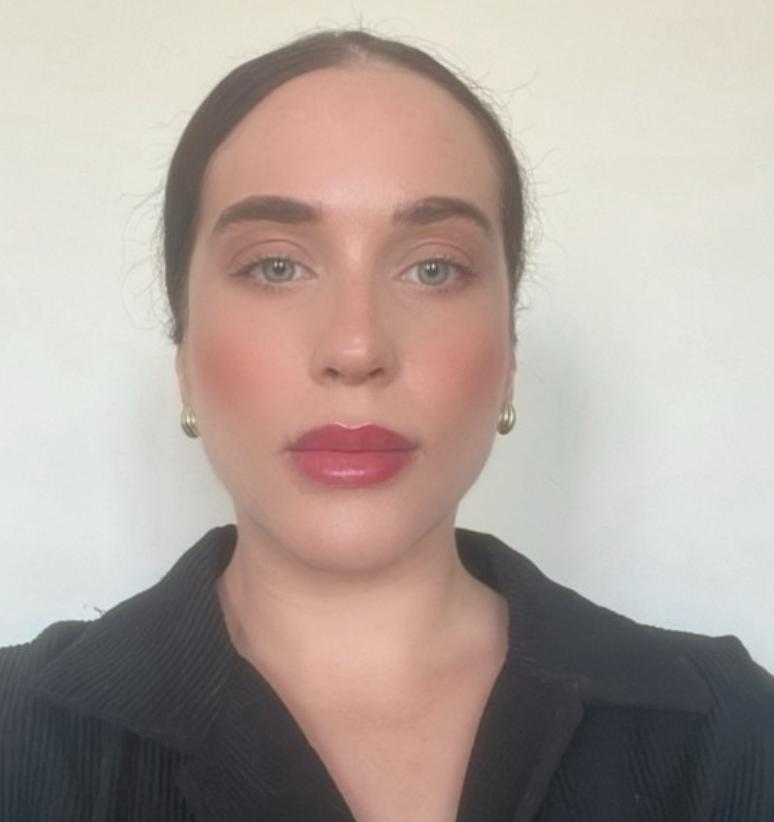
Siobhan Hardacre
Experiential out-of-home has evolved into a medium designed for emotional connection, shared cultural moments, and measurable business impact. In a fragmented, attention-poor world, immersive experiences are proving more memorable and more effective. For the first time, the industry has the data to prove their commercial value.
Siobhan Hardacre, formerly a Digital Transformation Manager at Unilever, is now a Marketing Consultant and Cultural Translator at Moment & Meaning Consulting, a brand, culture, and experience consultancy. She connects creativity, culture, and technology to drive long-term revenue, brand equity, and sustainable growth, with a particular focus on the place where digital and physical collide.
"Out-of-home is no longer just a broadcast channel. It's becoming a stage for shared cultural experiences, where brands move from being seen to being felt to being shared," Hardacre says. Brands face a new challenge: capturing attention when audiences are scattered and overloaded. "The issue is connection. Audiences are fragmented, pushed into niches, and overwhelmed with information. They are seeking collective emotional resonance and belonging." Addressing this requires an approach that reaches audiences together, not separately.
Connection gap: OOH is "one of the last truly shared media channels that everyone sees at the same time in the same place," she explains, making it uniquely powerful, but showing up isn’t enough. "Consumers want brands to entertain, inspire, and add value. Passive ads are easy to ignore. Experiences are hard to forget and easy to share."
Measurement catches up to ambition: Experiential OOH has long struggled with attribution. "We've always focused on reach and impressions. Understanding what people actually did in response has been extremely tricky. Partners like System One have built frameworks to test emotional responses. We know that the more an ad spikes emotionally, the more it drives sales, brand equity, awareness, and memory," Hardacre adds. Crucially, this data now ties to business outcomes. "You can run brand lift studies, test in real time and measure over three to six months how it impacts conversion, margin, and the P&L."
Ads that stick: The pattern is clear. Hardacre highlights that, "Every ad that spikes with high emotion is never down on long-term commercial impact." For an industry long struggling to justify audience-focused initiatives, she calls it a turning point. "It's not just a nice-to-have. There's a real commercial bottom line. Making people feel good and building community feels organic and authentic, but it's also good business." With these insights, the link between audience engagement and long-term business results becomes clear.
Turkish Airlines partnered with Refik Anadol, an artist who uses data to transform spaces through projected art, creating moments that show what happens when feeling, not selling, drives strategy. "The brief was, how do you make people feel travel? Travel is emotional, whether it's seeing family, escaping, experiencing culture, relaxing, or rewarding yourself." The concept came to life through projections across the space.
Heart of adventure: "They previewed this at Art Basel 2024, using the building and projections to show travel’s emotions: waterfalls, birdsong, food, community, and destinations," she emphasizes. "It's a fantastic example of bringing culture and art together. Showing how brands can speak in public spaces, doing the opposite of how most media behaves and bringing people into a magical world." The principle of making experiences tangible doesn’t just apply in public spaces; it can extend into people’s homes, where technology brings audiences closer to the story. A Ben & Jerry’s campaign with Colin Kaepernick proved it: "We created an experience where he appeared in people's living rooms, taking a knee and speaking directly to them in AR." The same approach extends across formats, from public installations to at-home settings, where audience engagement drives results.
The model scaled: Magnum partnered with Miley Cyrus for an AR concert, then drove viewers to retail. "After the concert, we sent a discount for Magnum at a retailer for a week. You'd be shocked by how many people joined Miley Cyrus in their living room," Hardacre says. This same approach translates to digital, where personal devices can deliver shared experiences at scale. Spotify Wrapped "contextualizes it to you, but makes it about us, something we share together." Dwell times hit ten minutes versus 54 seconds for a typical website visit. "You can't get that online in most FMCG categories." Returns shattered benchmarks. "We're talking ROIs of 11, 12, 13 times. If you get 2x ROI, that's strong. These results come from giving people more than a product."
Build the core: Experiential OOH proves its value, but success requires a clear platform and patience. Hardacre points to Persil's Dirt Is Good. "Families come in all shapes and sizes, laundry shouldn’t fall only on women. That's why we created Dirt Is Good: kids should go out, play, get dirty, and we'll take care of the stains," she adds. That platform anchored years of work. Free the Kids highlighted that children get less outdoor time than prisoners, while Changemakers, aligned with Greta Thunberg, engaged kids at protests. "We filmed them, talked to them. The messaging is different, but it's the same platform, an evolution. Find a single authentic nucleus and link everything back to it."
Meaningful experiences move brands beyond traditional advertising, resonating deeply while delivering measurable results. "Even strong platforms need time; real ROI comes around year three. That requires marketers to be directors, storytellers, artists, and cultural connectors, not just media buyers. The more you connect, the greater the brand and commercial return," Hardacre concludes.