Phone-Free Is the New Front Row: Inside Pinterest's Coachella Bet On Going Analog
Pinterest's phone-free Coachella activation signals a growing shift in how brands are thinking about digital engagement: sometimes the smartest play is encouraging people to log off.
Make brandbeat one of your go-to sources on Google


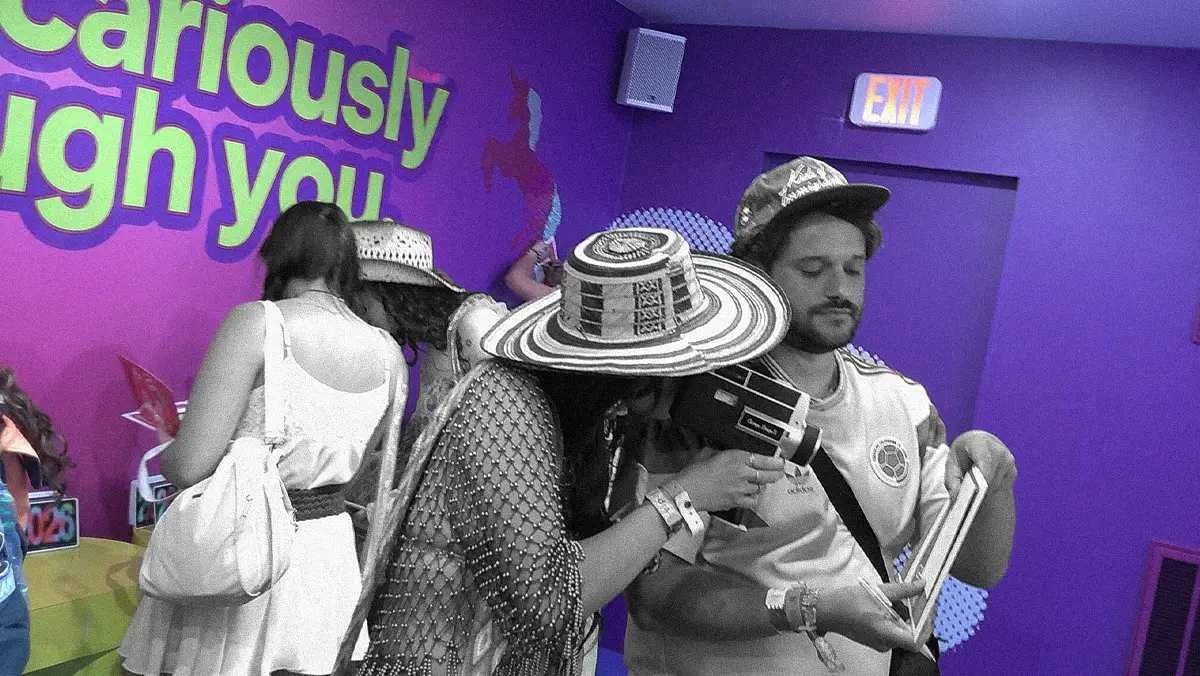
At a festival built around content creation, Pinterest did something counterintuitive: it asked people to stop creating content. The platform's 2026 Coachella activation used phone-locking cases to physically seal guests' devices as they entered, turning the space into a fully phone-free environment. Inside, attendees could make custom charms with friends, get beauty touch-ups featuring e.l.f. Cosmetics products, personalize stickers and postcards, and assemble a printed "Joy Guide," a junk journal-style keepsake filled with physical memories collected during the visit. The finishing touch: a rainbow lenticular photo, no screen required. Model and content creator Quenlin Blackwell, who stars in the campaign, chose to go entirely phone-free for her festival experience.
The activation is connected to a larger brand push. Pinterest also launched a 60-second brand spot stitching together home movies from the 1950s through the 1980s, positioning the platform as a bridge between digital inspiration and real-world living. Sara Pollack, Pinterest's Global Head of Consumer Marketing, framed the strategy directly: the platform's algorithm is built on signals that demonstrate action and engagement, helping users get inspired, then go do the thing, buy the thing, wear the thing, cook the thing. The phone-free Coachella experience is that philosophy made physical.
Pinning it offline: The campaign is backed by the platform's own data. Pinterest reports that searches for "analog aesthetic" have climbed 260%, reflecting growing consumer interest in offline experiences, tactile hobbies, and unplugged living. By designing an activation that removes the phone entirely, Pinterest is taking a trend it's already seeing on the platform and bringing it into the real world. They're creating an experience that reinforces the brand's positioning while giving festival-goers something they can feel, hold, and keep. It's a smart feedback loop: the trend lives on Pinterest, the activation lives at Coachella, and the memories go home as physical artifacts.
Off-screen, on-trend: Pinterest isn't the only brand leaning into the idea that less screen time can be a selling point. Heineken launched its Social Off Socials initiative encouraging real-life socializing and partnered with Nokia to create "The Boring Phone," a minimalist device designed to do only the essentials. Polaroid ran The Camera for an Analog Life, a campaign that celebrated analog photography as an antidote to digital noise. Svedka recently launched a Y2K-inspired flip phone aimed squarely at Gen Z's digital burnout. Each campaign takes a different creative approach, but the underlying bet is the same: consumers (especially younger ones) are actively seeking permission and encouragement to put their devices down.
The broader cultural context supports the instinct. According to a recent trend report, 27% of travelers now plan to reduce or shut off social media while on vacation, and 17% actively seek out trips that require disconnection. And the pattern extends beyond travel: from phone-free concert policies gaining traction to schools implementing device-free classrooms, the appetite for structured disconnection is showing up in more places and with more frequency.
Be here now: What makes Pinterest's approach particularly interesting is the paradox at its center. A social media platform is telling users to put down their phones, and the message is credible because it aligns with how the product actually works. Pinterest has long positioned itself as an inspiration-to-action platform, and the Coachella activation turns that positioning into something tangible. For advertisers, it's a reminder that brand activations designed around presence and participation can generate the kind of emotional connection that a sponsored post or in-app ad often can't. When people physically engage with an experience (making something, sharing a moment with a friend, assembling a keepsake) the brand association goes deeper than a swipe or a scroll.
Touching grass: The phone-free movement has practical implications for how brands think about media mix and experiential investment. As consumers increasingly value offline experiences, there's a growing opportunity for brands to meet them in physical spaces with activations designed around participation, craft, and sensory engagement. Experiential marketing, out-of-home placements, and community-driven events all benefit from this shift. The brands finding traction in this space are the ones building experiences that reward attention and presence, giving people a reason to be somewhere, not just something to look at on their way to somewhere else.
Three very different brands, one shared instinct: digital fatigue is real and growing. As more consumers actively seek moments of disconnection, brands that help facilitate those moments are earning something increasingly rare: genuine, undivided attention. And in a marketing environment where that resource keeps getting scarcer, knowing how to create it may be the most valuable skill in the toolkit.