We have this principle I call 'marketing that happens', and it’s really this philosophy where you can invite culture into the brand planning conversation and creatively meet consumers where they are.
 Todd KaplanChief Marketing Officer, North America @ The Kraft Heinz Company
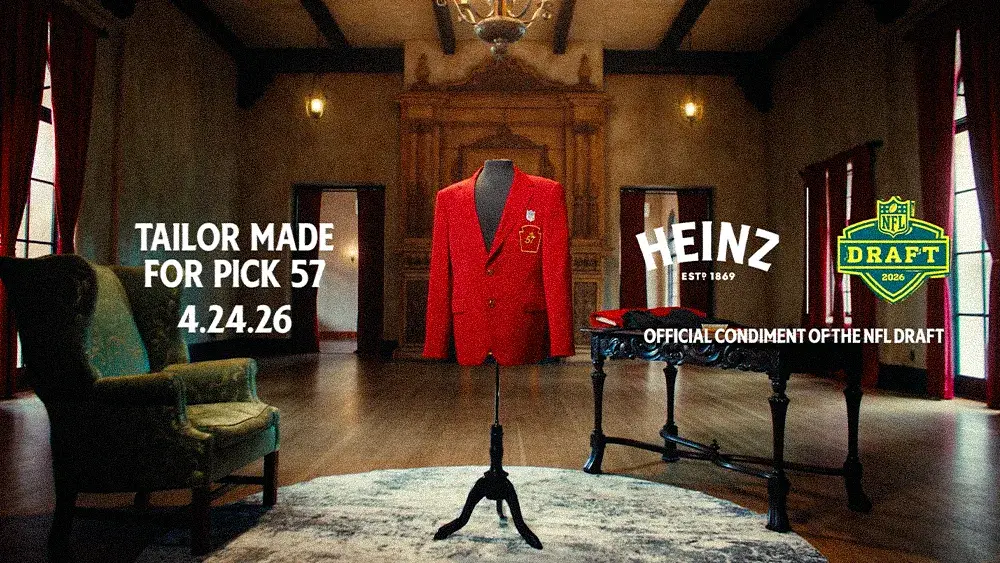
A logo on a stadium wall isn’t enough anymore, especially when everyone already knows who you are. For many brands, sports sponsorships still lean on "official partner" labels and static signage. But for a portfolio with near-universal household awareness, more exposure doesn’t always translate to more impact. At this year’s NFL Draft in Pittsburgh, Kraft Heinz Company took a different approach, using its own IP to step directly into the moment. Heinz built its activation around the 57th overall pick, turning the number long associated with the brand into a live hook. The Mr. 57 campaign and surrounding fan experience show how a legacy brand can rethink its marketing formula, shifting focus toward moments that feel specific, timely, and built for the context.
Todd Kaplan, Chief Marketing Officer, North America at The Kraft Heinz Company, brings a long track record of building brands at scale. During nearly two decades at PepsiCo, he led the Pepsi brand through sustained growth and helped launch products including Bubly and LIFEWTR. Now, he’s focused on translating that experience across Kraft Heinz’s portfolio, with an emphasis on making legacy brands feel more current and more connected to how audiences engage with sports today.
"We have this principle I call 'marketing that happens', and it’s really this philosophy where you can invite culture into the brand planning conversation and creatively meet consumers where they are," says Kaplan. Live sports still deliver scale, but Kaplan treats them as a canvas for context-driven ideas. With brands already present in 96% of U.S. households, his focus is on contributing something meaningful to the fan experience and building sponsorships around that contribution.
Playbook in a packet: In Pittsburgh, that philosophy shaped how Kraft Heinz Company approached out-of-home. The brand treated its citywide presence as a storytelling layer, using more than 150 placements to connect football language, location, and brand assets in ways that felt specific to the moment, like a Heinz packet placed where it would be torn open carried the word "break," echoing the call at the end of a huddle. Airport and transit placements used "red zone" messaging as fans arrived, linking the brand’s signature color to football shorthand. Rather than prioritizing raw impressions, Kaplan evaluates success through context and how each placement contributes to the overall experience. "We're not just expanding our marketing channels," he explains. "We're trying to embed our brands into the fabric of American sports culture, creating a deeper emotional connection that ultimately will drive longer-term loyalty for our business."
Beyond the billboard: The activation carried beyond traditional media into Heinz’s foodservice footprint. Through the Heinz Verified program, which works with restaurant partners that exclusively serve Heinz, the brand spotlighted local spots across Pittsburgh for visiting fans. The idea was to meet audiences where they were already spending time and make the brand part of that experience. In a landscape where standard commercial breaks are easier to ignore, Kaplan evaluates ideas based on the value they add in the moment. "Fans want authentic connection points," he notes. "If there is something that adds value or enhances the experience, and you can do it in a way that still says something about your brand, that is how you know you are winning."
Kaplan’s "marketing that happens" operating model is built around three truths (cultural, consumer, and brand/product) that together keep ideas grounded in what people are doing and feeling, not just what a brief dictates. He applies that framework as a shared playbook across channels, from sports to entertainment to retail, creating consistency in how ideas are developed and executed. It also reflects a broader view that physical environments can function as a connected system for brand building, where each touchpoint builds on the next.
Creative jam sesh: Kaplan built this model to address a structural bottleneck in how ideas get developed. Traditional agency workflows often separate thinking from decision-making, which can slow momentum and limit how ideas evolve once they’re presented. His approach is designed to keep ideas closer to the business context and allow for faster iteration from the outset. "We try to ground everything in our three truths, then we bring all our agencies, brand teams, and cross-functional partners internally together into a room and have a collaborative, creative jam session," he explains. "We go through tons of rapid-fire one-page ideas and see which ones are really sparking."
Let them cook: Kaplan calls this process "collaborativity," a way to surface ideas that don’t typically come out of a standard sponsorship brief. The goal is to create what he describes as "opt-in-level creative," work that feels relevant enough in context that fans choose to engage with it. That approach shows up clearly in the Wienie 500, an Oscar Mayer activation at the Indy 500. Instead of starting with a sponsorship package, the team began with the three truths (Memorial Day weekend, the cultural weight of the race, and the brand’s six Wienermobiles) and built from there. "We knew we needed to sell more hot dogs on Memorial Day weekend. There's a huge cultural race that happens that weekend, and we happen to have six Wienermobiles, so we decided to race them," Kaplan notes. "We had to start calling the track, talk to our safety people, and then we built from there. It becomes an infectious, iterative process."
Jiggle physics: Operating at scale introduces a different challenge: deciding which of Kraft Heinz’s many brands show up in specific moments. A newly signed five-year NFL deal spans 20 brands, but Kaplan is clear that not all of them need to be present every time. Instead, the team uses each brand’s distinctive assets as a filter to determine fit. That approach carries across activations, from the Jell-O Meter, which measures in-stadium fandom through the movement of Jell-O, to NIL collaborations like the Richie Saunders "rider" and a Kool-Aid x Nike x Ja Morant sneaker drop. Across each example, the focus stays on how the brand, the moment, and the execution come together in a way that feels natural. "Rather than force-fitting a message onto the eyeballs these platforms provide, the goal is landing relevant, contextual, and interesting creative that reaches an almost opt-in level," he explains.
Kaplan points to fit as the guiding principle. Heinz can credibly own "57" at the Draft, just as Jell-O owns the jiggle. Other brands in the portfolio show up around different equities, or sit a moment out, depending on whether they can add something meaningful to the fan experience. This philosophy carries through to how the company approaches the funnel. With products like Heinz Ketchup, Jell-O, and Oscar Mayer already in most households, the focus is less on trial and more on relevance, making people care more about what’s already in their fridge, especially during culturally charged moments like live sports. "We're just getting started. The good news is our products are already there," he concludes. "We just need to activate how we talk about them, why people care about them, how to modernize them, and how to think about them in different, more meaningful ways with our consumers. We're really starting to make some headway in doing that, which has been really exciting.”