Consistency Makes OOH a Memory Engine, Not a Line Item
Andrew Tindall, Chief Growth Officer at System1, is pushing brands to use OOH as a memory-building channel rather than a performance tool.

Make brandbeat one of your go-to sources on Google

Out of home is one of the last ways to truly reach everyone in a week, but too many brands are treating it like a targeted digital channel instead of using its broad reach and consistency to build memory over time.
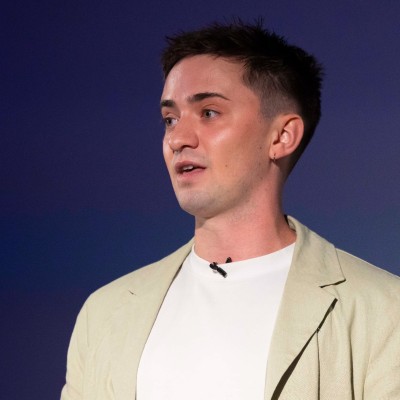
Andrew Tindall
As TV audiences fragment across streaming and digital platforms, OOH has become one of the last channels capable of delivering true mass reach. But at the exact moment its strategic value is rising, many advertisers are treating it like any other performance channel, optimizing, targeting, and confining it to the edges of the funnel. The brands seeing outsized impact are approaching it differently, using OOH as a long-term, creativity-led medium built to drive memory.
Getting scale right takes discipline and a clear understanding of what actually moves the needle. Andrew Tindall, Chief Growth Officer at System1, focuses on how brands turn attention into growth through behavioral science and creative consistency. At Diageo, he helped push Johnnie Walker into the top tier of GB whisky brands within a year, grounding his approach in proven results. His current work on Compound Creativity, developed with the Institute of Practitioners in Advertising and the Effie Awards Databank, explores how consistent creative execution drives long-term profit.
"Out of home is one of the last ways to truly reach everyone in a week, but too many brands are treating it like a targeted digital channel instead of using its broad reach and consistency to build memory over time," says Tindall. His push for consistency boils down to one simple fact: human brains evolve a lot slower than media channels. While ad loads have multiplied, the way people form memories and use mental shortcuts is broadly static.
Biology over billboards: Tindall grounds his thinking in durable consumer behavior. Preferences, mental shortcuts, and decision-making patterns have been shaped over millions of years, making them resistant to short-term campaign changes. That durability places more weight on consistency over time. Campaigns that stay in market and evolve gradually are more likely to reinforce memory and build familiarity than those that reset with each execution. "You can create iterations within that campaign with different assets, but as long as they're consistent, that's when you really start increasing the chance of actual profit, not just short-term revenue growth," he explains.
Less PM, more CMO: As ad loads increase across platforms, creative becomes one of the few remaining ways to stand out. OOH can play a central role when it’s used to reinforce a consistent, recognizable idea at scale, which requires a different way of managing campaigns. Tindall points out that teams often treat them as a sequence of projects, rather than assets that build value over time. "We need to move away from just doing new for new's sake, essentially being a project manager. We need to move towards being a true marketer, evaluating our campaigns and understanding where the investment needs to go."
For OOH to deliver meaningful impact, the foundation sits in strategy rather than execution. Driving connected commerce at scale depends on a unified positioning that holds over time, not one that resets each quarter. That positioning then needs to extend across touchpoints, ensuring a single creative idea can carry through billboards, mobile, and other channels without losing coherence. "There are very few brands that have any excuse not to aim for creative ideas, platforms, and positioning to last at least three years," Tindall says. "We need to evaluate whether that idea can stretch into other media channels, out-of-home, and creators. We need to start by thinking media-channel agnostic, because that's where our strategy is born, and then we can think about the execution."
The modeling mix-up: A long-lived creative platform still leaves room for experimentation, but those tests work best when they build on a consistent foundation. Measurement remains a key constraint, and standard econometric models often undervalue OOH, which can steer investment toward more easily tracked digital channels. Tindall notes that the picture changes when location data is included, bringing OOH’s contribution more fully into view. "Out-of-home sadly doesn't show up very well in econometric studies like marketing mix modeling. But if you include location data, it actually lifts the long-term ROI for out-of-home activities within these models by about 20%."
The 70-20-10 split: To manage uncertainty without stalling innovation, Tindall applies a 70-20-10 budgeting approach. Around 70% of spend is directed toward activity with demonstrated impact, supported by testing, brand lift, and ROI analysis. Another 20% is allocated to emerging formats with potential, such as dynamic or 3D OOH and new infrastructure-driven builds. What's left is reserved for higher-risk ideas that push creative boundaries and test new territory. "The other 10% of my investment should just be going into more crazy stuff, like hiring a celebrity to jump off a Times Square billboard."
Measure what matters: Marketers have more ways to evaluate OOH than they often use. Geo-experiments, such as running OOH in select markets, can provide a clear read on incremental impact, while brand lift studies and more accessible marketing science tools add additional layers of measurement. Taken together, these approaches make it easier to understand OOH as part of a broader system. High-impact campaigns are typically built to reinforce long-term platforms, and OOH can play a similar role, acting as a consistent, visible layer that supports other channels. That broader view of measurement, one that looks beyond short-term signals, is central to how Tindall evaluates effectiveness. "That's the job of creative measurement. Any good marketer should be bringing the consumer's point of view into this, and that's how we should be judging the creative effectiveness of campaigns."
OOH delivers its full value when it is anchored in a long-term strategy and carried consistently across touchpoints. The limiting factor is rarely the channel itself, but how disciplined teams are in applying it over time, and maintaining that discipline requires objectivity.
Tindall notes that teams can lose perspective after working on the same campaign for extended periods, making it harder to judge how the work is actually landing. Continuous creative measurement helps correct for that bias, grounding decisions in how audiences respond rather than how the work feels internally. "I think two things need to happen here," he concludes. "One is that brands need to be clear on who their target is, and what truth or insight-led positioning they're going to chase for the next ten years to change perceptions of their brand and grow market share. The second is to ensure they've got the right idea in the first place."