Digital Ad Fraud Hit $63 Billion. Out-of-Home Doesn't Have to Prove Its Audience Is Real.
Bots now account for 53% of web traffic, and digital advertisers pay to prove a person saw the ad. Out-of-home carries no such cost, and buyers are starting to price the difference.

Make brandbeat one of your go-to sources on Google


Bots accounted for 53% of all web traffic in 2025, up from 51% the year before, while human activity fell to 47%. Malicious bots alone made up 40% of the total, three points higher than a year earlier. AI agents have emerged as a third category, working through applications and APIs at machine speed and resembling neither a person nor a conventional bot. Brands are now buying attention on an internet where most of what moves is software.
Digital advertising has built a whole industry around the problem, and verification vendors, invalid traffic filters, viewability standards and accreditation audits all exist to prove that a person saw the ad. Advertisers cover the cost of that proof out of working media. Out-of-home carries no equivalent line item, because a billboard has no traffic to screen and its audience is whoever walks or drives past it.
One in twelve clicks
Invalid traffic averages 8.51% of paid media, or roughly $63 billion of global digital ad spend a year. Nearly one paid click in every 12 comes from something other than a potential customer, and rates vary widely across the major social platforms, running from 8.2% on Meta to 24.2% on TikTok. The count takes in coordinated bot activity, automated scraping, competitor clicks and accidental taps. Waste compounds from there, since the same data feeds the bidding and targeting systems that spend the next budget.
Scott Blair, Head of Client Development, North America at billups, has worked on both the agency and media owner sides of out-of-home across his career. His clients across the US, Canada and Mexico weigh the medium against paid social, search and connected TV, where verification costs come as part of the buy. The comparison comes up constantly in those conversations. "It's real," says Blair. "There's no bots, there's none of that fraud, and we don't have to deal with any of that in the out-of-home space."
Inventory with a street address
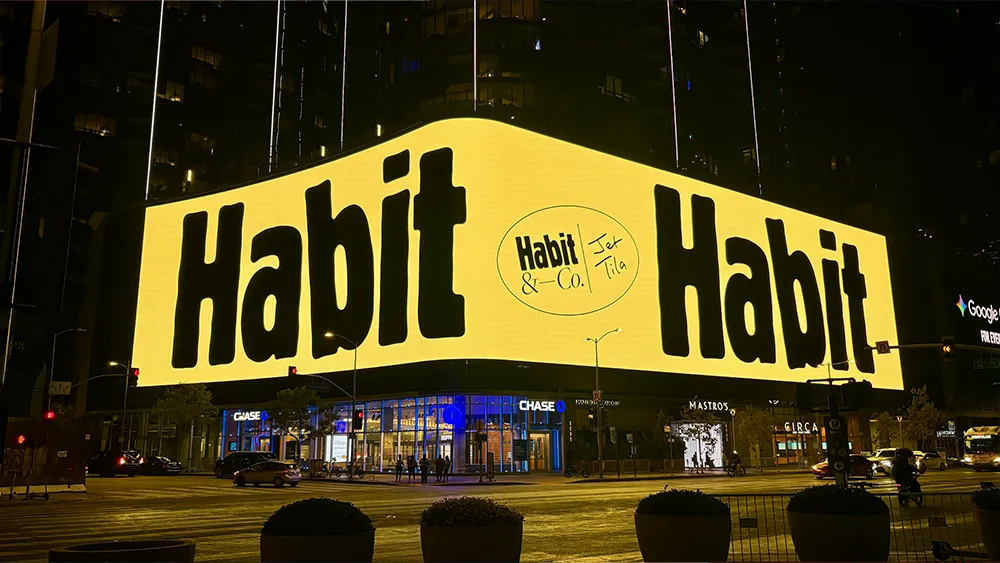
Out-of-home proves delivery on different terms, with media owners confirming postings through site inspections and photographs while digital screens log every play. Audience numbers come from mobile location data, travel surveys and footfall analysis, and brand lift studies measure what the campaign moved. None of that work involves filtering out non-human traffic. A screen in an airport concourse can't be loaded by a script, and a wallscape on a downtown building can't be clicked by a bot farm.
The format also sets the pricing, since out-of-home sells in blocks of days and weeks. A brand that buys a digital board at a major airport holds its position in the rotation for the length of the contract. Programmatic and traditional spot buys can run together across a single campaign, locking premium placement while cheaper inventory fills in the rest of the market. All of that money buys space in front of whoever passes, and none of it goes to fraud detection.
Record quarters, real audiences
US out-of-home revenue hit $2.12 billion in the first quarter of 2026, a record for the period and the twentieth consecutive quarter of growth. Revenue rose 7.1% against the same quarter in 2025, and spending from computers, software, and internet services jumped 139% over the same period. The companies that built their businesses online now rank among the fastest-growing buyers of physical space, and the quarter follows a record year that closed at $9.46 billion.
Consumer trust in digital environments has been falling for years, and the volume of AI-generated content on social platforms keeps pushing it down. Physical placement gives a brand a medium that can't be spoofed, blocked, or served to a script, and buyers are now weighing what each channel delivers for the money. "You've got the general consumer out there that from time to time suffers from digital exhaustion," Blair concludes. "Having a real world presence is a great complement to the other types of media brands are focused on."