Building Culturally Resonant Work Starts With Earning The Right To Participate
Jabulani Sigege, Group Executive Creative Director at Machine_, explains why cultural relevance is earned through observation, patient listening, and the lived experience of diverse creative teams.

Make brandbeat one of your go-to sources on Google

Everyone wants to be relevant and resonate, but are you actually being real? The problem starts when brands ride a wave before they have defined who they are and what grounds them.
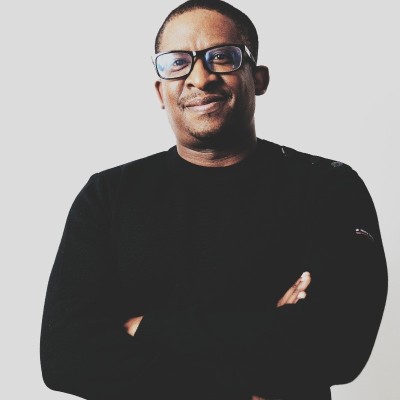
Jabulani Sigege
Advertising and culture operate in continuous, fast-paced exchange. As modern brands navigate marketing at the speed of culture, they constantly borrow from and feed into the communities they want to reach. The notable difference between connective campaigns and those that miss the mark usually comes down to whether a brand has earned the right to participate in the conversation it is trying to enter.
Jabulani Sigege, Group Executive Creative Director at Machine_, oversees the agency's creative output across its Cape Town and Johannesburg offices. Two decades in the South African advertising industry, plus a recent stint as a first-time awarding juror at Cannes in the audio and radio category, have given him a close view of the specific ways brands succeed or misfire when they try to enter cultural conversations. His working thesis is that the campaigns landing today are the ones that treat cultural relevance as an earned position, not an assumed one.
"Everyone wants to be relevant and resonate, but are you actually being real? The problem starts when brands ride a wave before they have defined who they are and what grounds them," says Sigege. Defining who a brand is only handles one side of the equation. The other side is knowing who the audience is, and most audiences today are made up of people who identify with several communities at once. A campaign that reads them as one flat group tends to land flat.
Earning permission to participate
The next question after knowing the audience is whether the brand has earned the right to participate in a specific cultural moment at all. Some categories require credentials before a brand can weigh in credibly. Moments like Pride Week are where audiences notice the difference between a brand that's been showing up for a community for years and one that arrived for the marketing window. Sigege's diagnostic for that decision runs on two questions: is it true to the brand, and is it authentic to who you are talking to. The failure mode he watches teams walk into is trusting dashboard signals when the audience signal contradicts them. Online metrics that make a campaign look on-track often miss the tonal read that makes it land in the room.
The other failure mode is a campaign with strong craft and innovation grafted onto an insight that doesn't belong to the brand. Sigege's argument is that the audience registers that mismatch through a fit test they run instinctively, and the brand loses the room the moment it fails the test. "I walk into a party and suddenly I'm proclaiming at the top of my voice that I'm this kind of person. Here I am, jumping up and down on the couch like Tom Cruise so everyone must look at me," he muses. "But is what you're saying actually right for the space? Are you the right person to even be saying it?"
The Coquí Alarm test
When brands invest the time to observe before speaking, the results extend past online engagement into measurable behavior change. Sigege's central example is Hyundai's Coquí Alarm campaign in Puerto Rico, a Cannes Grand Prix winner and the kind of work he uses as the standard when he judges. Hyundai, a South Korean automaker with rental fleet exposure on the island, identified concern around the endangered coquí frog and reprogrammed its vehicle warning alarms to play the frog's call. "What separates shortlist from bronze to silver to gold to Grand Prix is the strength of the ties, or rather, the lack of a string to pull and unravel," Sigege notes. "The work is undeniable. It's inevitable because you realize there could have been no other way to solve this thing."
Hyundai's investment in the coquí frog moved past sentiment and into behavior. Residents and prospective buyers walked into dealerships asking specifically for the vehicle with the coquí alarm, and the community sentiment around the brand moved in step because the campaign addressed something the community was already concerned about. "It also made a difference to their business," Sigege says. "The sentiment shifted simply because Hyundai paid attention and realized it was the right moment to step into this conversation."
The Coquí Alarm mechanic transfers to any brand entering a market where it starts as an outsider, including brands crossing into new geographic regions, navigating multicultural audiences, or connecting with generational segments like Gen Z. The common requirement across all of them is to enter the space as a listener before entering it as a voice, which is the operational difference Sigege draws between marketing at people and marketing with them. "Broadcasting is one way, talking to is a two-way conversation," he explains. "When you meet people and all you've been doing is listening, suddenly you become a safe space. That comes from listening and responding, not with grandiose gestures."
Cultural capital, lived experience
Sigege's approach also runs on the cultural capital already inside an agency's own team. He runs his practice in South Africa, a country with 11 official languages. His view is that hiring across that range functions as a research strategy, because each person on the team brings their own unique context. "People need to tap into what they've experienced and know," Sigege says. "How you see the world is different from anyone else. It's a little universe of its own, and nobody else can replicate that."
Cultural capital doesn't translate into good creative work on its own. Sigege's argument is that a unique perspective only becomes a creative advantage when the person carrying it has spent enough time developing what they can offer. The industry's push to bring in new voices rewards early contribution, while Sigege builds his approach around listening first. "In a society like South Africa, where certain demographics have been marginalized, they have insights that have never been seen before," he concludes. "I always encourage people to listen more than they speak. That way, when they do speak, it carries the weight and perspective needed."