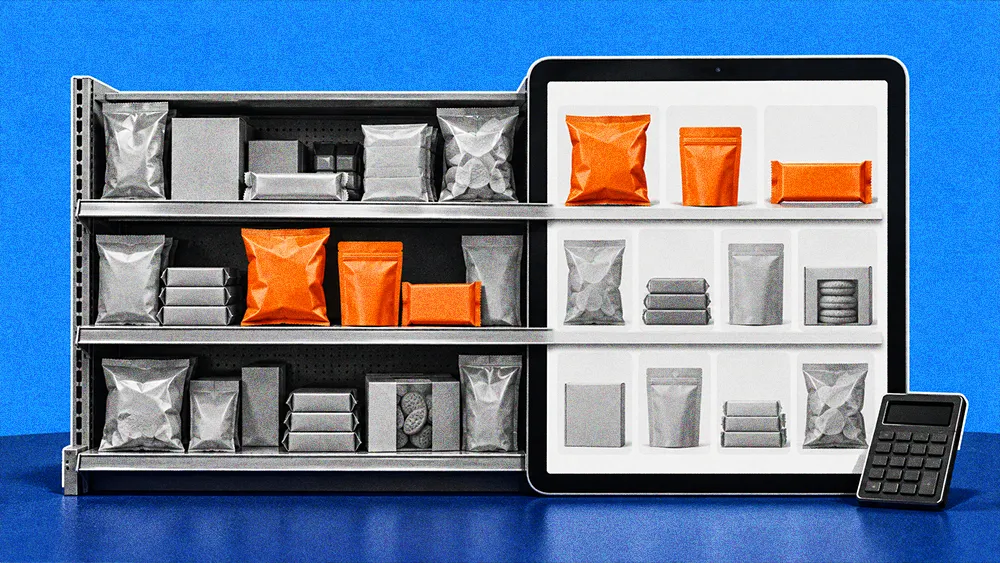

If you had to pay to secure visibility on the physical shelf, you wouldn't evaluate that investment on ROAS alone. In some cases, we need to think about retail media the same way because we're not just buying media, we're also buying visibility on the digital shelf.
 Kara FarnhamDirector, Commerce Media & Enablement @ The Hershey Company
The views and opinions expressed are those of the individuals and do not represent the official policy or position of any organization.
A brand buying search and display on a retailer's website is buying visibility, and the retailer grades that spend on return on ad spend. One study of retail media networks found the ROAS calculation varying by 63% from one network to the next, with 11 separate variables able to move the result. A consistent version of that figure works as a guardrail on efficiency, and it sits alongside a second question about what the placement does for the business.
Kara Farnham is Director of Commerce Media and Enablement at The Hershey Company, where she oversees the retail media investment behind brands like Reese's and Hershey's, along with the analytics and digital content that carry them on retailer websites. She stepped into the role in October 2025, after earlier assignments spanning media strategic investments, partnerships, and omnichannel operations. Her close to two decades in commerce and shopper marketing include six years at Mondelēz International.
"If you had to pay to secure visibility on the physical shelf, you wouldn't evaluate that investment on ROAS alone. In some cases, we need to think about retail media the same way because we're not just buying media, we're also buying visibility on the digital shelf," says Farnham. Farnham offers the comparison to frame a measurement question. A slotting fee buys a position, and the judgment is whether that position is worth what it costs. Retail media comes back graded on efficiency, a read she treats as necessary, and the comparison points at a second thing worth measuring, which is prominence.
Reading the return figure
Each retailer defines return on ad spend differently, and some leave the definition out of the reporting. Farnham's team sometimes sees returns reported without a note on whether they are incremental or attributable, so comparing performance across a portfolio of networks can quickly become unreliable. Optimizing toward any single measure also shapes where the next dollar goes, which is why Farnham wants the objective named before the figure gets used that way. "If we optimize to ROAS alone, we risk prioritizing keywords or purchases that may already have occurred rather than investments that are driving incremental growth," she says.
When a shopper buys through a paid search result, the brand's organic position on that retailer's site can rise with it, and the higher spot keeps working for every shopper who searches afterward. A standard ROAS calculation rarely reaches that organic lift, and brands run into the same gap when they try to put a value on earned visibility. "The value can extend beyond the initial conversion. Once a shopper purchases the item, it may become more prominent in their future shopping journey, creating visibility and repeat-purchase value that traditional ROAS may not fully capture," Farnham explains.
Measuring visibility on display
On search, the measure Farnham wants already exists. Share of voice shows what proportion of the results for a given term belong to the brand, a count of position on the page. Display has no equivalent metric today, so the read there is qualitative: which highly visible placements the brand is winning, how many sit on a primary page against secondary and tertiary ones, and how prominent the brand looks beside its peer group on a category or seasonal page.
Showing up well on display is a brand-side discipline before it's the retailer's. Todd Kaplan, Chief Marketing Officer, North America at The Kraft Heinz Company, treats presence as something earned through context rather than repetition. "If you're using it effectively, it's in the context of the city, the moment and the placement," he says of out-of-home, a rule he applies to any surface a brand buys. His test for a placement is whether the brand shows up "distinctively, authentically and consistently," so a shopper meets the same brand on every surface rather than a louder version of it on one.
Display is where Farnham looks for consistency across the entire funnel. As an example, a Reese's program tied to March Madness runs across national television and social, and it reaches stores on displays, on product, and sometimes on packaging. A shopper who met all of that offline should meet it again in the retailer's digital aisle, which is what puts display inside a 360 strategy.
Balancing two jobs
Paid placements can represent a significant share of the most visible positions in retailer search results, making paid search an increasingly important lever for brands seeking visibility against key category terms. Holding that position has a cost, and the upper-funnel job retail media is also asked to do has no measure in common with it, which makes weighing the two a matter of judgment. "The reality is that paid search is increasingly becoming the cost of maintaining visibility on the digital shelf," Farnham says. "With a finite budget, the challenge is determining how much to invest against two distinct jobs to be done: maintaining digital visibility and creating incremental demand."
The upper-funnel job is one some brands take on deliberately and measure on their own terms. Roderik Nuyens, Director of Marketing for North America Retail, Snacking at McCain Foods, describes a recent launch the team ran as a brand-building exercise before a sales one. "As a new brand, awareness may be low, but it gives us the chance to shape how people see us," he says. Rather than hold the work to immediate revenue, his team tracks social listening, impressions, and reach to see whether the brand is becoming part of the moment it wants to own. "Revenue targets may come later, but that's not the priority right now," Nuyens says, with brand equity the first thing he's trying to build.
Automation doesn't settle that balance, and Farnham is clear about where it does help. She sees real use for AI on content, producing and optimizing creative at a scale a person can't match, and on pulling reporting together so leading and lagging indicators can be read side by side. From her perspective, AI is only as effective as the clarity of the strategy behind it. "We're asking retail media to do two distinct jobs: support visibility on the digital shelf and maximize the demand we're creating across the broader marketing ecosystem," Farnham concludes. "The goal is to create a consistent experience across the shopper journey, in store and online, while ensuring the brand has the visibility it needs to compete effectively."