As Digital-Native Brands Move Outdoors, OOH Hits Its Measurable Moment
Scott Blair, Head of Client Development for North America at billups, explains why attention, attribution, and contextual creative are turning out-of-home into a core omnichannel layer.
Make brandbeat one of your go-to sources on Google

Attention has become the bigger focus. It used to be about driving as much reach and frequency as possible, but brands are recognizing how important it is to connect with consumers.

Scott Blair
Consumers are actively trying to unplug from their screens, and the marketing world is starting to build campaigns for a physical layer they had spent years treating as secondary. Attribution improvements, brand lift studies, and footfall tracking have each given out-of-home (OOH) advertising a measurable case that wasn't fully there five years ago, driving steady momentum across the category and pulling in budgets from both brand and performance teams.
Scott Blair, Head of Client Development for North America at billups, spent thirty years across advertising agencies, media buying services, and media owner companies. He returned to billups in 2025 after a nearly ten-year run at OUTFRONT Media, where he was VP, Regional Sales Director for the Midwest Team. Spending time at full service agencies, in the OOH specialist space, and on the vendor supplier side has given him a full view of the channel from every seat inside it. From that vantage point, the industry is finally moving past old assumptions about what physical ads can do.
"Attention has become the bigger focus. It used to be about driving as much reach and frequency as possible, but brands are recognizing how important it is to connect with consumers, which leads to consumer-generated content and more of a relationship with the brand," says Blair. Integrating physical media into proprietary marketing mix models is still uneven across the industry, but media companies are moving ahead of that curve on their own, adopting transaction-level attribution and campaign performance modeling to demonstrate how OOH lifts everything else in the mix. The next frontier is attention measurement, and a patent-driven, proprietary attention dashboard was launched by billups to give that metric the same operational footing the industry already built around older signals.
Stacking smart, placing sharper
The way buyers put OOH campaigns together is evolving alongside the measurement work. One of the most persistent objections Blair hears from brands entering major markets is the perceived cost of entry, which he counters by walking teams through CPM efficiency rather than absolute spend. From there, smart brands evaluating media tend to build across format types, mixing traditional spot buys with programmatic DOOH whether they are running a high-impact local campaign or targeting a business audience at an airport. "I always encourage brands to think about the full stack of out-of-home and how to plan it in a way that you're not putting all of your eggs in one basket, be it programmatic, static inventory, or place-based OOH," Blair says.
Media planning gets a brand into the right places, but creative is what makes the placement pay off. The medium's biggest structural advantage shows up when a message is built for one specific location, where the placement and the idea become inseparable in ways proximity and context uniquely allow. The strongest executions also tend to travel through social sharing, earned media, and consumer-generated content long after the physical run ends. "Some of my all-time favorite OOH campaigns have been those that are hyper relevant to the market or use the businesses in the immediate vicinity of the placement to make a bold statement. Loved the old Absolut campaign that featured the NYC apartment on a billboard in the shape of their bottle in Manhattan. Simple and genius. That contextually relevant opportunity is something you just can't do in other media. The really fun nature of the medium comes into play when you create a puzzle for the consumer to figure out. It makes them feel clever and part of the ad campaign."
Digital natives take to the streets
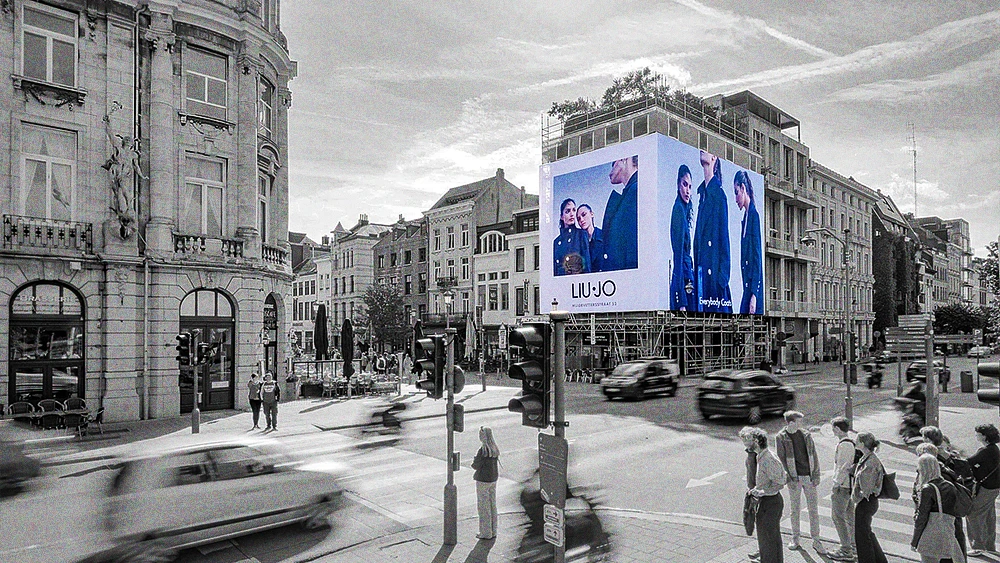
A new generation of digital-native marketers is moving OOH into their core planning, with brands that grew up entirely on digital channels now investing significantly in the physical layer they had previously overlooked. The pull is partly a response to declining faith in digital platforms, where bot traffic, opaque measurement, and general fatigue with online advertising have created an appetite for media that consumers can actually see and believe. "When direct-to-consumer brands blanket a city with wallscapes and transit media, that splash goes a long way in terms of launching a brand in a way that is trusted for consumers," says Blair. "Trust has eroded amongst consumers of all generations. Consumers are still going to want that escape. If we reward them with something fun and clever that adds real value to them, it's a win for all and this isn't just a fad. It's something that consumers innately really want as part of their day-to-day lives."
The combination of measurement maturity, contextual creative firepower, and cultural tailwind is what has moved OOH from a supporting channel into a media layer marketers now plan around from the start. The category has been building toward this position for years, and Blair sees the current moment as the arrival point the industry has been working toward. "I started my career as a media planner and got exposed to all the different things out there, but I found myself continuing to gravitate towards out-of-home because seeing your work up in the marketplace is really rewarding," he concludes. "It is refreshing to see the industry growing into what I don't think is just a moment, but is finally here."