
The opportunity of a challenger brand is that it gets to punch up almost always, and we happen to live in a society where people love an underdog. You get to take advantage of that in certain ways.
 Matt ShermanChief Marketing Officer, Pumpkin
Most challenger brands compete against media budgets they can't approach, and audiences give an underdog a certain amount of goodwill for free. Being liked gets a brand noticed, but a customer still needs a solid reason to choose it over others. In a category where the big brands all look and sound alike, being the exception is a reason on its own. Reaching everyone costs money, and a smaller budget has to work out which channels are worth paying for.
Matt Sherman is Chief Marketing Officer at the pet insurance company Pumpkin where he leads the brand, growth, and creative teams. He previously served as SVP of Brand Marketing and Omnichannel Sales at PetPlate, and also held a CMO and Head of Retail Sales position at Handsome Brook Farms. Earlier in his career, Sherman was Brand Director for smartwater at Coca-Cola and worked on Chobani's core yogurt business, after starting out in brand management at L'Oréal. He's also the founder of MSC & Partners, a brand strategy consultancy advising senior leaders on positioning and commercial execution.
"The opportunity of a challenger brand is that it gets to punch up almost always, and we happen to live in a society where people love an underdog. You get to take advantage of that in certain ways. Being an underdog is not a substitute for having a real point of difference from whoever you are punching up at," says Sherman. Pumpkin sells pet insurance against carriers it can't outspend, so Sherman looks for the places where a small buy still gets noticed. He starts with what the brand can credibly own.
A key point of difference
Sherman judges a challenger brand by whether it acts on the difference it claims. His example is Caddix, a cleat startup that makes studs that release under load to reduce non-contact injuries. The NFL fines players for displaying brands it hasn't licensed, but a quarterback wore the cleats with the logo showing anyway. Caddix covered the fine for a player it wasn't sponsoring, putting the company on record behind its own safety claim. "You have a key point of difference. You've got an attitude. You're going to step in here and do the right thing for somebody who can easily afford it," he says. "You said something big very quietly."
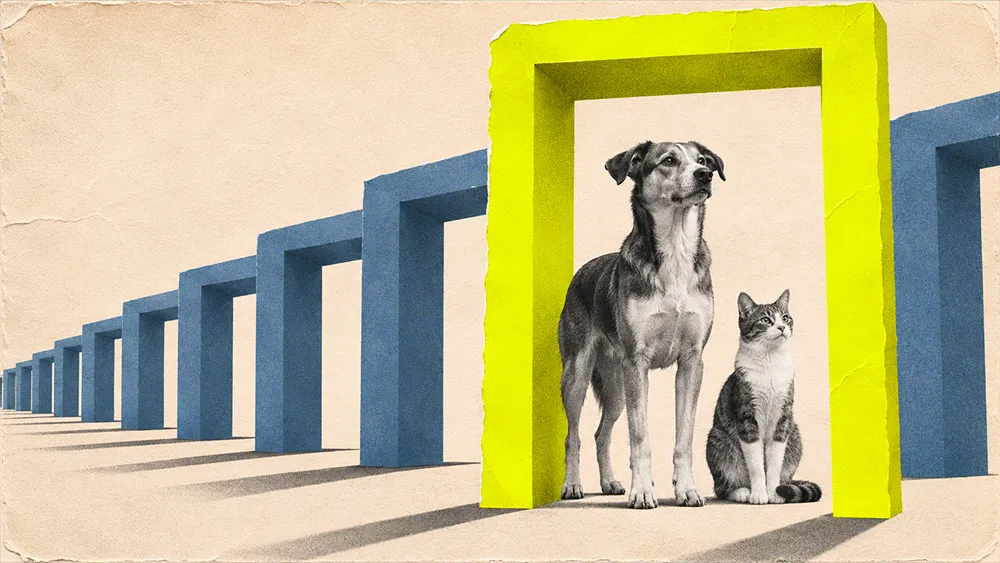
Insurance brands mostly use blue, and Pumpkin broke from that when it rebranded earlier this year, choosing Tennis Ball Yellow with black. Yellow is among the colors dogs and cats can see, giving Pumpkin a rooted reason for the choice. Sherman sees whatever a category has settled on, in color or in language, as an opening for a challenger willing to break it. "Find me a bank whose color isn't blue, or an insurance company," he says. "That's an opportunity to look and feel different."
Expectations by channel
Sherman divides the media plan by what he asks each channel to deliver. Performance channels answer for Pumpkin's growth numbers, and he's direct about why the standard there is firm. "At the end of the day, I'm in this seat so long as we are driving growth and policies, subscriptions, and renewals," says Sherman. "When I look at the channel mix, I have to be very conscientious about the ones where efficiency is the name of the game. I need it to be working smoothly and very hard."
Out-of-home, TikTok, and podcasts carry a different assignment, further up the funnel. Sherman names the objective as community, connection, and engagement, with earned attention as part of what he expects. "I do think that there's a media story here as well, so there's some earned potential here," he explains. "I don't nearly have the money that some of my competitors do." Sherman believes judging those channels by the performance numbers would end the experiments early, so he sets their expectations separately. "I'm intentionally not going to assign the same metrics and expectations to them, to allow the freedom of experimentation and to avoid the conversation of, 'Oh, what did it get you?'" he adds.
Linear television is where Sherman reaches widest, and he builds those spots knowing the audience is broad. The cheaper channels let him choose a location or a creator, so he aims at one customer specifically there. He says an influencer who already holds a Pumpkin policy makes a better partner for the credibility it carries with their followers. "As we get into some of those other channels, whether that is out-of-home location or influencer selection, I get to focus more and more on our muse, our ideal marketing target, because that's who I want to really see and identify with the brand," says Sherman. "Especially at this stage, I don't have the luxury of reaching them everywhere."
Adapted to the medium
A TikTok video and a television spot are different pieces of work, and Sherman keeps the subject underneath them the same. He says it's pet health and wellbeing in every case, with each format getting the execution it needs, and on out-of-home that means working from the hook. "Not every channel conveys our message in the exact same way, but if I laid out all of my content and creative, whether that is in performance TV or organic social or out-of-home or paid search, you should be able to recognize where we are in the funnel and what that message is," says Sherman. "It has to be consistent and coherent but adapted to the medium."
Color palette and tone of voice are what Sherman wants consistent across every piece, and a creative director he once worked with gave him the line he still uses. "I had an old creative director who was like, 'They don't have to look like twins, but they got to look like family,'" he notes. "That's kind of the way that I think about it."
Sherman is briefing next year's creative now, and he's keeping Pumpkin clear of the category's puns and soft imagery. "We have made the conscientious decision, starting with the rebrand that we launched, to move away from the cutesyness and be a little bit more honest," he explains. He wants that honesty pointed at something specific, and he describes pet owners weighing an animal's health the way they weigh a child's. "I think about my dog's health in a way that is increasingly similar to my daughter's health, in terms of what she needs and how I take care of her," he concludes. "Not just her physical well-being, but is she happy? Is she stimulated? What are we doing to really give them their best life?"