We don't need people to remember us just for the sake of remembering us. We need them to remember us when it matters.
 Hanna PanasiukHead of Brand @ Headway Inc
Consumer apps now compete against products making the same promises, and against rivals who understand paid acquisition just as well. Growth from capturing existing demand becomes harder as competition intensifies and customer acquisition costs rise. Building demand instead means knowing which moments put a consumer in the market, and landing as the option they trust when such a moment arrives.
Hanna Panasiuk is Head of Brand at Headway Inc, a consumer app company whose portfolio includes the book-summary app Headway and Nibble, a short-lesson "microlearning" app with over 10 million downloads. She came to the role from strategist and brand specialist posts within the company, and her earlier work includes agency strategy at Havas Village Ukraine. For Hanna, this is where brand building becomes an important part of sustainable growth. While performance marketing helps capture existing demand, brand building helps create future demand by establishing associations with the needs and situations that bring consumers into a category.
In performance-driven consumer app companies, however, brand building is often avoided or postponed because it is seen as expensive, abstract, and difficult to measure. Part of the problem, she believes, is how romanticized the concept has become. Brand is often perceived as something creative and emotional, rather than a strategic function with a clear business objective.
"We don't need people to remember us just for the sake of remembering us. We need them to remember us when it matters. When they're facing a problem our product can solve, when they're considering their options, and ultimately, when they're making a decision," says Hanna. In practice, she works back from the moments when a consumer becomes open to a category, and builds the brand work around them.
Associations first, advertising later
Hanna separates brand building from brand advertising, a distinction she says often gets collapsed. Building the right associations and establishing a position can take months, sometimes years. A team that waits until acquisition growth flattens to start building its brand is already too late.
It still has to learn its audience, run research, test what resonates, and build brand associations — all of which takes time. She weighs that slower pace against how quickly a performance team can correct a mistake. "You can turn off an underperforming ad overnight, but you can't turn off an association you've spent months building in people's minds," she says.
Early in a product's life, brand work means shaping the value proposition, defining the brand platform, identity, understanding the audience, and keeping the experience consistent across touchpoints. Investment in campaigns and larger brand projects grows once a product shows a sustainable business model. At that point, the team starts focusing on building branded assets like sound logos, cues that tell a consumer whose product it is.
Inside the Headway Inc portfolio, Hana has the brand team working a level above any single app, so each product's positioning is a decision instead of an accident. "It's not just about making each individual brand stronger," she notes. "It's also about making sure the entire portfolio can grow without competing against itself."
Curiosity, dug up
Brand plans at the company are informed by category entry points research, helping the team understand which moments and motivations bring people into the category.
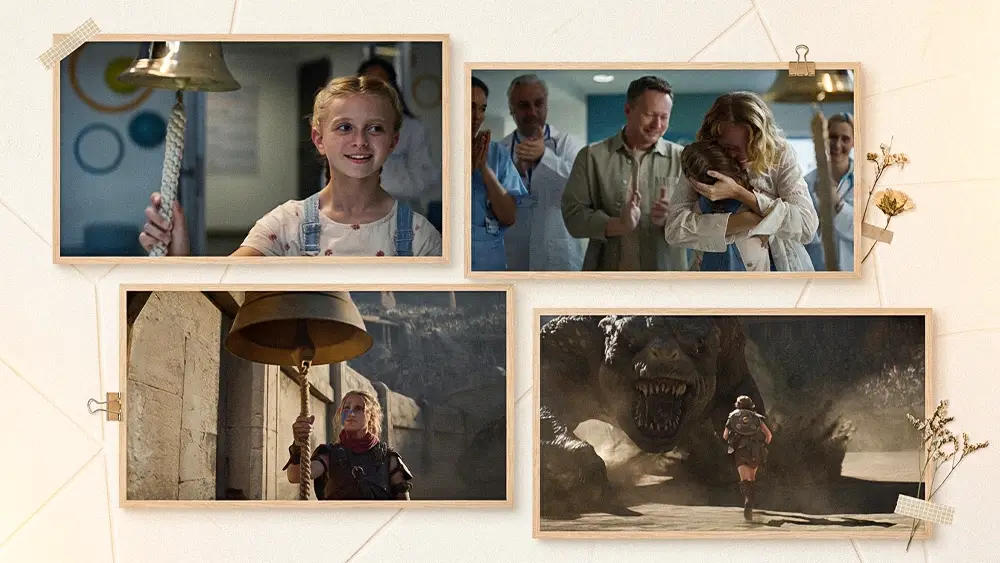
For Nibble, the brand's territory is moments of curiosity. This year's brand communication is built around helping adults rediscover the curiosity they often leave behind as childhood gives way to everyday responsibilities. "The most interesting part of category entry point research isn't just discovering when people might need your category," Hanna adds. "It's understanding which of those moments your brand has a credible reason to become associated with."
To bring this idea to life, Nibble collaborated with Max Klymenko, known for his viral Career Ladder series, and selected users who had dreamed of becoming archaeologists to experience their childhood dream. Together with DigVentures, they joined professional archaeologists at a Roman villa excavation in the Nene Valley. The project was documented by Max, while the discoveries and archaeological expertise are being turned into original interactive lessons for the app.
Hanna counts the dig as more than a single event, and sees physical touchpoints working best inside a broader brand strategy. "The experience itself might be limited in reach, but the content, associations, and stories it generates don't have to be," she says.
Reading a longer horizon
Brand effectiveness is sometimes reduced to measuring how consumers feel, but Hanna believes this is only part of the picture. She wants brand building to create the associations that bring an app to mind at the moment of decision. "Memorability doesn't always come from emotion," she notes. "And emotion alone doesn't guarantee that people will remember the right thing."
Hanna’s team tracks share of voice, mental availability, and associations with the relevant category entry points, alongside indicators such as branded search, traffic, and consumer behavior. Brand Lift and Search Lift studies help measure the impact of specific campaigns, while broader changes in brand associations and mental availability require a longer-term perspective. Projects tied to particular category entry points can also help align brand and performance activities around shared objectives.
Collaboration between the brand and performance teams at Headway Inc has evolved over time, with both sides developing a deeper understanding of each other's work and building greater mutual trust. Hanna’s share of it went into learning how performance marketing works, including its processes, its challenges, and the way its teams make decisions. She describes brand and performance as parts of one system that needs a shared language between them, and sees understanding each other's work as key to building mutual trust.
The two teams challenge each other's thinking, and Hannah counts that among the most valuable parts of the collaboration. "I don't think the goal is to move away from performance marketing. The goal is to build a brand strong enough that performance marketing doesn't have to do all the work," she concludes.