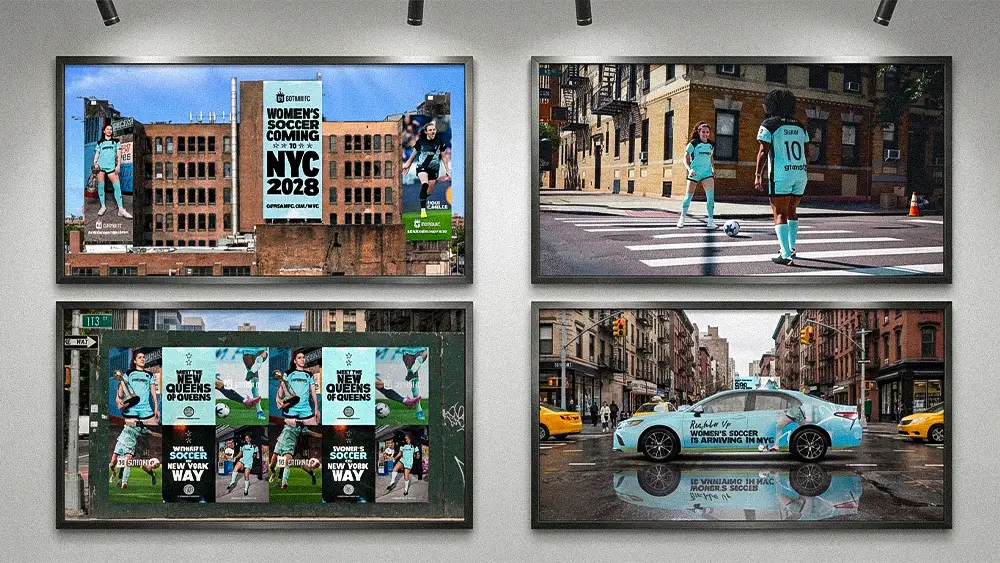
Out-of-Home Is Advancing As A Growth Engine In A Fragmenting Media Market
Marc Marienfeld, Managing Director Germany at billups, is helping scale programmatic capabilities across one of Europe’s most established out-of-home markets.
Make brandbeat one of your go-to sources on Google

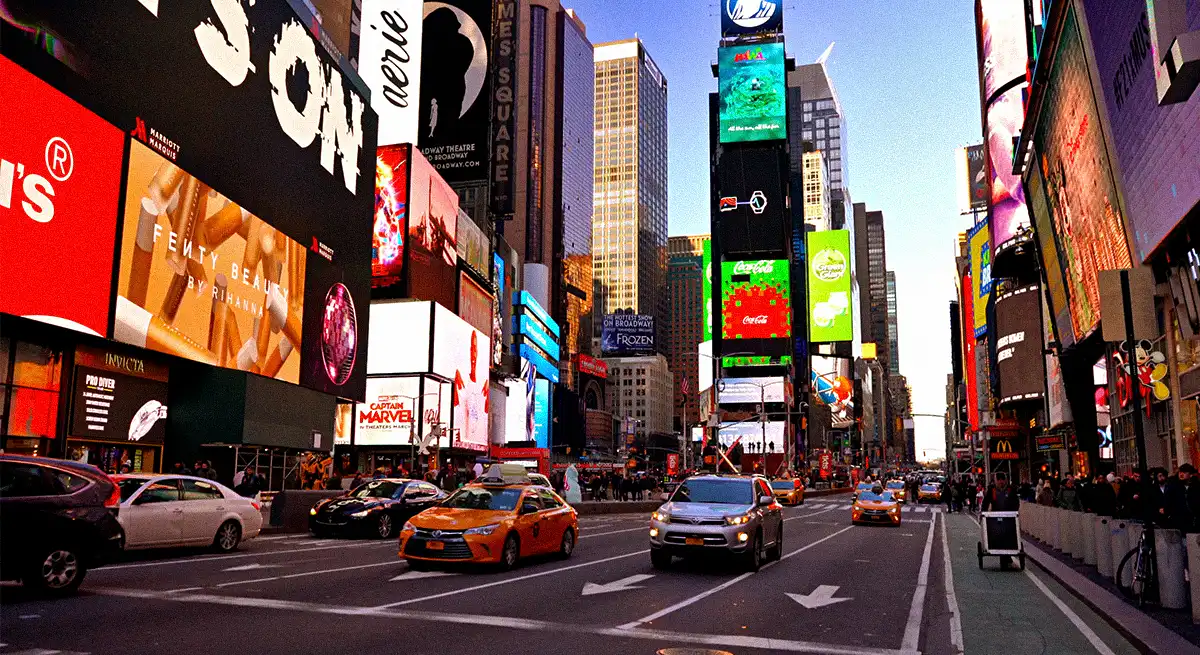
Out of home is one of the only media channels still growing, even if most channels are seeing decreasing investments. Last year, we hit the 10% mark of overall media market share for the first time, which is amazing.
Marc Marienfeld
As legacy media budgets tighten, out-of-home is becoming one of the few channels still capable of scaling growth. Global spend has climbed past $9 billion, but the real story is how uneven that growth looks across markets. Germany offers a useful case study. The country has one of the most mature physical footprints in the world, with dense networks of screens across major cities, but the infrastructure behind those screens is still catching up. Programmatic adoption remains relatively early, creating a gap between physical scale and buying sophistication that is starting to close while unlocking new growth potential in the process.
Marc Marienfeld, Managing Director Germany at billups, is helping translate that shift into market reality. With nearly two decades in senior agency roles, including CEO of Kinetic Worldwide Germany and leadership positions at Wavemaker and GroupM, he brings deep experience across both traditional and digital media. Today, he is focused on scaling programmatic capabilities in one of Europe’s most established out-of-home markets, connecting legacy infrastructure with more flexible, data-driven buying.
"Out of home is one of the only media channels which is still growing, even if the whole media industry is suffering and most channels are seeing decreasing investments. Last year, we hit the 10% mark of overall media market share for the first time, which is amazing," says Marienfeld. With linear TV fragmenting, a growing number of media planners now view OOH as one of the few remaining reliable options for top-of-funnel reach. Rather than dwelling on the decline of traditional television, many buyers are simply following the audience to the streets.
TikTok meets the street
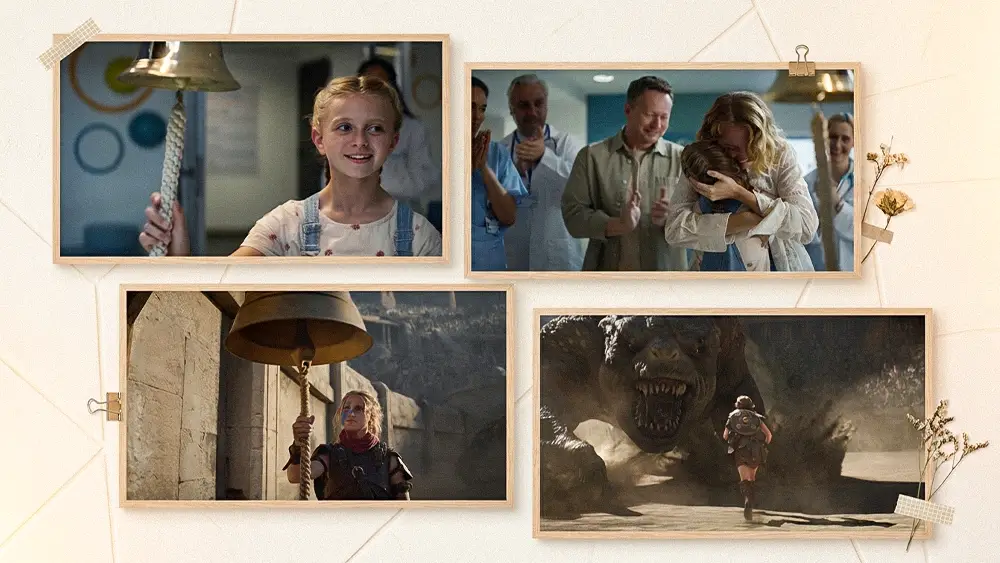
The transition to digital screens fundamentally upgraded the channel's utility. While traditional paper formats remain a staple, the lack of motion and susceptibility to weather historically kept certain premium, digital-first advertisers on the sidelines. Because urban centers are now mostly digitized, highly visual categories like luxury and beauty are leaning in. The wider digital out-of-home transition unlocks tactical advantages like day-parting, motion, and direct compatibility with social media formats. "Out of home is able to close the gap between social media and younger target groups because they share the same 16:9 format," Marienfeld explains. "This is really helpful because you can take TikTok ads and put them one-to-one on your out-of-home screens, especially in Europe with dCLPs."
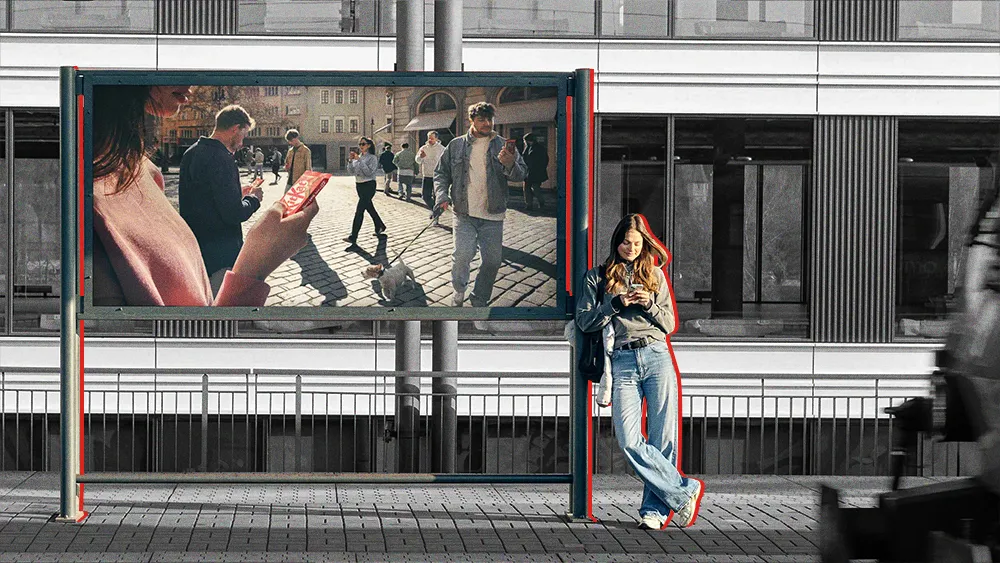
That reach advantage is becoming more pronounced as traditional channels fragment. Younger audiences, in particular, are harder to reach through legacy media, pushing brands to look for channels that still deliver consistent, real-world visibility. "OOH is the last surviving mass medium that we have because linear TV is dying," Marienfeld notes. "You get the best reach with out-of-home for younger target groups, especially 14 to 29. Everyone is outside every day, more or less, and if you ask younger people if they are disturbed by out-of-home advertising, they aren't. They like it, and they appreciate it."
OOH delivers the most value when it’s integrated into a broader media mix rather than used in isolation. Marienfeld frames it as a physical anchor within a programmatic strategy, where screens in the real world reinforce messaging delivered across digital channels. Brands are already experimenting with how mobile, audio, and public screens can work together to reach people across different moments in their day. Coordinating that effort requires shared audience definitions and frequency controls to avoid oversaturation. "I wouldn't tell someone to put all their money in an out-of-home-only campaign. It works best together with other media," he advises. "Whether it's TV, CTV, or other programmatic environments, you can have frequency capping and unified target groups across all channels."
Context is the creative
Because OOH meets people in specific real-world moments, like waiting for a train, walking through a city, or standing in line, it benefits from creative that reflects that context. Programmatic dynamic creative optimization makes that possible by adjusting messaging in real time based on factors like weather and time of day. Instead of a single static execution, campaigns can shift at the point of exposure to stay relevant to the moment. "If it's raining, you show a different ad. If the sun is shining, you show a different ad. If it's morning or evening, you show different ads," says Marienfeld. "It touches you when you realize a brand saw something change in the outside world and adapted to it. It makes you feel like they are taking care of you as a consumer."
As expectations rise, measurement is evolving beyond basic impression estimates. Brands are starting to connect physical exposure to actions like store visits, app downloads, and search activity. Bringing those signals together creates a more complete picture of impact, helping OOH move from a visibility play to something more performance-oriented. "We have to become a performance medium," Marienfeld suggests. "It always starts with brand awareness, but then you can do footfall measurement, digital measurement for app downloads, and search activities. If you combine all of this, it becomes high value to clients and also to consumers."
From potential to performance
Turning OOH into more of a growth driver comes down to how it’s used in practice. The medium already offers scale and visibility, but the next step is in how deliberately it’s applied. Better measurement, more confident use of programmatic, tighter cross-channel planning, and creative built for real-world moments can start to unlock more value over time. In many cases, it’s less about building something new and more about getting more out of what’s already there.
The infrastructure is largely in place. Screens, data, and buying platforms exist, but they aren’t always used to their full potential. Instead of relying on DSPs to mirror traditional deals, there’s room to experiment with more flexible, responsive campaigns that connect across media and build momentum gradually. "What is important is to continue advancing digitalization and to be braver. There are so many opportunities when you use the beauty of programmatic," Marienfeld concludes. "You have to take an integrated approach, create momentum beyond just one media channel, combine them, and let them work hand in hand. That is the biggest opportunity for us. If we can coordinate this, then we will win."