From The Streets Of London To Bars Across America: Three OOH Campaigns Built for the Moment
Recent work from Vivobarefoot, Modelo, and Spotify demonstrates how brands are using OOH and physical activations to sharpen positioning, extend multichannel campaigns, and bring product stories into real-world spaces.

Make brandbeat one of your go-to sources on Google


Out-of-home advertising works hardest when the creative has a clear reason to exist in physical space. With U.S. OOH ad revenue reaching a record $9.46 billion in 2025 and digital out-of-home now accounting for more than a third of total spend, the format is attracting more investment than ever, and the campaigns that stand out are the ones where the creative strategy is built for the medium. Three recent campaigns from very different brands illustrate how physical-world presence can serve as a strategic tool for challenger positioning, cultural relevance, and product storytelling at scale:
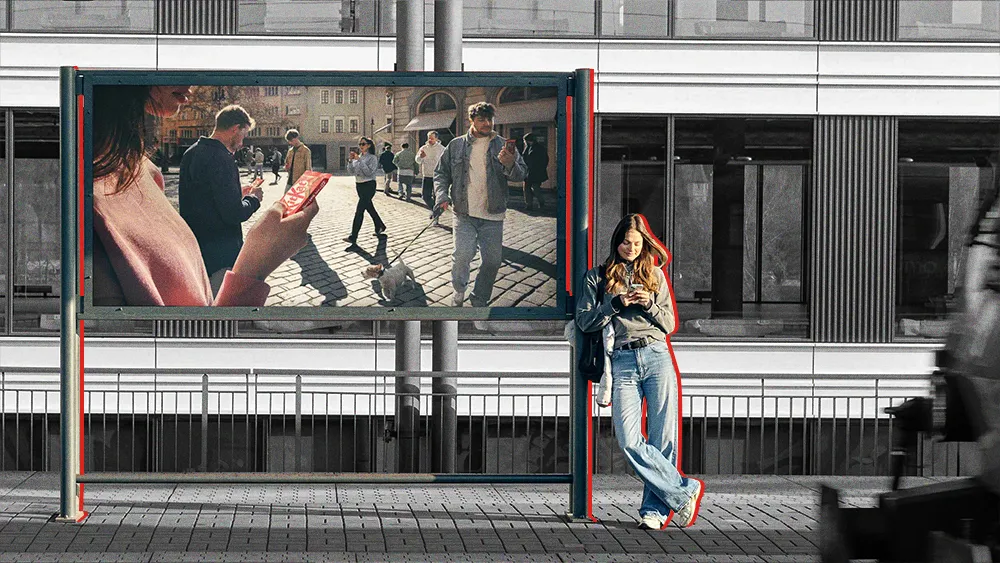
Barefoot takes the streets: Vivobarefoot's Free Your Feet campaign marks the barefoot footwear brand's first-ever out-of-home campaign, running across strategic sites in Central and East London. Developed by independent agency Thingy & Thingy, the creative takes direct aim at what Vivobarefoot calls "Big Shoe," a category built on cushioning, foam, and separation from the ground. The OOH work extends a platform that originally launched through social and film, bringing the brand's provocative positioning into the physical world. It's a fitting move for a company whose entire philosophy centers on reconnecting with what's underfoot. Rather than competing on traditional performance claims, the campaign reframes the conversation altogether, arguing that real comfort comes from feeling more. The campaign also carries a sustainability message: the global footwear industry produces over 20 billion pairs of shoes annually, with more than 90% ending up in landfills. For a challenger brand making its first move into physical media, the OOH format gives the message a kind of public-facing credibility that social alone can't replicate, placing the brand's point of view directly in the path of the mainstream audience it's trying to reach.
Fútbol runs on Modelo: Modelo's Best Seat in the House campaign represents the beer brand's largest soccer investment to date, timed to the FIFA World Cup arriving on U.S. soil this summer. The multichannel effort includes TV spots in English and Spanish, social and digital content, media partnerships, and out-of-home ads and on-premise activations at bars, airports, and hotels nationwide. The campaign features five international players, including Mexico's Edson Álvarez and Raúl Jiménez, and extends into physical products through a limited-edition capsule collection with Italian sportswear brand Kappa and a custom-designed ball celebrating Latino fútbol fandom. Modelo will also sponsor every pre-game World Cup broadcast on Telemundo across all 104 Spanish-language matches. What makes this campaign relevant to the OOH conversation is how Modelo is using physical presence as connective tissue between broadcast, digital, and in-person moments. The OOH layer ensures the brand is visible in the real-world spaces where fans are gathering, traveling, and watching together, reinforcing Modelo's positioning at the cultural center of the event.
Features go full-format: Spotify's latest OOH push takes a product-led approach, spotlighting two Premium features (AI DJ and Lossless Audio) as part of a five-week, multi-platform campaign across India. The campaign spans digital video, connected TV, audio, social media, OOH, and on-platform integrations, positioning outdoor placements as one layer in a broader media strategy designed to communicate specific product benefits at scale. AI DJ is presented as a personalized music curator that adapts in real time, while Lossless Audio highlights the depth and fidelity available to Premium subscribers. The creative is built around everyday listening moments, grounding the product story in relatable scenarios rather than abstract tech messaging. The campaign also incorporates regional content in Tamil and Telugu, reflecting Spotify's localization strategy across India's diverse listening landscape. For a streaming platform operating in an increasingly competitive market, the decision to lead with product capabilities on OOH, a format that demands clarity and instant comprehension, reflects confidence in the features themselves.
These three campaigns share a common discipline: each one treats physical-world presence as something that demands its own creative logic. Vivobarefoot used OOH to give a digital-native challenger brand real-world credibility. Modelo used it as the bridge in a multichannel World Cup strategy designed to reach fans wherever they gather. Spotify used it to bring product features into public spaces with clarity and scale. For advertisers evaluating their own approach to outdoor and physical-world media, the pattern is clear: OOH rewards specificity. The campaigns generating the most impact are the ones where every placement feels intentional.