Dentsu Creative Turned a Wine Cork Into a Bookable Billboard for Visit Portugal
Dentsu CCO Lourenço Thomaz on how a tap of a wine cork is drawing travelers to Portugal's overlooked interior, one poem at a time.
Make brandbeat one of your go-to sources on Google

Every brand has access to the same technology. The smart thing is to humanize it. The experience isn't technically tailor-made, but when you're sitting with a glass of wine, reading a poem about the place it came from, it feels like it was made for you. That's the difference.
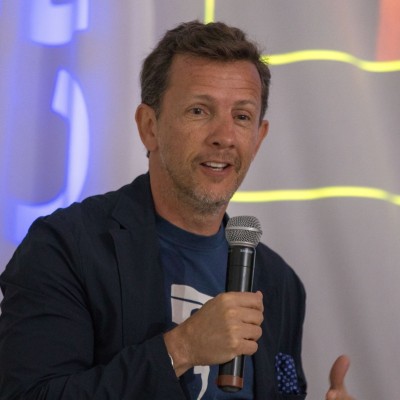
Lourenço Thomaz
Drinking wine is inherently transportive. The earthy or briny taste and smells of wine can collapse time, pulling people back to a special cabin weekend in the woods or a long-forgotten afternoon by the sea. It's the kind of experience that, when met with intention, can move people toward emotions, creativity, or action. One agency saw that power and asked a different question: what if a glass of wine could inspire someone to finally book that trip they've been putting off?
That idea became the foundation for a recent campaign with Visit Portugal, the national tourism board. The goal was to use poetry, rich sensory experience, and technology to draw travelers off the beaten path and toward the country's lesser-known inland towns. The result is a working model for solving a real travel problem in a genuinely inventive way.
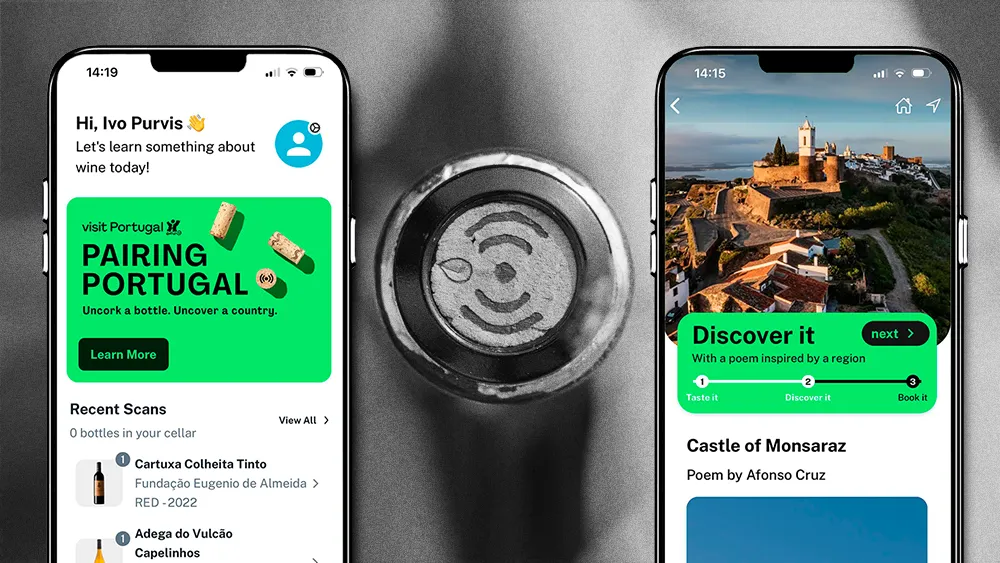
Lourenço Thomaz, Chief Creative Officer for Dentsu Creative Iberia and founding partner of Dentsu Creative Portugal, built the campaign around a key consumer insight around travel. Vacation decisions are often emotional and instantaneous; if someone doesn't book in the moment, the impulse can die within days. So his team partnered with startup Corkified to embed edible, sustainable NFC chips directly into wine corks. When a diner taps the cork with their phone, they're guided to the region the wine came from, and can even book a trip instantaneously. The campaign, called "Pairing Portugal," points to a broader shift in how brands are starting to treat physical products as OOH activation.
"Every brand has access to the same technology. The smart thing is to humanize it," Thomaz explains. "The experience isn't technically tailor-made, but when you're sitting with a glass of wine, reading a poem about the place it came from, it feels like it was made for you. That's the difference." He says that merging of experience and technology is the secret sauce behind an inspired booking.
Escaping the group chat: Most travel marketing targets people who are already in research mode, but Thomaz wanted to reach them before they even knew they were looking. "The action comes at that moment when you're having a great wine and you say 'Oh, this is amazing. Let's book the trip,'" Thomaz says. "It's that call to action. Very simple, and it's immediate."
Dentsu's decade-long relationship with Visit Portugal gave the agency room to push beyond a straightforward tech play. But Thomaz's team knew the technology alone wouldn't carry it. If a consumer dislikes the wine, they won't engage with anything attached to it, so the quality of the drink had to come first. He also knew the digital layer had to be thoughtfully crafted to match the experience.
Hardware with heart: Thomaz team's was adamant about creating a campaign that felt custom but not AI-generated. "The business of wine is a business of storytelling," he says. "The region, if it's hot, if it's warm, all the conversations you're having with your friends or your family when you are drinking the wine." For this effect, his team commissioned exactly 100 poets to visit 100 different interior vineyards and write original poetry about those regions, each piece accessible with a single tap of the cork.
That tap-to-book functionality of the concept turns the cork into more than a packaging novelty. By embedding content and a booking engine, the bottle becomes a compact out-of-home experience sitting in front of people as they eat and talk.
Billboards in a bottle: Highlighting the emotional connection and measurement potential of the format, Thomaz framed the cork as an advertising channel. "We imagined a shortcut and a new kind of media, because now the cork of the bottle is like an outdoor billboard," he says. The format does something traditional out-of-home can't by turning a passive impression into a measurable, bookable moment.
The campaign launched in Spain in January 2026 and in London two weeks ago, and is already working. Rather than relying on impression estimates from a traditional media buy, Dentsu and Visit Portugal can see exactly how people move through the experience. The team owns first-party data on every tap: which wines are scanned, and which interior regions and hotels are booked directly from the cork experience. Corkified is also seeing strong inbound demand from Portuguese cork producers interested in the NFC technology, and inquiries are arriving from the US, Germany, and the UK.
The rollout points toward a broader shift in how agencies think about out-of-home media, and could eventually contribute to a new operating layer of outdoor media. Instead of only buying street furniture and transit wraps, campaigns like Pairing Portugal suggest a model where everyday objects carry scannable content and attribution. Visit Portugal does not hold exclusivity over the technology, leaving room for the platform to be reused by other tourism boards, wine regions, or brands entirely.
A global vintage: Because Visit Portugal does not hold exclusivity, the platform is open to adoption by other tourism boards, wine regions, or consumer brands. This means the campaign infrastructure Dentsu built could operate at a scale far beyond a single client. "This is only going to grow," Thomaz notes. "And Visit Portugal is the vehicle to do that. It will bring more people to Portugal, and bring them to zones of Portugal that not a lot of tourists come to. We need economy, we need business in those kinds of regions that are not on the coast."
The campaign signals to the branding world that effective storytelling today is about meeting people in the right moment, not just deploying innovative technology. The NFC chip and booking engine are all elevated by the emotional experience built around them. The question for any brand trying to follow that lead is where in a customer's life your story fits, and whether the brand has something genuine to offer in that moment. "We put Portugal on a cork that travels all over the world, and we used it to inspire people to visit a place they'd never thought to go," Thomaz says.