Why Brand Growth Depends On Knowing The Difference Between Reach And Resonance
Chris Arakelian, EVP of Brand Strategy & Growth at OptiBrand Rx, shows why durable brands are built through steady presence, not one-off moments.
Make brandbeat one of your go-to sources on Google

Brand is the collection of experiences people have with you. A one-off or copycat idea might get eyeballs in the moment, but if it doesn’t ladder up to a common brand purpose, the whole experience starts to feel fractured.

Chris Arakelian
Sit in any marketing strategy session right now, and the question hanging in the air is the same: of everything the team is producing, what actually belongs to the brand? Generative AI has made output cheap, fast, and nearly impossible to govern at volume, while algorithmic distribution can surface almost anything that catches a moment. The brands building real preference are the ones with a strategy strong enough to sort signal from noise before the work goes live, giving teams a clear standard for what to keep, what to kill, and what should never leave the room.
Chris Arakelian has spent three decades working on brand strategy and growth for some of the most recognized names in tech, consumer goods, and regulated industries. Currently the EVP of Brand Strategy & Growth at OptiBrand Rx, she previously spent nearly eight years at Wolff Olins as Executive Director of Growth, driving up to 100% year-over-year revenue growth and securing competitive wins with companies including Meta, Microsoft, and Uber. Over a career spanning more than 200 brands and a seven-year tenure as a visiting lecturer at the NYU Stern School of Business, she has developed a practical view of what makes a brand durable as the tools around it keep changing.
"Brand is the collection of experiences people have with you. A one-off or copycat idea might get eyeballs in the moment, but if it doesn’t ladder up to a common brand purpose, the whole experience starts to feel fractured," Arakelian says. That standard becomes harder to meet as AI accelerates ideation past what most organizations can govern. Without a clear definition of what the brand stands for, teams cannot tell whether the day's output, from an individual or a model, reflects the company's heart.
Synthesizer, not savior
Arakelian views AI primarily as a synthesizer, a tool that requires strict human oversight to operate safely at scale. Pointing to the risks of unchecked experimentation, she says, "Laying that foundational groundwork for what brand can solve for and what it cannot solve for is really important for key stakeholders to know. You need to know ultimately what your brand stands for as an input so you can evaluate whether AI-generated content feels like a reflection of the heart, soul, and raison d'être of the organization."
That clarity comes from four things a team has to understand together: category, culture, consumer, and business. Skip them and the work reads generic, and audiences shaped by growing skepticism toward AI can spot it from a distance. "These fundamental inputs go into understanding why you exist as a brand, coupled with what the world needs," she says. "You can't exist if you don't have something the world actually needs."
Having a vision is the easy part. Getting sprawling internal teams and outside agencies to care about it is where most strategies stall. Strategy without buy-in goes nowhere. If internal teams and outside agencies are not aligned on it, the playbook does not get used. As the lines between in-house departments and agencies blur, shared judgment across both sides matters more than formal reporting structures.
"Whether you're on the inside or the outside, you're still an insider, and you still have that degree of instinct for what is and isn't going to work," she says of agency partnerships. "Whether it's inside, outside, AI, or not AI, you need collective intuition to generate ideas that have staying power and can show up in the right moments in front of the right people."
Bring your whole brain
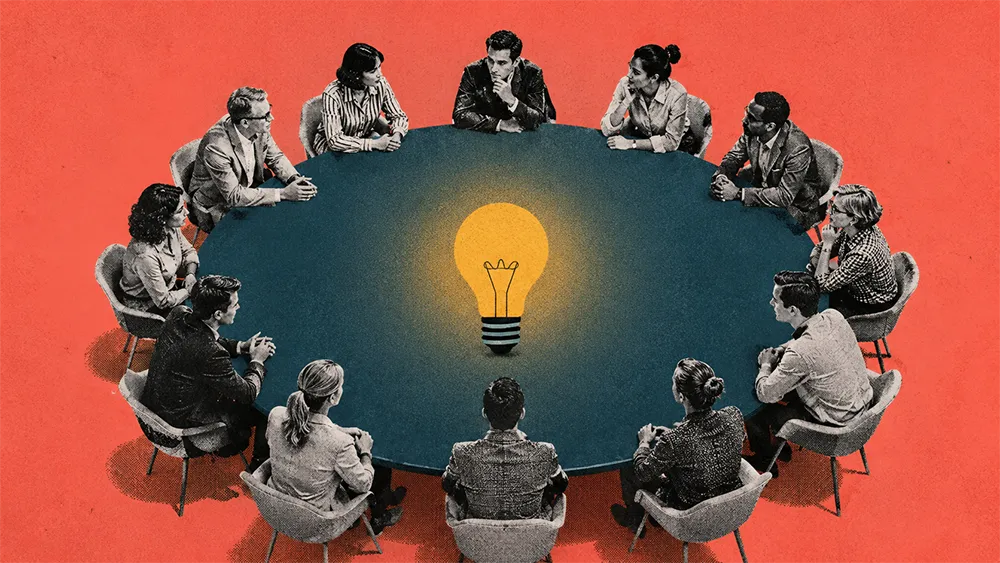
Arakelian still emphasizes the value of people in a room together, building that intuition. For her, the best work comes from teams that know how to bring their full lived experience into the process. "I always use the reference of left brain, right brain, and context versus content," she says. "How do you leverage your contextualized being and the things you experience as a person to bring it to the zone you are operating in from a business standpoint? That is how you drive new ideas and iterate on them together."
Balancing collective intuition with modern digital volume requires teams to measure both the quantifiable and the qualitative sides of their marketing. A modern test-and-learn approach often combines empirical brand research and human intuition to understand what truly moves the needle. Digital channels reach broadly. Intimacy requires showing up in the real world, whether through experiential creator summits or targeted out-of-home campaigns. Treating brand building and performance marketing as a pendulum swing can make it harder for customers to understand what a company stands for, a lesson Nike learned publicly when it began shifting dollars back into brand to reclaim premium positioning. For Arakelian, that pendulum problem comes back to a basic point about presence.
"You're showing up; you're human. You have the ability to build relationships because brands are like people. You want to know who they are. There is a level of intimacy you cannot get on screen that you can get in person, and one needs to play off the other."
No absentee landlords
Consumer trust is built through steady nurturing, a discipline most strategists describe as relentless and unglamorous. The Trust Barometer reading underscores how thin the margin is in 2026, with skepticism running as the consumer default and the brands holding ground being the ones already in the room. Arakelian often reaches for a parenting analogy from her own life to explain why brand engagement cannot follow the rhythm of a campaign budget.
"It can't be whenever you feel like it, because people need to feel wanted all the time," she says. "I've got teenagers. I don't need to babysit them anymore, but they want to know their mom is around, cares, and is invested in their future. Brands are the same way. They are like human touchpoints. The relationship will go away if you don't feed it, spend time with it, and nurture it."
That kind of intimacy doesn't appear overnight. When legacy companies execute highly visible cultural insertions, such as Heinz claiming the 57th pick at this year's NFL Draft, those efforts succeed because the foundational equity was already there. Kraft Heinz's broader pattern of building on brand IP is what lets a single number become a multi-year story. Isolated stunts meant to manufacture instant intimacy fail to earn the same payoff.
"If you do something that feels like a one-off, a copycat, or will just get you eyeballs in the moment, like certain Super Bowl ads, they're expensive and can have a great effect," she says. "But if it feels random just to spike a reaction, it won't feel authentic, and it won't have staying power."
Casting the zeitgeist
Brands that last stay distinct by tracking the cultural mood closely, a discipline most visible in luxury. Arakelian points to heritage houses like Yves Saint Laurent, Gucci, and Tiffany as examples of brands that keep refreshing their relevance while staying anchored in a recognizable core.
"They need to show up in the right moments and convey the right image," she says of the luxury market. "They often use actors because actors are typecast to convey a certain image, whether that is edgy or classic. By mixing those elements up, the relevancy isn't lost on their audiences, and they avoid feeling like just a brand grandma shopped at."
By the end of 2026, Arakelian expects the gap to widen between brands that have done this foundational work and those that have leaned on algorithmic distribution as a substitute for it. The first group will reveal themselves as the real deal, with audiences they understand and a clear point of view on the world. The second group will fizzle out, exposed as shallow products of trend chasing whose visibility evaporates the moment the algorithm shifts.
Brand elasticity has its boundaries even for those doing the work. Choosing to be a highly focused, singular brand is a valid strategy, though it requires strict discipline. "If a brand is very singular and focused, that can work too. You just have to know you are always going to mean that very specific thing to your initial audience unless you pour tons of money into sub-branding, which gets very expensive and tedious."
Sneakers to scripts
The biggest opportunity Arakelian sees right now sits in global, highly regulated environments like healthcare and pharmaceuticals, where she currently focuses her work. Under prescription drug advertising regulations, marketers face heavy legal review cycles, and those constraints logically encourage conservative creative choices and familiar tropes. At the end of the day, healthcare professionals, patients and caregivers navigating these complex decision dynamics are making personal decisions for themselves and their families. Arakelian sees the sector's caution as understandable and realistic, and treats these audiences as humans looking for brands invested in their best interests by reflecting their values, with empathy and best practices.
"I have seen a lot of junk, and I think it's partly because it's safe," she says. "But there is an ability for healthcare brands to be more singular and meaningful in their communications, and not lean on the same old approach just because it's expected or historically moved the proverbial needle. Honing in on behavior-based insights that factor unconscious biases and real-world interaction will enable healthcare brands to have impact in that same way we see contemporary consumer brands break through. At the end of the day, it is still about the customer scrutinizing their options and landing with choices that reinforce their beliefs.”