The New Experiential Advantage Is Owning The Unexpected Lane
Timothy Owens, VP of Brand Experiences, argues that the strongest activations win by finding unexpected context and making every touchpoint earn its keep.

Make brandbeat one of your go-to sources on Google

Experiential marketing is no longer a nice-to-have. It's expected that it's in the brief. You want people seeing, touching, feeling it, and walking away having really been enveloped by the brand.
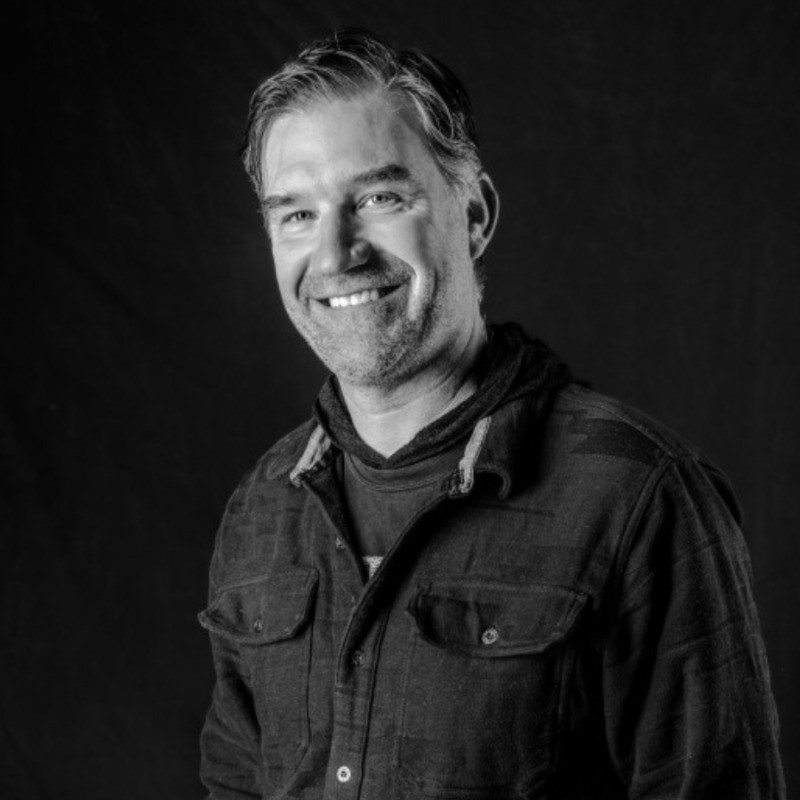
Timothy Owens
Experiential used to be where the planning meeting put the leftover budget. Now it’s the starting point. With the festivalization of culture and a post-pandemic hunger to be in a room with other humans, live activation is where the brand can actually be felt. 57% of B2B and B2C marketers plan to grow event attendance this year, and 61% of consumers report being more inclined to purchase after experiencing a brand in person. Budgets are following, and so is the competition. As more brands pour into festivals, conferences, and pop-ups, presence alone no longer cuts through.
Timothy Owens is VP of Brand Experiences, having worked with clients like American Express, Nike, Google, PepsiCo, and DICK’S Sporting Goods. With more than 15 years executing large-scale activations across automotive, beverage, and tech, he has built a reputation for designing experiences that translate creative ambition into measurable business outcomes. His read for 2026 is that the brands winning experiential are the ones showing up where their category has no business being, and engineering every footprint to keep working long after the event load-out.
Experiential is now the strategic centerpiece
"Experiential marketing is no longer a nice-to-have. It's expected that it's in the brief. You want people seeing, touching, feeling it, and walking away having really been enveloped by the brand." Owens works from a framework that layers passive, interactive, and immersive touchpoints into every activation: a draw that catches the eye from across the room, a tactile moment that pulls the consumer in, and an emotional payoff that lasts longer than the giveaway. The framework does not care about the budget. A 10x10 footprint with the three modes built in will outperform a 30x30 stage that forgot to give anyone a reason to walk closer.
Owens points to the surge in festivals, conferences, and pop-ups, with a millennial generation now in its peak earning years and willing to spend a weekend dressed for a brand activation. More events mean more places to show up and more competition for the same eyeballs once a brand arrives. The teams figuring out how to win are the ones organizing the rest of their media plan around the activation, treating it as the organizing principle that pulls paid, earned, and owned together in one direction.
The work that lands shares one trait. Every choice in the design was deliberate; every moment was built to do what the brand needed it to do. Even a simple setup of a sampling table, with a table cloth, back wall, and digital activation screen can resonate if it deliberately balances the three modes of engagement. The trap is assuming spectacle alone will do the work.
The unoccupied lane wins the saturated category
At tentpole events like the the Super Bowl or major music festivals, long-standing sponsors are blending into the background. The brands still buying the same predictable sponsorship at the same tentpole event every year are paying premium rates to blend into a crowd of competitors doing exactly the same thing. Owens watches the smartest teams hunt for non-endemic environments, places where their category does not belong, and therefore commands attention by virtue of being there at all.
"You have to find a space where your presence is unexpected. The American Heart Association's activation at the Miami Grand Prix was called Check Your Valves. It was all about automotive because it was about valves."
The Miami Grand Prix typically draws automotive sponsors and legacy beverage partners. AHA stepped into that environment with a cardiac-health activation built around the linguistic overlap between engine valves and heart valves, and the cleverness of the placement did the work that paid sponsorship dollars usually have to do. Coors Light ran the same play at the Interior Design Show in Toronto, where the brand built Home DeCoors, a 24-piece furniture collection where every piece was a case of beer. A beer brand at a furniture show is the kind of placement that earns coverage the brand's own ad budget could not buy.
"It's expected that major beverage brands are going to be at the NBA All Star Game or festivals like Stagecoach," Owens says. "How do brands go into spaces where it's unexpected to gather eyeballs? Going to stuff that's very unexpected is definitely the future." That logic helps prove scale is not always the same thing as impact. The classic Molson Canadian beer fridge stunt, a single-object activation that generated global coverage, proves a sharp conceptual hook can outperform a massive budget. Any team with a strong idea can participate in the channel, regardless of size.
The chandelier always loses to the KPI
Selling unconventional placements internally requires translating creative vision into business utility. Owens routinely uses saturation data to show clients why owning an empty lane beats competing in a crowded one.
Somewhere between the moodboard and the budget approval, the same fight shows up in every creative meeting. "A lot of times, you get hung up on the design piece. Creatively, you really want the really niche custom designed chandelier hanging in the footprint because it is so cool. But ultimately, you have to make a choice. You either get the chandelier, or you hit the KPIs, which means spending those dollars to hire more brand ambassadors to be handing out the soft drinks."
The decision usually comes down to what the client needs the activation to do. "If the goal is about getting cans in hands, signups, or registrations, that involves more bodies. Those are humans that need to do that," he says. "You have to balance those design elements and that expense with hitting the client's KPIs. That is actually the goal at the end of the day."
That discipline reframes how creative teams pitch internally. The activation has to be defensible as a working asset, with a clear line from physical footprint to measurable outcome. The pattern across recent live-events analysis is the same. Spectacle fades. Participation and amplification keep the activation working months after the load-out.
Built to travel beyond the booth
The physical footprint now functions as a live-action studio for digital reach. The activations Owens has watched at the Super Bowl and Coachella sometimes don't read in the room. They read in the cut. "They really sold it and made it something amazing, and then you see the shares and likes from that," he says. The activation exists in two places simultaneously: on-site for the few thousand attendees who physically pass through, and online for the millions who encounter it only through content. "It's not just about how it looks. It's about how you can then utilize it and make it utilitarian."
Earned media has become the metric used to justify the build. Owens has watched PR-driven placements out-perform the live attendance numbers by ten and twenty times, and the pattern is budget-agnostic. The Molson fridge worked. The Coors furniture installation worked. The hook in both is small enough to explain in one sentence and sharp enough that a feature writer will write that sentence for free.
Production belongs in the ideation room
Production is moving into the room where the ideas get pitched. Owens has watched independent scenic and production shops merge with strategic creative agencies, a consolidation that gives creative teams real-time feasibility checks during ideation. The unaffordable chandelier gets caught earlier, which means concepts arrive at the client both executable and aligned to KPIs. The shift also gives smaller production players a clearer path into larger brand work.
Owens sees this collaboration as the practical way agencies are figuring out how to build what PR teams pitch without blowing the budget, where both sides calibrate ambition against logistics and timelines in real time. The pattern shows up across the industry as the emotional resonance and ROI of experiential become provable enough to justify cross-disciplinary investment.
"They want a spectacle that's up high, that's the biggest light. So you start unpacking what that really means and what you can do with it. It's a big idea, but how can we make it a scalable idea that still works for what they need to do?" Unpacking is the work now. The activation that earns its budget is the one still alive in the feed after the truck has left the venue and the brand ambassadors have caught their flights.