Growth Teams Move From Conversion Chasing To Habit Building As Retention Takes Priority
Carmen Murillo, Digital Marketing Manager at Newlink, explains why the strongest growth loops start before the first sale closes.
Make brandbeat one of your go-to sources on Google

"When you look at human behavior, make your product into a habit, and start engaging instead of selling, the sales will come."

Carmen Murillo
For ten years, the product marketing scorecard has tracked one number: did they buy? Performance teams chase clicks; growth teams chase installs; brand teams pop champagne when money changes hands. The whole model treats the purchase as the finish line. Now that any brand can crank out creative for nothing, the finish line stops paying. With AI-mediated discovery reshaping how purchases happen, the winning brands are designing for the second purchase before the first one even closes.
Carmen Murillo has been running that play for a decade. As Digital Marketing Manager at Newlink and a bilingual growth and product marketing leader based in Miami, she has scaled paid media portfolios from $100K to over $1M per month across multiple categories, with an academic foundation in industrial design that taught her to evaluate any product by how cleanly it fits into a user's day. Her argument is that customers stay when the product becomes part of their routine.
"When you look at human behavior, make your product into a habit, and start engaging instead of selling, the sales will come," Murillo says.
The product has to fit before the campaign matters
Behavior design shows up best in the products that have already disappeared into daily life. The Apple Watch does its marketing on the wrist, with haptic taps and visual rings that turn small actions into a ritual the device quietly rewards. Calm has built the same loop into its Instagram feed, posting a breathing prompt that resolves a tiny moment of stress before any sales conversation can start. The lesson Murillo draws from both is the same. The product becomes part of the day first, and the relationship grows from there.
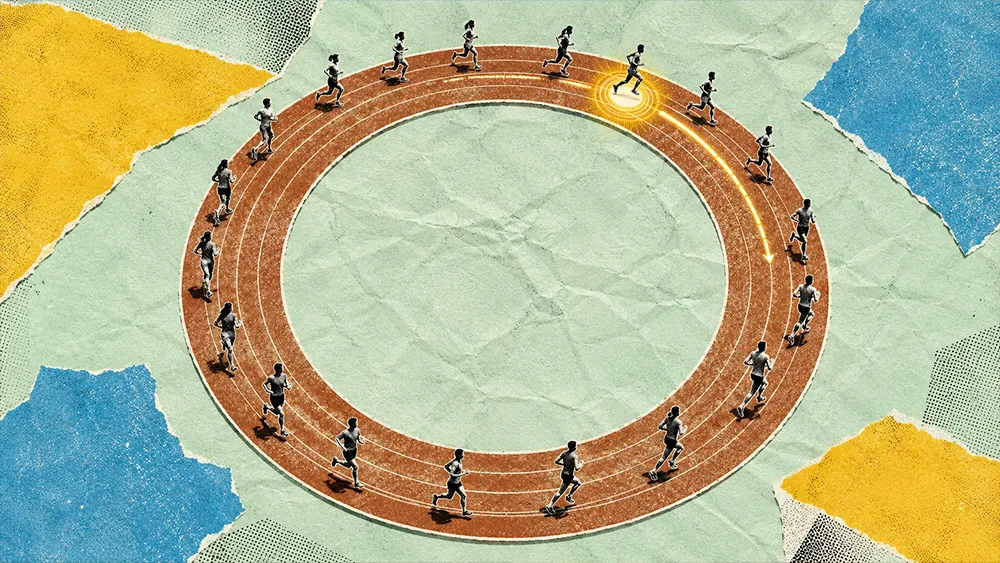
"If you analyze Calm's Instagram profile, every now and then they post a video with a circle going around prompting users to breathe for five seconds," she says. "You actually pause, breathe, and continue scrolling. They are not telling you to download the app after those five seconds, and they are not selling anything. They are just making you stop for five seconds and continue scrolling. That is a very clear example of how communication is shifting more toward what a brand can give its audience instead of what it can sell to them."
The loop that turns a purchase into a ritual
Murillo treats the behavior design challenge as mappable, with a known framework to work from. James Clear's habit loop runs in four beats. A cue triggers a craving. The craving demands a response. The response earns a reward. The reward decides whether the next cue lands. Every beat maps to a touchpoint that marketing already controls.
"Because buying is very linked to feeling. If we take the James Clear Atomic Habits framework, the cue, the craving, the response, the reward, we can actually map it into a campaign," Murillo says. "A consumer might see a Korean skincare product on Instagram; that's the cue. The craving is the dissatisfaction they feel when looking at their wrinkles. The response is going to Sephora, buying the product, and using it. And the reward is seeing their face look younger and brighter. That is the whole habit, and that is how a product becomes a habit."
The framework reframes what a brand is actually selling. Coca-Cola does not sell a drink. It sells happiness, which is how a can of soda has outlasted every better-tasting challenger for a hundred years running. The real work is naming the feeling the product resolves, then auditing every touchpoint in the loop to see whether it carries that feeling or leaks it.
The community has to exist before the ad spend does
A touchpoint carries feeling only if the audience already trusts the source it comes from. Habit formation has a prerequisite most growth teams underweight. A loop only holds if the user trusts the source of the cue. Trust is built in the community before it can be amplified in paid media, and the brands that try to skip that step end up paying to amplify nothing. Murillo has spent enough years inside seven-figure ad budgets to recognize the symptoms early.
"When your friend recommends something, you believe them. You're always going to believe that first before an influencer recommendation," Murillo says. "When you start with an organic approach and grow your community, then you can expand into Meta ads, Google, or TikTok. But if you don't have a basic community that is engaging, buying, and acting as recurring customers, you can invest millions in Meta ads and not reach the engagement you're looking for."
The community is what makes the habit loop self-sustaining. Once a brand has an active core, peers do what paid acquisition cannot, and every dollar of media spend is leveraged against existing trust. The teams that invert the sequence find themselves running expensive performance campaigns to audiences who have no reason to believe what the ads are saying.
That is also where most brands give themselves away. A feed that does nothing but push promotions trains the audience to scroll past it. A feed that offers something useful between the asks earns the right to make one.
"Pay attention to your community and stop constantly selling to them," she says. "If every post you have is just pushing a purchase or an upsell, that is not engagement. That is not a conversation. It doesn't show that you are trying to help them improve. It just shows that you are trying to sell, and people don't connect with that."
The right role for AI sits behind the message
The temptation to scale this approach with generative tools is real, and it is also where the strategy collapses. Audiences have grown sharp at spotting machine-written copy, and a brand using AI to manufacture emotional connection ends up signaling the opposite of what it wants to convey. The cleanest division of labor puts AI on the back end, running tests and surfacing patterns in customer data that human strategists then turn into stories. Other operators have landed on the same split, treating AI as a copilot and as an amplifier of human creativity.
"You can very clearly tell when a brand is using AI in all of their posts. Consumers recognize that it is unnatural and fails to resonate, so they push back," Murillo says. "AI is a wonderful tool for efficiency and A/B testing lots of creatives, but there always has to be a human in the middle. Empathy in the middle. Organic in the middle. It does not eliminate the human, the empathy, and the connection you need to create with every post you put out."
Getting that division wrong shows up in the work. A team using AI to generate the emotional core of its content ends up producing posts that read like every other AI-assisted competitor's posts, which is the outcome a habit-forming brand cannot afford. A cue that could have come from anyone triggers a habit with no one.
Sales come back when selling stops being the goal
Murillo's playbook is five moves in order. Connect, build community, name the feeling, design the loop, amplify. Run them clean, and the habit pays the revenue bill. Run them out of order, and the habit never starts.
"When marketers start looking at connection and human behavior instead of sales, sales will come around," Murillo says. "When you make your product into a habit, when you start engaging instead of selling, sales always come back. My biggest advice for brands and marketers is: first connect, then sell. By doing that, your product is going to be part of the everyday lives of the people."
While everyone else is renting attention from people whose habits were formed somewhere else, the brands that will own 2026 are the ones a customer reaches for without remembering why.