Travel Marketing's Biggest Missed Opportunities Sit Between the Ticket and the Trips
Alfred Travel Technology CEO Billy Chan on the gap between live event ticketing and the surrounding trip, and what brands and marketers are missing.
Make brandbeat one of your go-to sources on Google

The booking itself is straightforward. The problems are on the inspiration and execution layer. That's where we see the white space.

Billy Chan
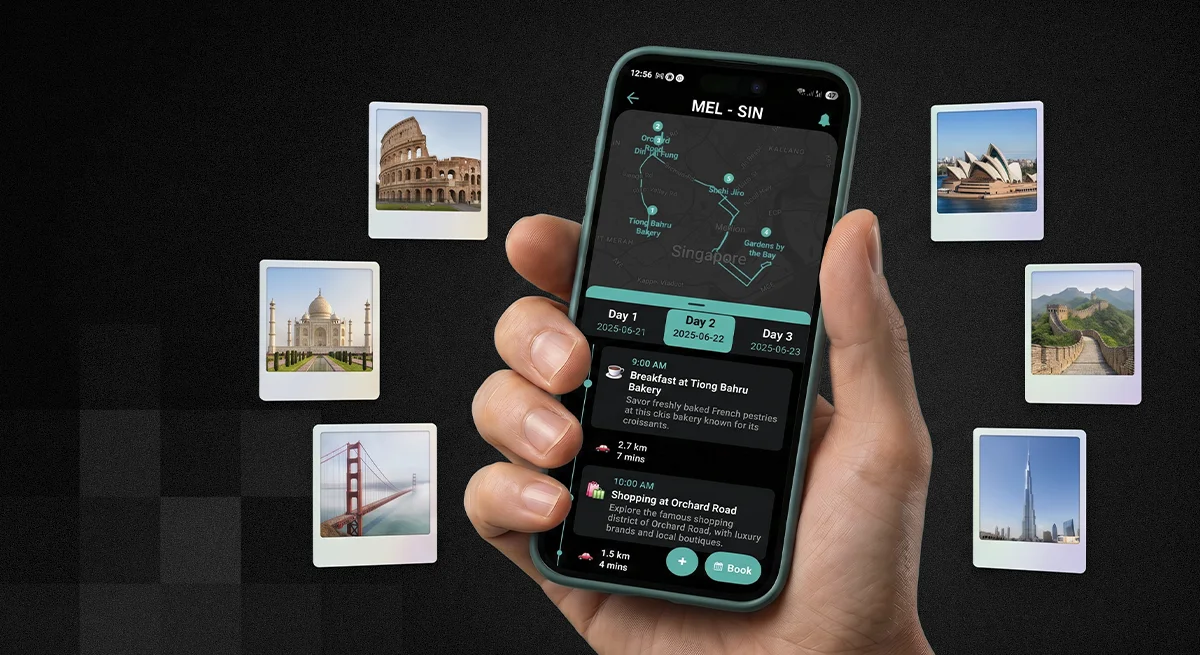
The travel industry is pouring resources into autonomous AI booking agents, even though the transaction itself is largely a solved problem. The real friction lives at the edges of the trip. Travelers spend hours stitching together viral TikTok and Instagram clips into something resembling an itinerary, then arrive on the ground only to find themselves copying addresses out of a spreadsheet into Google Maps one cell at a time.
That gap between inspiration and execution is where Billy Chan, CEO and Co-Founder of Alfred Travel Technology, sees the next decade of travel competition playing out. Chan built his career across travel distribution and frontier tech. Before spending eight years in the crypto industry across Hong Kong and Singapore, he managed API connectivity for online travel agencies throughout Asia-Pacific at Travelport, one of three major global distribution systems. Alfred Travel applies AI, blockchain, and social media to the parts of a trip that fall outside the booking transaction. "The booking itself is straightforward. The problems are on the inspiration and execution layer. That's where we see the white space," Chan says.
The gap is everything about a trip that can't be monetized through a transaction. Pre-trip research, on-the-ground decisions about where to eat or which neighborhood to explore, the small frictions of moving through an unfamiliar city. Major platforms have built AI trip planners and itinerary tools, but those tools tend to surface what their inventory can monetize. The free hikes, public parks, and hole-in-the-wall restaurants that often define a trip sit outside the commission model and outside the focus of incumbent product roadmaps. "What's the point of Expedia recommending a hike for a traveler if they can't convert on that?" Chan says. The clearest illustration of that gap is playing out right now around major live events.
The trip outlasts the ticket
Fans flying in for the Singapore Grand Prix typically stay a full week in the city, even though the race itself only takes up a weekend. They need somewhere to eat on Tuesday, something to do on Wednesday, and a sense of which neighborhoods are worth exploring on Thursday before the race weekend even begins. The pattern extends well beyond Singapore. Across the F1 calendar, tennis majors, and golf majors, a growing share of travelers are buying the ticket first and figuring out the destination second. Host cities benefit accordingly. The Singapore Grand Prix routinely drives sharp spikes in hotel rates and incremental tourism spending across the city, with similar effects around comparable events worldwide.
The connective layer between the ticket and the trip is largely unowned. Event organizers focus their marketing on the gates, sponsors concentrate visibility on the venue, and tourism boards promote the city in general terms rather than around the specific traveler holding a specific ticket. The fan in the middle of all this still figures out their Tuesday afternoon alone. For brands, organizers, and destination marketers, the upside of closing that gap is a longer arc of attention, deeper spending capture, and a tighter loop between the reason a fan booked the trip and everything else they do while they are there. "We partner with event planners to help us distribute, on the basis that we're planning the trip around their event. It promotes the event, it promotes the city from a tourism perspective, and the user has the whole holiday planned in one place rather than fragmenting it up," Chan says.
Hype cycle redux
The agentic AI push in travel is a solution searching for a problem, Chan says. It assumes consumers want to hand off booking decisions to an autonomous agent when most travelers find that part of the trip the least frustrating to begin with. He has seen this pattern of marketing promise outrunning consumer behavior before, in crypto. "If you think about the marketing around Bitcoin 10 years ago, people were talking about using it to buy Starbucks. Fast forward a decade later, and we're not there. AI in the travel industry seems to be trying to retrofit a use case where a lot of brands are trying to implement agentic bookings," Chan says.
Forcing AI to execute financial transactions ignores how humans actually move through a trip. People hesitate to hand over calendar access, email inboxes, and bank account permissions to an autonomous agent, and that hesitation deepens as AI-generated content floods feeds and inboxes. The actual planning grind, meanwhile, still happens in browser tabs and spreadsheets that nobody opens once the trip starts. Travel planning is fundamentally spatial and visual, and the interface needs to live where the traveler actually is, on a phone, with activities laid out day by day and the ability to pull in locations directly from a map.
Voice didn't win retail
Voice commerce was supposed to be the next major shopping channel by the early 2020s, with some forecasts pegging it at $40 billion, but it has settled into a far narrower set of use cases than its early proponents predicted. It has since found real traction in narrow contexts like setting timers, playing music, and reordering household staples, but it has not become the dominant interface for high-consideration purchases. Travel sits squarely in that high-consideration category, where buyers want to compare options side by side, see photos of a room before committing, and review cancellation terms in writing rather than parse them through audio. "Yes, you can now talk to an AI, but the efficiency of going online and just clicking, clicking, book, book, is proven," Chan says.
The next interface shift, in Chan's view, runs through augmented reality glasses rather than chat windows. Meta's wearables roadmap interests his team more than Apple's heavier headset hardware because the lightweight form factor matches how people actually move through a city. An AR layer can turn navigation into street-level overlays, surface the history of a cathedral the moment a traveler looks at it, and quietly remind users they have 45 minutes to walk to dinner without pulling out a screen.
The points illusion
Travel loyalty programs are under more strain than they have been in years. Travelers depend on them heavily, particularly as the cost of premium travel keeps climbing, yet trust in the programs themselves has been eroding across airlines, hotels, and cruise lines. Product decisions that travelers feel directly, including American Airlines pulling loyalty points from basic economy fares in late 2025 and the steady expansion of dynamic award pricing across major carriers, have widened the gap between what members expect and what programs deliver.
For the broader travel industry, the through-line of Chan's argument is a reversal of how new technology gets deployed. AI, blockchain, AR, and social media should be slotted in where they fit a real consumer behavior rather than retrofitted to manufacture a use case that does not yet exist. That stance turns the question facing travel over the next decade away from which AI feature ships next and toward which problems are actually worth solving. "We see whether there's a use case for this technology, and if there is, let's implement the technology for that particular use case rather than trying to find the use case for a particular technology," Chan says.