For the next generation, luxury is no longer consumed simply for the logo. They buy into the stories, the communities, and the cultural credibility that brands continue to build.
 Menglin DaiHead of Strategy for Brand Communication & Creative Concept @ Hylink DE
Today, brands are learning that nostalgia alone doesn't drive long-term growth. Legacy players get real mileage out of history when they treat it as active proof they can adapt to the present. Taking a brand across borders or generations acts as the test for that approach. When entering a new market, literal translation and basic AI localization can convey language, but they often miss the cultural nuances required to make heritage resonate with a new audience.
Menglin Dai, Head of Strategy for Brand Communication & Creative Concept at Hylink DE, works as a cultural bridge between global headquarters and local execution teams. Drawing on more than 13 years of experience that includes agency work at WPP's GroupM and IPG Mediabrands' Reprise Digital, she advises international brands navigating the Chinese and German markets, translating global brand strategies into locally relevant communication and market expressions. In Dai's read, heritage may secure a brand's initial entry into a new market, but cultural interpretation is what helps sustain relevance over time, and nowhere does that show up more clearly than in how younger consumers engage with heritage brands today.
"For the next generation, luxury is no longer consumed simply for the logo. They buy into the stories, the communities, and the cultural credibility that brands continue to build," says Dai. The rules of legacy marketing are adapting to that reality. Shifts in luxury consumption suggest that younger audiences increasingly treat heritage as a foundation rather than the sole reason to buy. They expect brands to transform heritage into cultural relevance through contemporary expression. Artists, athletes, and cultural figures become the cultural connectors through which legacy brands translate their stories into the conversations and communities that shape Gen Z's world." To remain relevant to today's audiences, you need to build connections through collaborators who already carry cultural credibility and meaning in this group's mind," Dai says.
Heritage across markets and consumer contexts
The cultural interpretation work extends further when a brand carries its story across borders. When Chinese electric vehicle brands enter Europe, for example, they land in Germany—the historic heartland of the automobile—where the story a car tells counts as much as the specs on paper. While Chinese EV marketing has increasingly positioned vehicles as intelligent lifestyle spaces, with domestic marketing narratives often highlighting interior experience, connectivity, and digital entertainment, directly transferring this proposition into Germany requires adaptation. German consumers typically evaluate automotive value through a different lens, where technical performance, reliability, and engineering trust remain central to brand perception.
Where all of this pays off is at the specific moment of purchase. Dai uses Maslow's hierarchy as a lens to describe the relationship between functional needs and emotional resonance: consumers may begin with a functional need, but the final decision is often shaped by emotional resonance built through accumulated brand equity, familiarity and social proof. The convergence happens when a practical need meets a brand that has already earned a place in the consumer's mind. Dai points to her own recent purchase of a Stanley product as an example. Having encountered the brand repeatedly through creator content over time, she was already familiar with its reputation. She eventually purchased it when an illness required her to hydrate constantly. "I know the quality, but also when I really needed one and had to make the decision, Stanley came to mind," she notes. "I know I'm going to have to get it because I trust the brand."
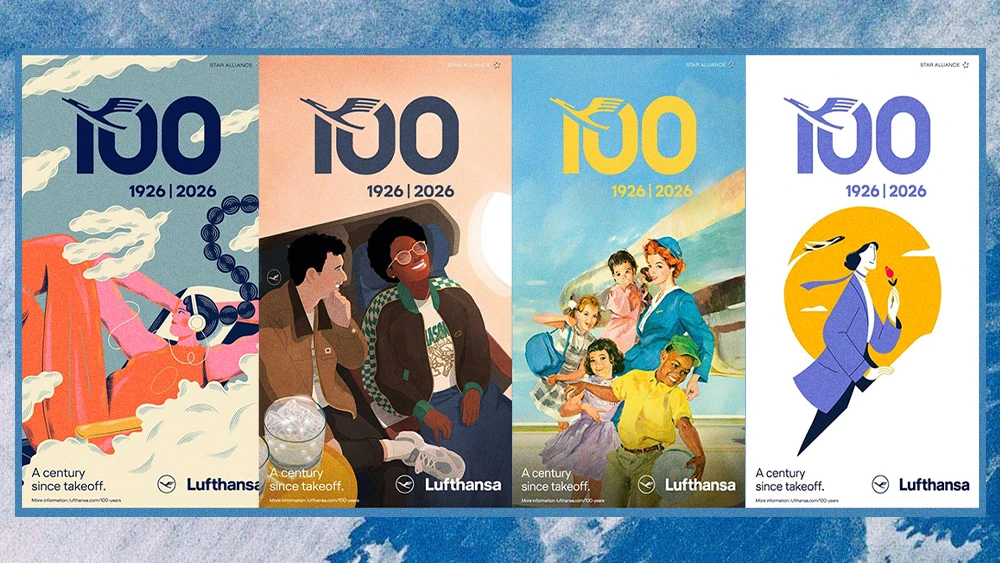
The cultural translation work also extends into how heritage travels across formats. Dai treats a brand's history as a multi-format asset that must be continuously reinterpreted across different channels and cultural contexts. She points to Lufthansa's 100-year centennial campaign as an example of how a century-old brand translates its heritage into a contemporary narrative. Rather than presenting history as a retrospective, Lufthansa revisits its legacy through modern visual storytelling and forward-looking messages such as 'We are the Journey' and "Yes. To what's next." The contemporary expressions are what allow the underlying heritage message to resonate with audiences who may not connect with a purely retrospective celebration of the past.
Speaking the audience's language
Cultural interpretation is shaped by where and how audiences encounter a brand. Each channel creates different opportunities and limitations for expressing heritage. Dai points to out-of-home advertising in Germany as a clear example: transit environments like airport terminals give brands only seconds to land the message with a moving viewer, which changes how heritage has to be expressed at that touchpoint. "The brand would need to consider a short slogan with sharp, attention-grabbing information—one that distilled into a concise expression that communicates the brand's identity while leaving a lasting impression," Dai says.
Social media presents a different set of possibilities, giving brands the space to build a ongoing narratives that deepen the meaning of heritage over time. "On social media, it's an ongoing process," says Dai. "You don't need to hurry up to post every slogan that should be catchy. It could also be storytelling. Every day has its series, it has its continuity." Despite the differences between channels, the strategic challenge remains consistent: heritage has to be continuously interpreted for the specific audience in the specific moment. "To bring a strong brand and product to life, brands need to deeply understand their audience—their behavior, expectations, and cultural context — and translate their value in a way that feels relevant," Dai concludes.
The views and opinions expressed are those of Menglin Dai and do not represent the official policy or position of any organization.