Starting From the Outcome Turns A Celebrity Collab Into Lasting Brand Equity
Samuel Minns, who has led campaigns for global brands like Levi's, Nike, and Timberland, on making global brand DNA stronger through authentic local expression.

Make brandbeat one of your go-to sources on Google

Don't tell me you're part of the culture. Actually create something to prove that your brand is part of the culture.
Samuel Minns
Most brands treat a celebrity endorsement as the finish line. The deal closes, the famous face goes up on the billboard, and the campaign is declared a success. The result is a spike of borrowed attention that fades the moment the contract ends, leaving the brand roughly where it started but with a smaller budget. The marketers who actually move a business treat signing the deal as the opposite of a finish line. They start from the commercial outcome they want, then build a year of work designed to capture the attention a star creates and convert it into something the brand gets to keep.
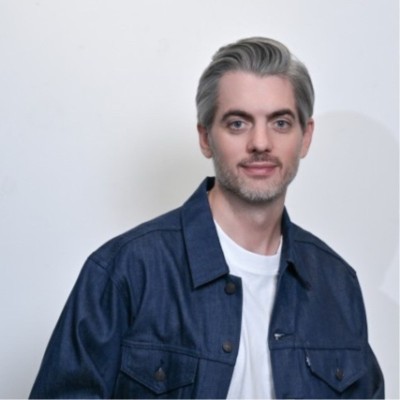
Samuel Minns has spent more than a decade doing just that. He built his career on the agency side at TBWA\Media Arts Lab working on Apple, then spent close to seven years as a brand marketing director at Nike in Shanghai, where he led the repositioning of the billion-dollar Air Max franchise in China. He went on to run marketing for Timberland across APAC, doubling the brand's unaided awareness in China and turning Japan from decline into double-digit growth. All of that led him to becoming Levi's most senior marketing leader in Asia-Pacific. Across these experiences, he's been the person global organizations rely on to make heritage brands mean something to consumers who were never in the original brief.
"A celebrity endorsement is not a strategy. It's a tool in your strategy," Minns asserts. The gap between those two approaches is the difference between renting relevance and building it, and nowhere is the gap more punishing than in Asia, where consumers have become experts at spotting a brand that's performing belonging rather than earning it.
Outcome first, endorsement follows
In Minns' telling, the order of operations in a celebrity partnership is where most brands go wrong. "It doesn't start with the endorsement. It starts with defining the outcome you want to achieve," he says. For Levi's in its recent partnership with global superstar ROSÉ, that outcome was specific and pointedly not about the brand's existing fans. "The outcome we wanted in Asia was building a stronger brand with women, many of whom didn't necessarily have a strong connection with Levi's or denim in general." The gap came first. The star came later, chosen specifically to close it.
Within that model, the role of a celebrity is narrow, precise, and temporary. "A celebrity endorsement lets you borrow attention and credibility, but it's up to you to capture the energy that you created to achieve the desired outcome," Minns notes. A star lends a brand a burst of cultural attention it couldn't generate alone. Whether that burst compounds into equity or evaporates depends entirely on what the brand has built to catch it.
The ROSÉ collab shows the discipline in practice. "We knew the opportunity was much bigger than a celebrity endorsement. We wanted Asia to have a bigger voice in building the brand globally," Minns recalls. The execution was architected as a year-long arc. It debuted in the "Behind Every Original" campaign during the Super Bowl, Levi's first appearance there in twenty years. It ran through ROSÉ's custom stage looks on BLACKPINK's Tokyo dates and out-of-home takeovers in cities worldwide, then closed its first year with the opening of Levi's Haus Tokyo and a Levi's x ROSÉ capsule collection carrying in-store customization, so fans could participate in the work rather than merely watching it.
Each stage of the arc was engineered to bank the attention the previous one created. Doing that well, Minns says, depends on understanding exactly where each moment touches down.
People don't live in regions
If Minns' first principle is that a celebrity is a tool, the second is about the terrain that tool works in, and here is where his years across Asia become the real spine. He pushes back on the way global organizations often flatten geography into a single planning unit. "People don't live in 'regions,'" he points out. "They live in cities and neighborhoods and communities, and they're very proud of those places. They want to feel represented, and that's a universal feeling."
That belief shapes how he runs marketing across regions as diverse as China, Japan, and Korea. The strategy is shared, but the expression isn't copied. "Every region needs to be pulling in the same direction, but there has to be flexibility in how that direction is translated. A translation that works in Tokyo isn't necessarily going to resonate in Shanghai." The craft for a successful global brand is holding both at once. "We try to create a red thread across the region, but allow the flexibility that everyone can make the brand meaningful in their own culture."
Show me, don't tell me
Minns' test for authenticity is built on how little patience Asian consumers have for brands claiming a belonging they haven't earned. He starts from what he holds sacrosanct. "The best global brands have distinctive assets that shouldn't be messed with." What flexes, he says, is the feeling. "Brands need to make people feel something. And the feeling part needs to be unified across the world, but the execution of how you evoke those feelings needs to be flexible to the culture connotations at hand. Creativity, inspiration, security, rebelliousness, originality, they all mean different things in different cultures." The value stays fixed, but the expression of the value moves market by market.
His Air Max work in China is the clearest illustration. The shoe is globally understood as innovative, a truth built into its design. The problem in China was that the innovative product had become the opposite in the culture. "Everyone was saying that Air Max is just not relevant to young people anymore. It was their dad's shoe." The fix was not to tell people Air Max was innovative. It was to prove it by turning the shoe into an engine for the consumer's own innovation. "What we wanted to do was actually enable them to do innovative work in the creative field that they chose," Minns says.
His team built a platform to do exactly that, then pushed it into the social layer. "We gave tools to consumers online to create branded content in new, innovative ways that we then celebrated." A crowdsourced innovation campaign turned the audience into the proof. "Cultural relevance to me is about taking that global DNA and making it stronger through the local expression, not diluting it. Don't tell me you're part of the culture. Actually create something to prove that your brand is part of the culture."
Build something the culture actually wants, then keep building long after the applause has faded and the billboard has come down. For a brand striving to matter in a market that was never its own, it's the only approach that has ever really worked.