Lowe’s Shifts Home Improvement Messaging For Next-Gen Homebuyers
How Kyle McCarthy, VP and CCO at Lowe’s, and Brian Eden of Dentsu Creative, are grounding the brand's new campaign in real customer behavior and positioning Lowe’s as a brand aligned with how people want to live.
Make brandbeat one of your go-to sources on Google

Younger audiences want engagement, entertainment, and to co-create with the brand. That insight guided how we structured this campaign and how we connect with them in real time.

Kyle McCarthy
Lowe’s is redefining what it means to be "helpful" in home improvement, moving away from the mechanics of the work and toward the lived experience of being in-store and engaging with the brand. For decades, the category has centered on effort: tools, technique, and the grind of getting a project done. That framing is starting to lose traction as younger homeowners enter the market, many of whom feel overwhelmed by the technical side of home repair and are more focused on how a finished space will actually improve their day-to-day lives.
Led by Kyle McCarthy, Vice President and Chief Creative Officer at Lowe’s, and Brian Eden, Executive Creative Director at Dentsu Creative, the brand's There's No Place Like Lowe's campaign balances sweat with style. McCarthy’s past experience at Patagonia and agency Ogilvy & Mather brings a lifestyle-first perspective, while Eden’s background as a published travel photographer grounds the work in real, everyday moments. The result is a retail strategy that positions Lowe's less as a tool provider and more as a brand aligned with how younger homeowners want to live.
"Younger audiences want engagement, entertainment, and to co-create with the brand. That insight guided how we structured this campaign and how we connect with them in real time," McCarthy notes. "While home improvement has been framed as work for decades, folks don't fall in love with the work," he adds. "They fall in love with what that work makes possible. That's what this is all about, putting that feeling back at the center of home improvement."
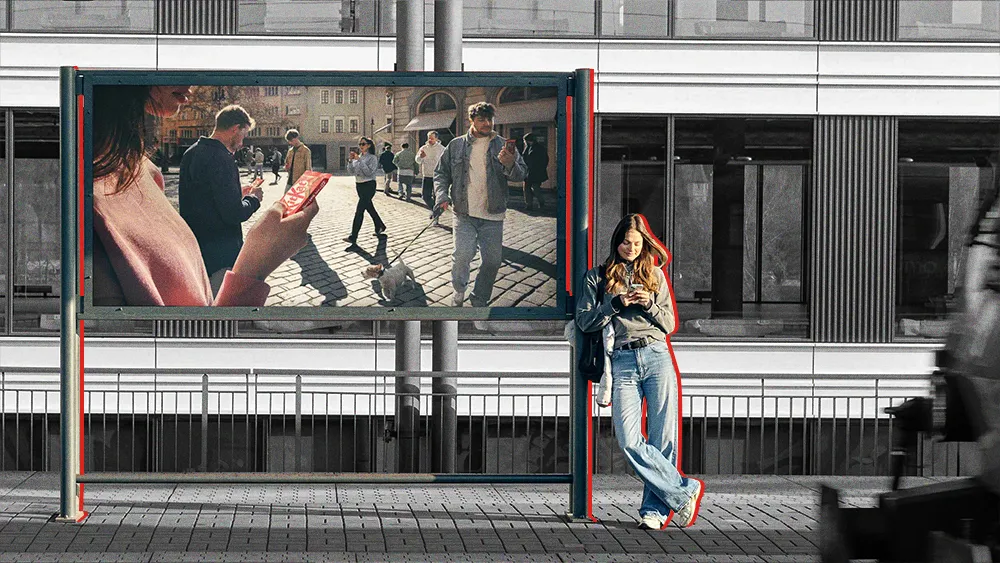
Come as you are: To find the campaign's emotional core, Dentsu and Lowe's turned to social listening. The team saw more customers focusing on smaller, highly approachable weekend projects and sharing store experiences that felt relaxed and welcoming. That input helped inform the campaign, a messaging approach that treats the store as an easy, weekend destination rather than a daunting warehouse. They were also inspired by a simple but powerful image. "It was a shot of a tattooed dad who had just gotten up in the morning. His kid was in the car and nobody was ready to go anywhere," McCarthy recalls. "It captured that feeling of possibility. 'Come as you are, we're accepting of everybody.'"
That same stream of organic, real-world content informed how the campaign was brought to life. The team worked with a director to establish a clear visual point of view, pairing dynamic in-store moments with the nostalgic use of Ludacris' 2001 track, "Rollout." Together, those elements were designed to make the store feel energetic, optimistic, and familiar to viewers who grew up with that music. "That track was a banger for a reason in the first place because it was totally motivating and made you want to go do stuff, and that remains true today," McCarthy says. "A good song is going to communicate emotion. Then we have that layer of it being nostalgic for the people we're trying to connect with."
Lights, camera, Lowe’s: The team approached the store as a series of distinct emotional beats, each captured with a different visual rhythm. A moment like finding the right plant in the garden center is slowed down, with details like water droplets emphasized to heighten the sense of satisfaction. In contrast, the appliance delivery moment is treated with more energy, using time-lapse to convey the anticipation and transformation of a new piece arriving at home. "Visually, it was really important to focus on those good stuff moments and feature them and do honor to them," says Eden. "We worked with a director who brought a really strong point of view and filmmaking craft to it that could really slow down the moments that you want to call attention to."
When Luda logs on: Lowe’s is treating the campaign as part of a larger evolution in how retail brands build relationships. The emphasis is shifting from short-term sales to sustained engagement and cultural presence, showing up across sports, creators, and the platforms where younger audiences spend time. But the strongest signal comes when that engagement happens naturally. In this case, the campaign picked up unexpected momentum when Ludacris shared it on his own. "Ludacris posted the spot to his story, and nobody asked him to. This wasn't a partnership," McCarthy notes. "He did it because he was genuinely excited about the work, and man, that resonates."
Internally, the new direction was framed less as a dramatic reinvention and more as an organized effort to stand out in a tightly competitive space. For Lowe's, pulling off that kind of pivot meant leaning heavily on collaboration between McCarthy's team and Dentsu to show how focusing on "possibility" could work at scale. "We operate in a duopoly, so you have to give people a reason to choose you versus somebody else," McCarthy explains. "When we started to unveil this across the organization, there were vigorous heads nodding. People immediately understood that it wasn't about giving them the price of a drill and the battery runtime, it was about making them feel the possibility of that project."
Team work, dream work: From early on, McCarthy and Eden positioned their relationship as one team, which meant sharing rough cuts and early ideas before they were fully polished. Both leaders agreed the lesson they are taking forward is the value of grounding creative in real behaviors that are already true of the brand. "I think the reason that we're seeing the work resonating so much is because we've tapped into something that's true," says Eden. "The human moments and the little details, some of those were reflected to us on social, and we took inspiration from that. And some of it is we just know the store experience better than anyone, obviously, because it's Lowe's."
At the end of the day, the work still has to move product. Eden jokes that the simplest, most successful outcome is someone taking home a new refrigerator. But for McCarthy, that moment is just the entry point. Success is measured by what happens after the first purchase, and whether the brand earns a place in a customer’s routine over time. "I want that person to keep coming back to us for their next fridge, and their next fridge," he says.
The brand's long-term view ties back to a more durable definition of helpfulness, one grounded in familiarity and repeat engagement rather than one-off transactions. "One memory that came up repeatedly was people doing Lowe's runs with their parents. It just became this thing that you do. It is the place you go on a Saturday, or for your holiday decorations and projects. I truly hope this is the beginning of a relationship that keeps somebody under the Lowe's rooftop for a long time," McCarthy concludes.