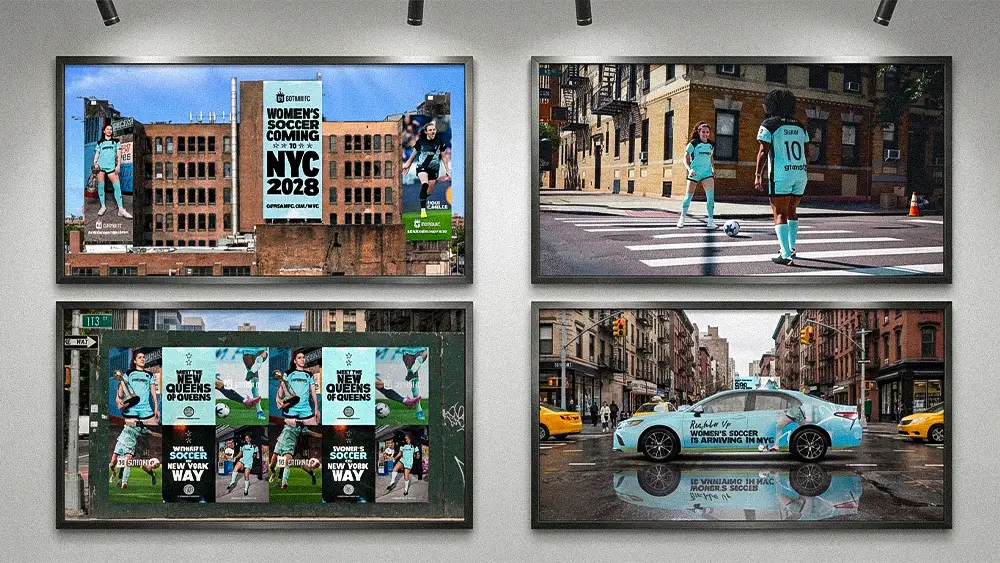
Digital Out-of-Home Lets Smaller Budgets Deliver Big, Surprising Moments
Rick King, Consultant and former Head of Marketing at the John F. Kennedy Presidential Library, shows how digital out-of-home expands access to high-impact media.

Make brandbeat one of your go-to sources on Google

Out-of-home is a great platform to surprise people. If you use it effectively, you can get people's attention. And once you get people's attention, you can persuade them to think differently.

Rick King
Out-of-home has always been associated with long-term brand building, but its real strength is more immediate. It captures attention through surprise, simplicity, and repetition, often in just a few seconds, and now that dynamic is becoming more accessible. While legacy brands have historically used billboards to build memory over time, smaller advertisers have approached them as a way to stay visible right now. The rise of digital out-of-home is changing the equation, allowing brands to buy fractional time on premium screens and show up in major markets without legacy-sized budgets.
Rick King, Consultant and former Head of Marketing at the John F. Kennedy Presidential Library, now a university instructor, has spent his career working across both large and constrained budgets. This range has shaped how he thinks about stretching out-of-home spend effectively. He first saw its impact at scale while at Showtime, where campaigns helped drive tune-in to original series. He later applied those same principles in lower-budget environments, showing the playbook can hold up without legacy-level investment.
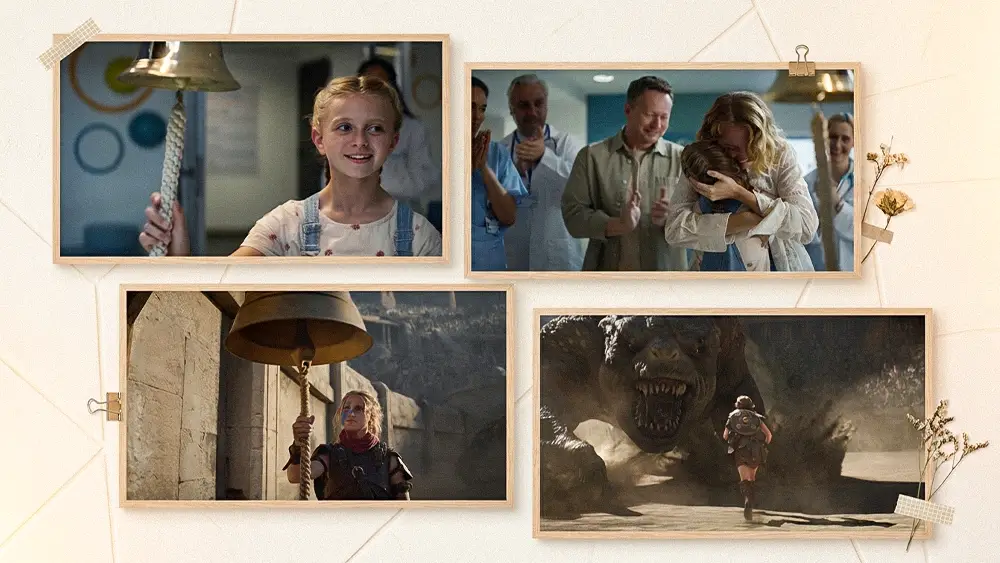
"Out-of-home is a great platform to surprise people. If you use it effectively, you can get people's attention. And once you get people's attention, you can persuade them to think differently," says King. He points to the medium’s physical scale as the advantage. Large formats and high-traffic placements create unavoidable moments, especially in dense environments where visibility is built in. That approach was shaped during his time at Showtime, where former CMO Len Fogge pushed teams to prioritize ideas that break pattern and stand out. "We were really in the surprise business. We were in the business of delivering the unexpected," King recalls.
The element of surprise
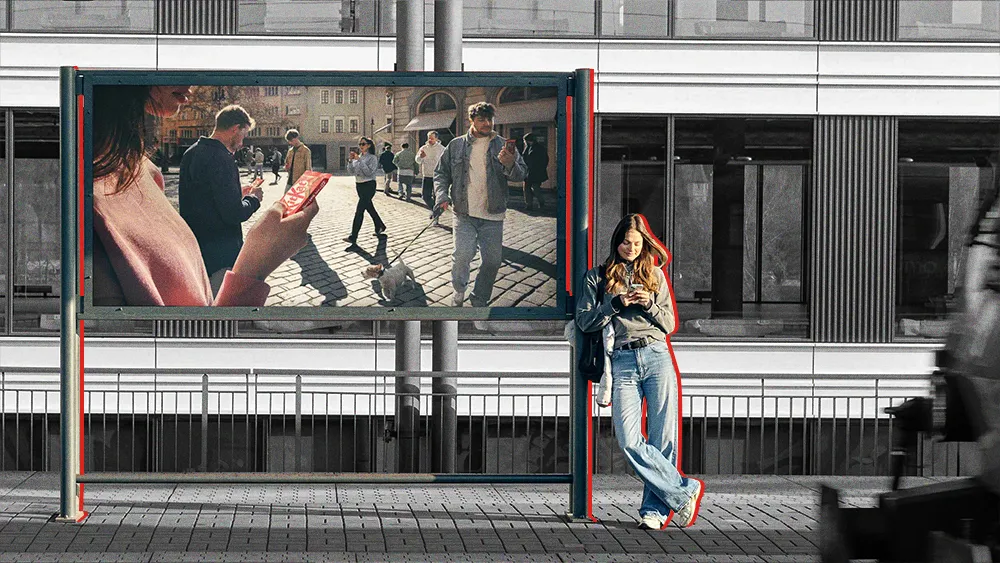
King's playbook mirrors much of Andrew Tindall's work on brand fluency and OOH. King specifically references the "Double Take" approach to out-of-home (the idea that a strong execution earns a second look) as a bridge between his attention-first mindset and the need for cumulative brand recognition. The goal is to grab them with a surprise, then use consistent elements to make the memory stick over time. "What you really want to do is get people's attention in out-of-home," says King. "You want to have enough frequency so that when they come back and see you again, they're halfway toward knowing who you are and what you're about."
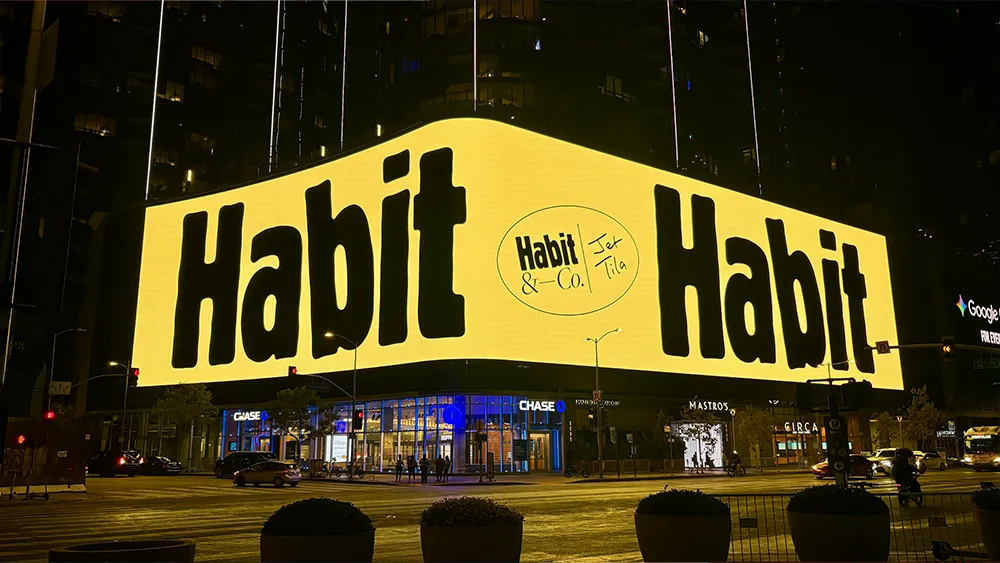
King advises marketers to commit to a small set of consistent brand assets over time so each new execution is immediately recognizable, even as the creative changes. The goal isn’t to make a single ad unforgettable, but to build familiarity through repetition and visual continuity. That kind of consistency becomes especially important in out-of-home, where audiences have only a few seconds to process what they’re seeing and rely on cues they already know. "It's about using enough consistent elements so that a year from now, when they see an ad that might be a different creative execution, they'd still say, 'Oh, that must be coming from Brand X.'"
Tapping into the frequency
Fractional buying helps campaigns hit that target frequency. With lower CPMs and flexible buying options, digital out-of-home lets buyers get more from limited budgets. Instead of committing to a single static board for thirty days, advertisers can use a DOOH strategy to spread their presence across multiple locations and time slots. As digital formats mature, brands are experimenting with contextual, adaptive executions that refresh the creative while holding onto familiar brand cues. "What I quickly grew to love about digital out-of-home was that I no longer essentially had to buy one static unit for thirty days or longer," King explains. "With the small budgets I had, I wouldn't have been able to afford many more than a couple of them. But with digital, you can be in a lot of places. Because you're running roughly about one-eighth of the time, you can be in more places for less money."
Because DOOH is transacted digitally, it often gets evaluated through a performance marketing lens. King notes that some marketers default to applying digital benchmarks, testing creative based on immediate response signals rather than overall impact. The reliance on short-term metrics is understandable, especially for smaller advertisers focused on near-term results. "Marketers have been seduced into looking at short-term metrics to decide if something is working," King says. "You certainly have to have a short-term measure because if you fail within the operating year that you're doing business in, you probably won't be around next year." At the same time, he argues for a more balanced view, one that pairs those immediate indicators with measures of attention, emotion, and brand recognition built through repeated exposure.
Small step, giant leap
King applied the same framework during his time at the John F. Kennedy Presidential Library, where he was tasked with promoting an AR recreation of the Apollo 11 mission tied to the anniversary of the moon landing. Working with a modest institutional budget, his team prioritized core markets like Boston, then used remaining funds to secure fractional digital placements in New York City and Los Angeles. The campaign, known as JFK Moonshot, combined mobile AR, out-of-home, and social to extend the experience beyond the exhibit itself and bring it into everyday environments.
The results showed how far that approach can stretch. The project went on to win a Cannes Gold Lion, demonstrating that smaller teams can still achieve meaningful visibility in major markets when media is deployed strategically. "We used a tiny part of our budget to do digital out-of-home in New York City," King concludes. "It didn’t deliver the same scale as a full static buy, but it got us onto the streets of New York and the highways of LA and kept the campaign visible where it mattered."