How AI Search is Pushing Paid Media Toward Tighter Trust-Building Across All Formats
Mariana Nasreddine, Director of Digital Media at DAC, explains how AI search is rewriting paid media strategy and what brands must do to stay visible.
Make brandbeat one of your go-to sources on Google

In conversational AI, we will not be competing for attention. We will be competing for trust. The creative that wins will not be the most interruptive but the most helpful.

Mariana Nasreddine
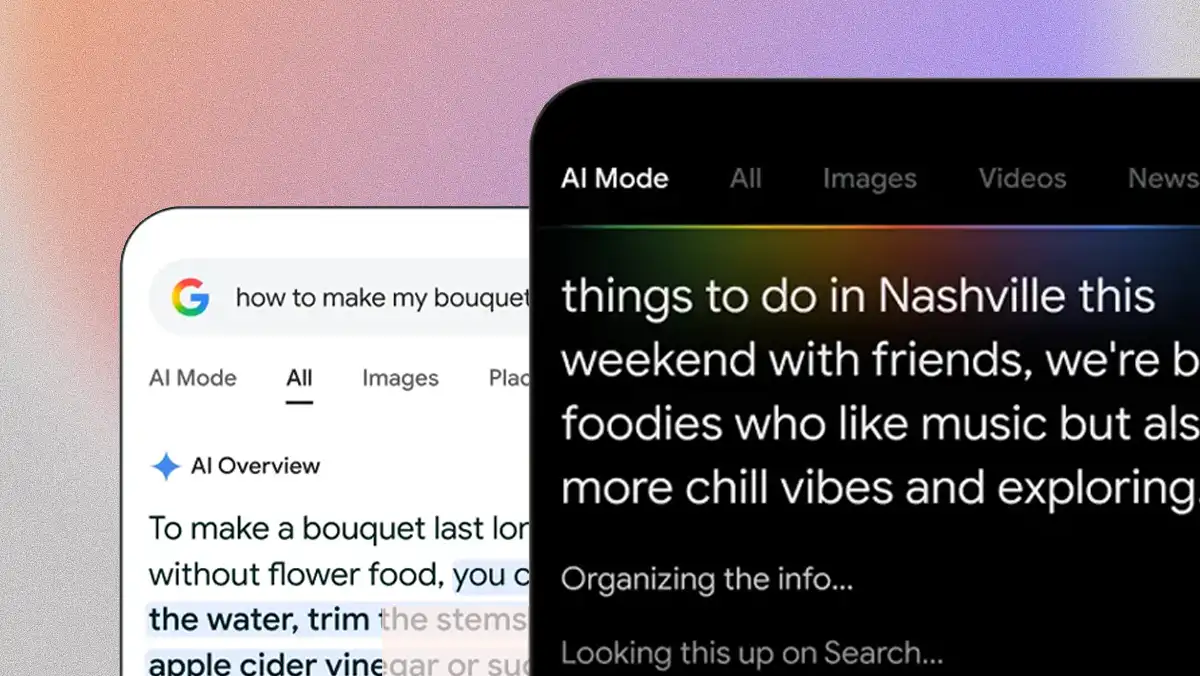
AI search is rewriting the rules of digital advertising, and brands are racing to earn inclusion in AI-generated answers. In this new landscape, visibility depends less on bidding power and more on credibility, utility, and the ability to deliver genuinely helpful responses inside the query itself.
To understand what this means for advertisers, we asked Mariana Nasreddine, Director of Digital Media at digital agency DAC, a few questions. Nasreddine is an expert in biddable paid media who is leading her team in navigating what’s next in advertising, particularly with ChatGPT. She’s already seeing that the old rules of social advertising don’t apply in the age of AI.
"In conversational AI, we will not be competing for attention. We will be competing for trust. The creative that wins will not be the most interruptive but the most helpful," says Nasreddine. In other words, future AI-native ads must be dedicated to thoroughly answering searchers’ questions. "You have to be able to pack the answers to those potential questions into concise creative," she notes.
Commit to learning: Adapting to these changes means teams must commit to learning new tools and techniques. She points to Meta’s move to its Andromeda AI personalized ads retrieval engine as an example—within this system, the most successful brands are engaging in rigorous testing, determined to understand how AI platforms work, and sharing it with the larger public. "No one knows exactly how this will unfold yet, because much of it is still theoretical,” she reminds leaders, “so come prepared, do as much testing as you can, and share it with the community."
Piece by piece: "Creative will have to become modular. Brands will need to think more like their customers, identify the problems they are trying to solve, and align their creative to that," Nasreddine advises.
As AI reshapes search, paid media can no longer stand on its own. Because consumers expect helpful, credible answers, AI platforms assess a brand’s entire digital footprint before surfacing content and reward brands whose online presence is filled with genuinely interesting, human-made content.
Money can't buy you trust: "In the past, you could buy your way to the top. That is going away." She forewarns that "brands won't be able to just buy their way in, because the conversational AI platform itself is incentivized to provide helpful information. If it provides unhelpful information, users will stop using that platform."
All formats considered: The evolution of paid media within AI search she describes as "total SERP synergy," an approach that merges organic with paid media. Nasreddine’s main focus is AI search, but implications stretch beyond digital placements. As AI platforms aggregate signals from across a brand’s ecosystem, consistency between online messaging and formats like OOH, experiential, and retail media becomes increasingly important. A disconnected billboard or subway ad that contradicts digital messaging can undermine the very trust AI systems are rewarding. She highlights that AI will pull information from your website, your Google profile, backlinks, and product feeds, which means it's crucial to invest in consistent brand touchpoints. "A brand that only relies on ads will lose because the ads will be merged with those organic signals," she adds.
The rules of how to dominate AI-generated search are still taking shape, including paid advertising's place in the AI search ecosystem. For AI platforms, the economic pressure to monetize these platforms is substantial, making ads "the obvious choice." But within this lies an opposing conflict: current consumer resistance to ads in their AI conversations.
Pay to play: AI platforms’ approaches to advertising currently vary greatly. "ChatGPT is charging a $200,000 minimum for select advertisers," she says. Meanwhile Claude claims it will never charge for ads. This contrast likely means, for now, brands will experiment more with what works rather than pay for placement. "Not many advertisers have the budget ChatGPT is proposing to throw into something unproven that only provides clicks and impressions. This means it will take time, with the biggest advertisers testing, learning, and failing first before we see a gradual rollout to others."
A tough sell: "Consumers are thinking about ads in conversational AI negatively; they don't want them. I think it's because they are expecting the disruptive ads we see on Meta. As a consumer, I don't want those in the conversation either. But if a brand does it right and provides support and help instead of pushing consumers to buy, their perception will change. Over time, they will see that the ads can be as helpful as the content itself."
For such a complicated time to be a brand advertising online, Nasreddine’s advice for gaining AI search relevance is simple: make the utility of your content undeniable. "Come prepared to deliver trust so you don't waste your dollars. Test a lot. Even if you find one concept that works, test something else, because no one really knows what will work yet. Do as much testing as you can, and share what you learn with the community." Ultimately, in the age of conversational AI search, you don't win by being louder. You win by being more useful.