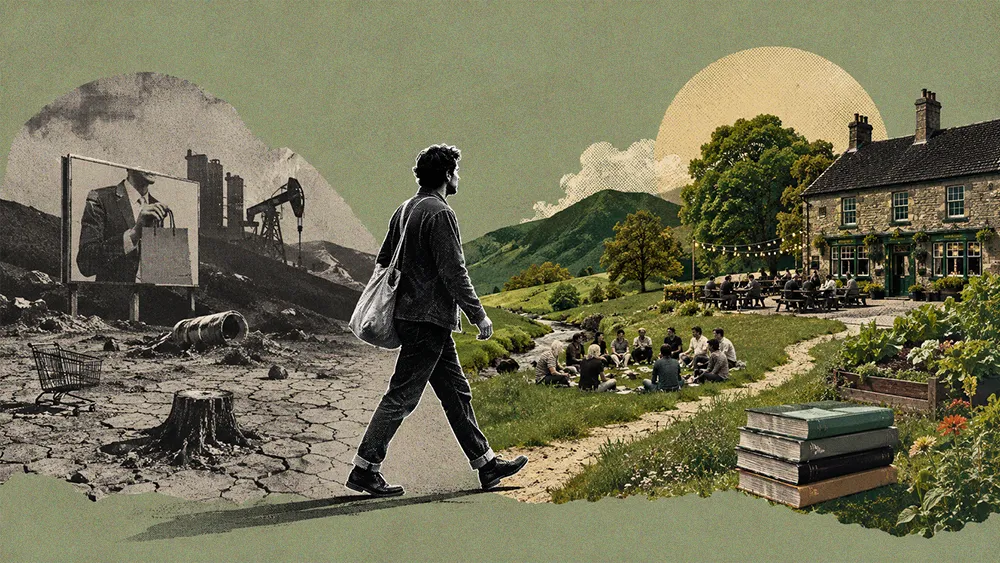
For me, regenerative creativity is a philosophy of leaving people and places better than we find them. It moves beyond sustaining existing resources to actively restoring, renewing, and revitalising both humans and the systems in which they generate ideas.
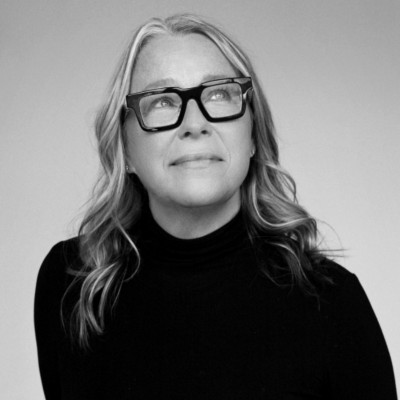 Jean BatthanyFounder @ The Art of the Pause
Many of the official panels at the Cannes Lions festival, polished through corporate comms teams, obsessed over artificial intelligence this year. On the Croisette, the raw energy felt more like a creator economy taking the spotlight. While those trends dominated industry conversations, the workforce driving them is dealing with the constant pressure of modern marketing. Award submissions were down and tens of thousands of jobs have been eliminated by recent mergers and layoffs. The resulting fatigue makes it harder for agencies to keep their strongest people.
After a three-decade career steering creative for heavyweights like Disney and Walmart, Jean Batthany hit a wall and had an epiphany. Following her tenure as Walmart's first-ever Chief Creative Officer, she took an intentional career break. While away from the corporate grind, she worked as a fractional executive with a regenerative land developer in Costa Rica. Studying alongside farmers, architects, and social economists at the Regenesis Institute, she helped build a community centered on eco-tourism and regenerative farming. Today, as the Founder of Art of the Pause and a Certified Regenerative Practitioner, she advocates for a creative management framework designed to keep teams functioning at their best.
"For me, regenerative creativity is a philosophy of leaving people and places better than we find them. It moves beyond sustaining existing resources to actively restoring, renewing, and revitalising both humans and the systems in which they generate ideas," says Batthany. Her argument is that the industry's default operating pace doesn't build in the pauses creatives need to keep producing strong work over the length of a career. "Think about treating top talent like we do top athletes, building time into the season between matches for intentional recovery," she adds. "Advertising is a marathon, not a sprint. Fortunately, burnout is an injury, it's not a fatality. But if left untreated, it gets harder to rebound."
Leaving it better
The "leave it better" ethos was playing out on the Cannes shortlists as well. Batthany points to three currents behind the strongest 2026 entries: a return to craft that pushed back against generative AI, campaigns aimed at real-world social problems, and work that gave audiences a specific stake in the outcome. Columbia Sportswear's Expedition Impossible provocation, where the brand's CEO challenged flat-earthers to hike to the edge of the world, showed how a campaign can turn its most skeptical audience into its distribution engine. "The brand earned massive media coverage, and it was really like, 'Okay, show us,' using the deniers to be the creators and amplifiers," Batthany recalls. "It was brilliant, brave, and fresh."
Heineken's The Pub That Refused to Die applied the same principle to a village hall problem in rural Ireland, taking home a major creative strategy win for documenting 26 residents rescuing their local pub. "It takes a village to save a pub, but it takes a pub to save a village," Batthany notes. The strategic move that carried the campaign past the documentary itself was Heineken's operational commitment to the pub's future. "Seeing how pub culture is the hub of the community, you wonder what happens to culture and community as we start to lose these third places amidst a loneliness epidemic," she adds. "Heineken stepped in organically to train and support new publicans, giving hope to others."
Artplan's Nigrum Corpus, which took the Glass Lion for Change, applied the same principle inside a completely different system. The campaign treated racism as a diagnosable condition and produced a medical textbook designed to help doctors study and care for Black patients, and the textbook remains in circulation as a working reference well after the campaign's media buy ended. "The textbook redefined medical education and humanized Black bodies for an estimated 2 billion people worldwide," Batthany explains. "It gives me goosebumps seeing how we can use creativity and craft to change the world."
Regenerative work, inside and out
Participation was the commercial engine behind several of the year's strongest campaigns. As more consumers pay for subscriptions that strip out traditional advertising, campaigns have to give audiences a specific reason to lean in. Batthany points to the KitKat Heist as the sharpest example this year, where 12 tons of chocolate were "hijacked" from trucks and the brand invited fans to solve the mystery in real time using tracking codes. "They took a product shortage, mashed it up with an interactive crime show, and mashed that up with Willy Wonka's golden ticket," she explains. "It shows that the more we engage our customers, the less they're going to avoid our content."
The same regenerative discipline that keeps campaigns working after the media buy ends also determines whether creative teams keep functioning after the win. Walking the Cannes grounds, Batthany noticed young Gold Lion recipients showing signs of intense fatigue, and the pattern signals what happens when the pressure to deliver the next headline outruns the work of maintaining the conditions creative teams need to keep producing. "I'm a big believer in servant leadership and the idea that my teams don't work for me, I work for them. It's crucial to create the conditions for humans to thrive," she concludes. "The number one thing leaders can do is build cultures of psychological safety, where play is invited, risk is encouraged, and failing forward is rewarded."