Sports Properties That Invest In The In-Between Turn Fan Interest Into Revenue
Michael Porter, Marketing Consultant and Director at Porter Wills, makes the case that the quiet weeks between events are where fan loyalty and ticket revenue are actually won.

Make brandbeat one of your go-to sources on Google

Everyone focuses on these big peaks because everybody loves a peak, but I actually think the opportunity is in the trough. Sports care about their sponsors, their partners, their revenue targets, but they forget that fans power the sport.

Michael Porter
Sports properties love the spike: race week, game day, sponsor takeovers, packed feeds, big visibility. Then the weekend ends, the posts slow down, and the fans who were most engaged are left to drift. The real commercial upside sits in that neglected in-between, where steady fan conversation can build trust, strengthen sponsor value, and turn attention into ticket sales long before the next event arrives.
Michael Porter knows exactly how this promotional cycle works and hopes to see new patterns arise. A marketing executive who helped build five global sports properties from concept to commercial traction—including Formula E, SailGP, E1 Series, and RunGP—he now operates as an independent marketing consultant and fractional CMO through his firm Porter Wills. Porter works with sports properties on marketing and ticketing strategies that directly turn fan interest into revenue. And he says there's still a huge blind spot when it comes to noticing the value of posting in between big events.
"Everyone focuses on these big peaks because everybody loves a peak, but I actually think the opportunity is in the trough. Sports care about their sponsors, their partners, and their revenue targets, but they forget that fans power the sport," Porter says. Converting fan attention into actual sales starts with rethinking the off-season. Coming from highly seasonal sports like motorsport and sailing, Porter points out that the standard race-week spike leaves the quiet weeks between events underused when companies could be building momentum. Maintaining continuous community management through off-season social media strategies can help build the foundation for future brand loyalty and ticket sales.
The brilliant basics
Porter says connecting with thousands of fans in a meaningful way can be surprisingly simple and low budget, starting with engaging with fans directly on socials. "You can do that for free in the comments because fans will see that and appreciate the response," he notes, adding that intent is what makes for impact. "The power of an instant connection means they'll go and tell their friends. Do the brilliant basics. I know it sounds cliché, but just do the basics."
But the biggest roadblock to executing those basics is in the internal politics. Some decision-makers prioritize the instant gratification of a ticket-sale spike and highly visible campaigns over the disciplined, monthly or annual exercise of true brand building. Because measuring brand health requires infrastructure many properties lack, a disproportionate share of the budget often ends up serving solutions that look good to boardrooms but aren't driving tangible results. That pressure can delay investment in more sophisticated out-of-home measurement and attribution that looks beyond vanity metrics.
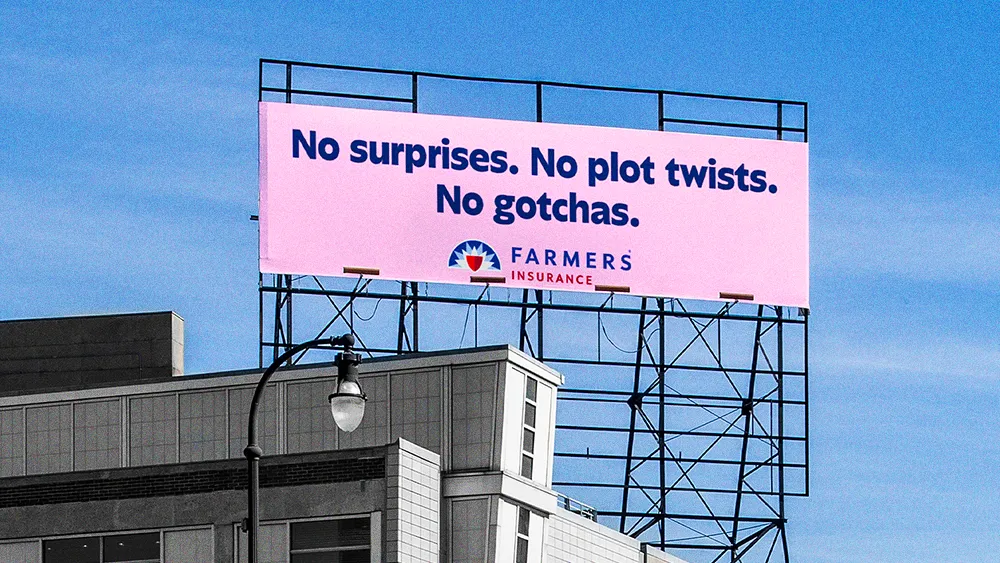
He admits to using this approach to manage expectations in the past. "I used to do that. I knew where my CEO would be during an event, so I'd buy all the billboards. He felt my marketing was larger. The thing is, it's optics. If the decision-makers see scale, they assume it's working." Today, he uses a different workaround to buy political cover. "If I had half a million dollars to spend on an integrated marketing campaign, would I spend 50% on out-of-home billboards? No. I'd spend 5% targeted to my stakeholders. That would give me the freedom to then go and fight to try and introduce a brand relevance measurement metric."
Once marketing teams buy enough political room to measure what matters, a diversified media mix works best. Converting modern fan attention into measurable revenue often means deploying live sports advertising tactics across multiple channels at once. Porter describes integrated campaign execution as a "Swiss army knife," where billboards, radio, Spotify plugs, and pre-roll on local news operate simultaneously. It's a similar approach to how brands plan around major events like the Super Bowl.
Centering the fans in content creation
Company engagement on socials is critical. But to reach audiences on modern platforms authentically, properties need to hand content creation over to fans. Pointing to independent livestreamers like IShowSpeed, Porter notes that some organizations still hesitate to invest in subsidizing creators. What they forget is that by doing so, they're buying distribution into a captive, highly engaged audience.
Some traditional properties struggle to balance brand safety with the creative freedom Gen Z and Gen Alpha audiences expect. Porter's answer to this is structured enablement. "If sports can actually define a framework where creators and next-gen audiences can operate within the guardrails of the brand, they can send them out into the world to go and have some fun," he says. "Go and inspire us, motivate us, and prove to us that this is the model."
Selling without selling out
Finding that balance between creative freedom and brand safety in social also applies to sponsored content. B2B integrations are a financial reality that pays for the sport, but audiences tend to spot quickly when something is for the brand rather than for them.
Porter relies on a strict 80/20 ratio to balance authentic fan storytelling with required B2B sponsor integrations. "It's briefing the creator to find ways to integrate the partner product or service, rather than me as the marketer dictating the talent, the product, and the brief," he says. "Ultimately, it comes down to good briefing. If you can write a good brief that encapsulates everybody's objectives but still gives them the freedom to create something authentic, that's still 95% better than anything else coming out of a lot of the rights holders."
The conversion playbook, from off-season to on-sale
For Porter, building an engaged off-season community is often the first step toward feeding a disciplined ticketing cycle. Rather than relying on a single on-sale blast, he advocates a multi-stage process that begins the moment the previous race concludes.
If leagues want to sell out an event in a single day, book a global pop star like Bad Bunny. For every other occasion, Porter shares it takes six weeks minimum and four stages to lead fans to a ticket sale. "You've got to stagger it and break up your audience. Which audience groups fit under each ticketing cycle? Work backwards from that. It's not one-size-fits-all. Know your data, know your customer, and tailor around the framework." The goal is to use all that off-season community building to do the conversion work before the on-sale even opens.
So how do sports properties pull it off? The cycle starts with a one-week early-bird phase aimed at superfans, offering either a monetary discount or a simple upsell like a cap or shirt. That is immediately followed by a strict 24-hour window targeted at that same group. "For anyone in the early bird group, make sure they are communicated to via email, social, video, website, or paid targeted advertisement warning them they have 24 hours before this discount goes away and we enter full price," Porter says. "You can actually do quite a lot of your conversion in those two phases."
After that, he keeps full-price tickets open as long as possible, only considering discounts or new packages if demand clearly falls short. The point is to use segmentation, timing, and pricing discipline to convert the interest built in the trough between events.
Women's sports as the working model
Fan-first community building, authentic conversation, and thoughtful monetization are already fueling the booming commercial growth of women’s sports. The global value of the space recently jumped from roughly three-quarters of a billion to "almost two billion pounds in two years."
"We all need to not just take it seriously, but throw rocket fuel, or whatever the most sustainable fuel is, on it to send it to the moon. I am all for the growth of women's sports," he says.
Porter views this momentum as a working blueprint other properties can learn from. "I love the next generation owning the narrative and putting my generation and older back in our box, and that's called confidence," he says. "Women's sports is all about the fans: it's authentic, it's real, and there's so much conversation happening." To him, that's the future of sport, and how it presents itself online. "It's less serious, more fun. It's sport, it's movement. Enjoy yourself."