Defining When Creative Work Is Finished Protects The Time AI Production Promises To Save
Catalin Dobre, CEE Creative Director, Chief Creative Officer, and Co-CEO for Romania for McCann Worldgroup, explains why an agency's value moved from making more ideas to ruling most of them out.
Make brandbeat one of your go-to sources on Google

If you're not extremely disciplined, you end up with a process that on paper takes less time, but in reality takes longer. Why? Because it's a process where anybody at any certain point can change anything.

Catalin Dobre
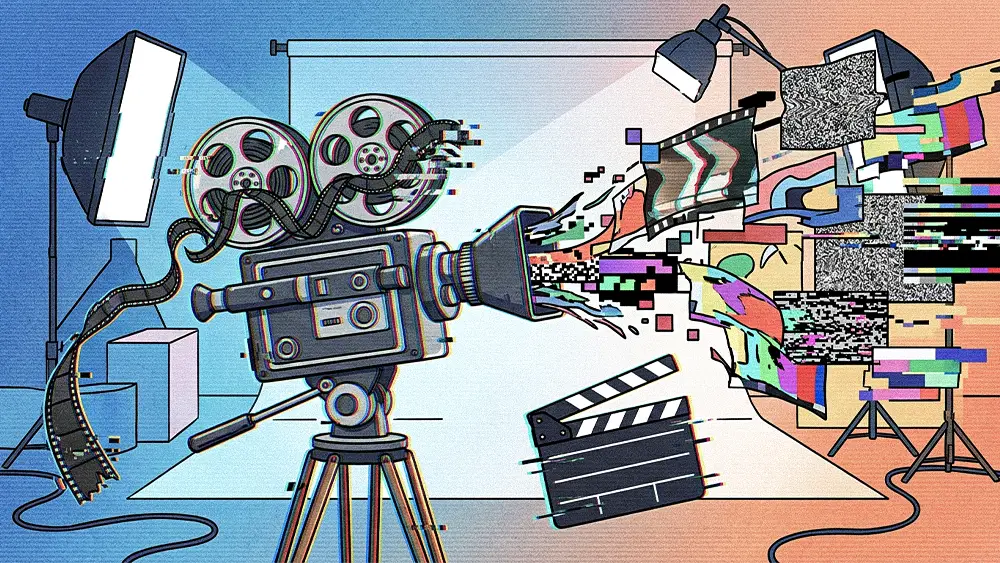
The typical film shoot ends on a fixed day, and the footage captured on that day is what the team has to work with. AI production has no equivalent deadline, since the files stay editable until the work ships. Anyone working on the brand, at the agency or at the client, can ask for a new version. Someone has to decide when the work is finished, and that decision now falls to creative leaders.
Catalin Dobre is CEE Creative Director, Chief Creative Officer, and Co-CEO for Romania for McCann Worldgroup. He joined the agency as a copywriter in 2004 and has worked there for more than 20 years, on brands including Mastercard, Vodafone, and IKEA. Dobre's work has won four Cannes Lions Grand Prix and two Titanium Lions, and he entered the Golden Drum Hall of Fame in 2023. His teams now use AI across the creative process.
"If you're not extremely disciplined, you end up with a process that on paper takes less time, but in reality takes longer. Why? Because it's a process where anybody at any certain point can change anything," says Dobre. His teams use AI heavily, and he has watched the time it saves come back as changes. The people asking for those changes are often not the people who set the direction.
After the crew wraps
A reshoot is expensive enough that teams work with the footage they have, and the edit starts from that material. Dobre spent most of his career under that constraint, and he describes the commitment it forced as part of how the work got finished. "Back in the day, when you are shooting something, people are preparing, you're doing PPMs, you're doing all that," notes Dobre. "When you're shooting, you are committed to what you're doing. We're going to end up with this, and this is it. We're going to put it out there."
No equivalent of the wrap exists in an AI timeline, so the work stays open to whoever wants another version. Dobre has seen that option used at every stage, including after a piece has been signed off. "With AI, you do the same thing, but after you do it, you still have the possibility to still change things," he explains. "And you are changing things because you have a lot of people involved."
Dobre has been through one version of this before, when new platforms arrived. He advises agencies to use the tools, but watch for the effects at the same time. "When social media popped in, everybody thought, "Wow, that's great, you're connecting with people,'" adds Dobre. "I think with AI, we're kind of at the same stage."
Briefing the machine
Experience is the advantage Dobre sees in AI work, more than any familiarity with the tools themselves. Years of judging what came back from a request teach a creative what to ask for in the first place. "If you don't know how to brief, you won't know how to prompt, because you don't know what you're asking for," says Dobre. "If you don't know how to ask for something very specific, then you're in a black hole, and half a day is done."
Dobre asks his teams to write their own version of the work first, whether that means a text, a layout, a brief or a piece of feedback. The draft goes into AI to be sharpened, and the person edits it again afterwards. The AI pass comes in the middle of that sequence, after the person's draft and before their final edit. "If it's not clear for you, AI is just going to come with deeper confusion," notes Dobre. "Don't give up on what you know. It's deeply human, and that's your skill."
With a shortcut now available on just about every job, Dobre's worry is what a tired team will accept. He rates much of that output at about the level of junior work. AI tools also often produce options faster than teams can judge them. "If you just take a brief and you put it in AI, it's going to give you something, and maybe it's mediocre," he explains. "That loop when AI is giving you mediocrity, for me that's one of the biggest dangers."
Filtering on the way out
Agencies and their clients can now both produce material faster than the other side can read it. Dobre wants an agency cutting that volume down before any of it reaches a client, and describes what happens when no one does. "It's not only our opportunity, but our responsibility, both to integrate AI in what we're doing, but also to use it in a responsible way," says Dobre. "If you're not curating the content, you end up in a space in which confusion is all around, a never-ending ping pong of mediocrity, agencies sending AI ideas, clients giving AI feedback."
Producing more options now costs an agency little more than an afternoon, so more options get produced. Dobre sees no value for a client in that extra volume, and he expects agencies to earn their fee on what they rule out. "Now with AI, we can put 20 ideas in front of a client. That's the worst thing," Dobre concludes. "What is going to be very valuable with this gigantic amount of content is our role of being curators. We need to be curators of content, we need to be curators of ideas."