Award-Jury Duty Has Become the Industry's Overlooked Creative Training Ground
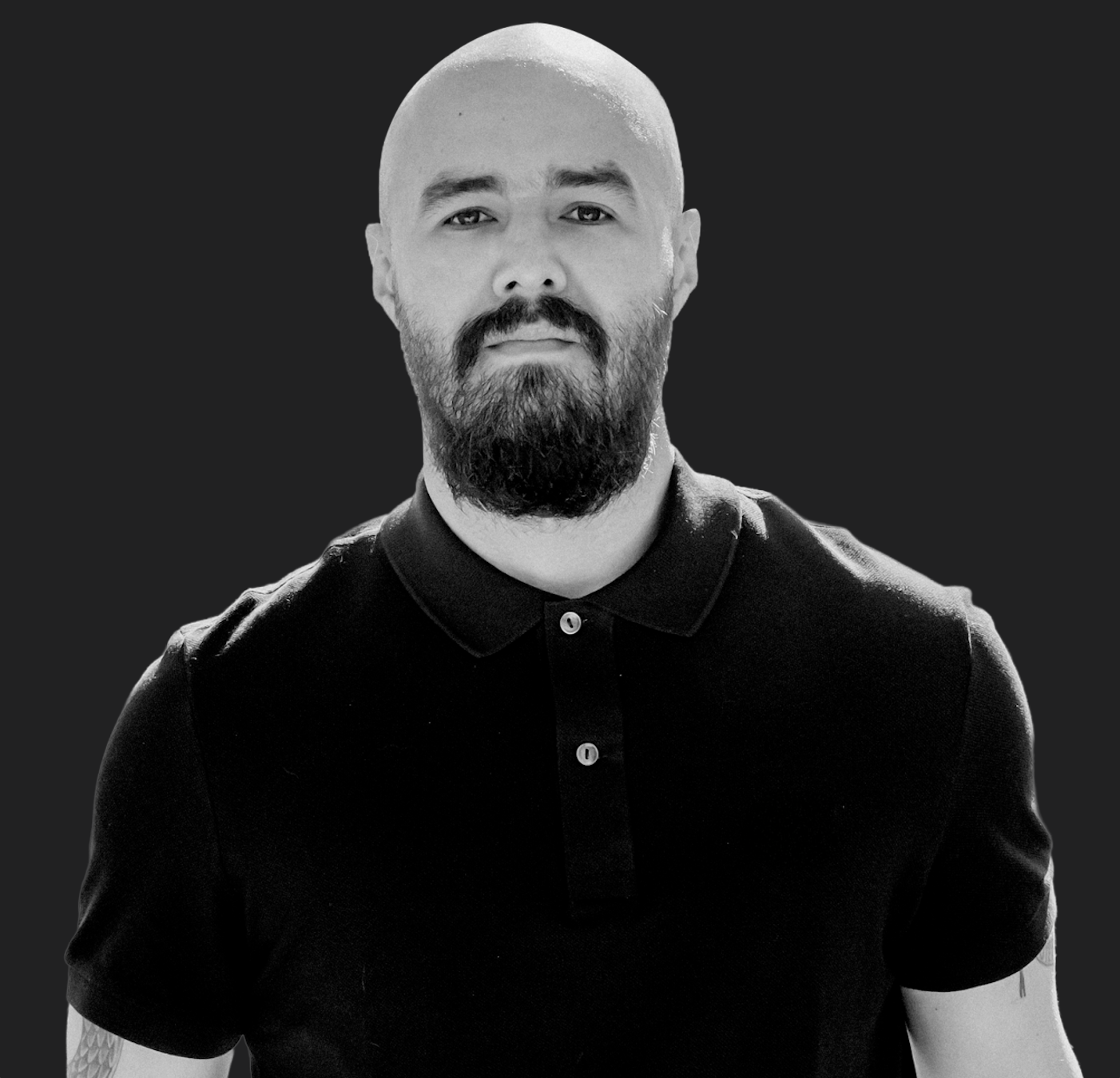
Fabio Barros, Freelance Global Creative Director at Meta, treats award judging as an MBA, using unfamiliar entries to challenge how he approaches audiences and ideas.
Make brandbeat one of your go-to sources on Google

No matter how far you get, there’s always someone who inspires you. Even your role models have role models.
Fabio Barros
Senior creatives live on deadlines, a deck due Thursday and a client note that needs an answer by lunch. Not much time is left over to look at what anyone else is making. Put them on an award jury, and whole days belong to strangers' work, each entry answering a brief someone else got, for an audience in a market the juror may never have worked in. That displacement is the point. Few things sharpen a creative's own work like a week spent studying everyone else's.
Fabio Barros spent five days on the design jury at The One Show 2025, working through more than 100 entries with jurors from around the world. He's a Freelance Global Creative Director at Meta and came up as an art director with an illustration background. Over 20 years he's built campaigns at Ogilvy, McCann, R/GA, AMV BBDO, and Publicis, working across São Paulo, Qatar, Dubai, London, and New York. That work has drawn recognition from Cannes Lions, The One Show, D&AD, the Clios, and the Art Directors Club. He believes watching other people's work is how he gets better at his own.
"No matter how far you get, there’s always someone who inspires you. Even your role models have role models," Barros says.
The jury room is a creative MBA
Barros treats judging as coursework. He regularly emails Cannes and D&AD asking to join their juries. "Watching award work is your MBA in creativity," he says.
He admits his schedule rarely leaves room for anything outside his own projects, which is what makes the jury week valuable. Scoring a piece starts, for Barros, with working out why the team made the choices it did. He goes in looking for ideas he can absorb and apply at home with a different point of view. The only requirement is leaving ego outside long enough to watch other people's work with real attention.
Every market hears a brief in its own accent
Juries pull work from every region, and each entry reflects how its market expects to be addressed. Barros knows those expectations from the inside. He has sat in meetings with ten nationalities at the table, and each group brings its own sense of how a brief should sound. "Working across markets has taught me to question my own assumptions. Something that feels obvious to me might land very differently with someone else. You have to listen to the people who understand that audience and be willing to rethink your approach," he says.
For Barros, that variety is what a juror can meet inside a single category, where one entry may lead with feeling and the next with precision. He speaks several languages imperfectly and says the effort leaves him better prepared for those rooms. He builds that cultural nuance through exposure, one market and one jury at a time.
Watching those differences has also changed how Barros evaluates an idea. "Sometimes I tell my teams I miss being a junior, when I was just worried about delivering a good idea," he says. "Today it's about the good idea reaching your audience, whether that's millennials or Gen Z."
"It's about them," he tells junior creatives, pointing past the deck to the people it's for.
AI gives him another read on an idea
Barros uses AI the way he uses a jury, as a second opinion on who the work is for. He asks whether a concept makes sense for a specific audience or which details would help a platform idea connect with Gen Z. The finished piece is another matter. "There are limits," he says, a point he recently made to a collaborator when AI came up for an illustration job.
He holds that boundary with ease because he has lived through this kind of shift before. He started in advertising when Photoshop arrived and watched colleagues worry it would take their jobs. Photographers kept working and changed how they shot. To Barros, AI is the next Photoshop. "Take an F1 driver," he says. "The man is the one who drives. The car is just there."
What's new this time is that clients have the tools too, and they know how fast work can move. "You cannot tell the client you don't like to use the tool, so you're going to deliver in five days," he says. "The client knows it can be delivered in a day and a half. They'll find someone who uses the tool."
Speed is the obvious payoff, along with the rote work AI can take off creative teams. Barros sees the value earlier, using the tool to question an idea before anyone commits to it. The decision about what ships stays with people.
He studies the street work that makes people look up
The same habit shows up in the work Barros studies outside award shows. He notes that people now spend more time on screens than on the street, and he sees the challenge as making something that can compete with the phone in every passing hand. He points to two recent campaigns from other teams that stuck with him.
In August, Uncommon Creative Studio rolled a 10-foot ball of hair through Manhattan to launch K18's FutureIQ serum, and New Yorkers stopped mid-stride to film it. Last December, Disney+ promoted the second season of Percy Jackson and the Olympians with a Hollywood and Vine billboard that poured real water into a pool beneath the screen. Each idea left its frame and became a physical moment people could capture and share. Barros says getting there takes a war room that gives people space to push for ideas like these, and he admits that's hard to pull off.
The admiration runs the other way too. People tell Barros they'd love to have made his own campaigns. "For me, it's not that great," he says. "But for someone, it's great." Somewhere a junior creative has one of his pieces saved on a phone, studying it the way he studies a stranger's entry on day four of judging.