If you don't make me care, if you don't disturb my equanimity, I'll never respond to your message.
 Tracey BraderCSIO @ Remedy Edge UK
The most awarded pharma creative at this year's Cannes Lions competes for attention against mainstream consumer brands, and it gets there by making an audience feel something before presenting the science. The edge goes to teams that can read people.
Tracey Brader is Chief Strategy and Innovation Officer at Remedy Edge UK, an Omnicom Health agency that specializes in healthcare communications. She served as this year's Pharma Jury President at Cannes Lions. Brader has spent her whole career in healthcare agencies, in roles spanning global market research and advertising to patients and clinicians, and she has run her own agency and consulted at the IPA.
Her argument comes down to a fight for mental space against everything else pulling at a person. "If you don't make me care, if you don't disturb my equanimity, I'll never respond to your message," she says. Most pharma work leads with the evidence and assumes attention will follow. Brader starts from the opposite end.
Push, don't break
The best work at the festival came from teams that turned a strict rule into the starting point for the idea. Brader sets one limit on that. Pharma is regulated tightly enough that a single misstep can damage the whole sector, so being brave means pushing a rule as far as it goes without breaking it.
China shows how far that approach can go. Advertising prescription drugs to consumers is constrained there, and cultural norms keep open talk about sex and intimacy largely private, which leaves little room to promote an erectile dysfunction brand directly. Ogilvy Shanghai's Viagra Blue Brands campaign, a Gold winner in the Pharma Lions, works within those rules by casting Viagra as one of a set of blue-branded products, so the "blue brands" stay culturally present without the drug being advertised.
"If Viagra is just one brand in a portfolio, you can talk about the others even when you can't talk about the drug itself. You work creatively within the code to solve the problem," Brader notes.
Person before patient
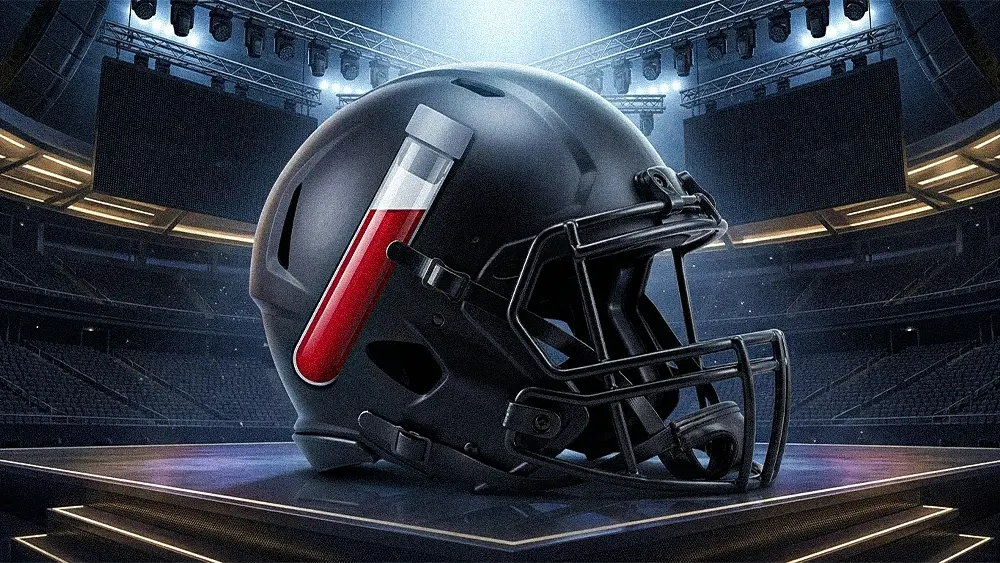
This year's Pharma Grand Prix went to Novartis and Fallon for Relax, It's a Blood Test, a Super Bowl spot built around NFL tight ends. Many men avoid prostate screening because they dread the rectal exam, so the campaign reframes the first step as a simple blood test and lets recognizable, unflinching athletes make it easy to take seriously. It treats that reluctance as reasonable and points a man toward getting checked while leaving his self-respect intact.
"You've got the archetypal big, tough American tight ends who come across as very brave going into anything, and even they look at a rectal exam and think, who wants to do that?" Brader adds. When even they admit they would hesitate, getting checked stops feeling like a test of nerve.
When everyone's funny
Humour runs through much of this year's standout entries, and Brader counts roughly five of the seven medal winners leaning on it. She welcomes the change while wondering how long it lasts, because the industry has a habit of chasing whatever succeeded last.
Pharma relied on one familiar formula for years, the soft-focus patient walking a dog on the beach, and comedy risks the same fate. The joke lands now, but spread across every brief, that spark fades. "If it's all humour, we destroy the very trick that got us that connection, because it becomes too predictable," she says.
Show, don't tell
The campaigns Brader admires most let a healthy audience feel what a condition is like from the inside. Novartis UK's MSfx campaign plays like a car commercial. The misdirection is deliberate, built to reach patients who steer clear of health information, and the automotive framing carries the message once they are watching. The film puts MS symptoms in the position of a dashboard warning light, a signal no driver ignores, and asks people to give a worsening condition the same regard.
Utility is where Brader points next, past craft to the question of whether the work leaves a patient better, or improves how their condition is managed, once the run ends. Innovation gives it a reason to exist beyond the award show. "If you've got humour and you've got activation, utility is another way to get people to listen to your message. Will it make my life, or that of my patients, better having had this experience?" she says.
The views and opinions expressed are those of Tracey Brader and do not represent the official policy or position of any organization.