Social Relevance Becomes The Standard For Brands Building In Local Markets
Orlando Alvarez, Chief Creative Officer at Publicidad Comercial MullenLowe, separates cultural recognition from social relevance and shows what that difference changes in the work.
Make brandbeat one of your go-to sources on Google

We don't go for the traditional cultural pupusa thing. We go for what's socially relevant to the audience. That's mainly the difference: what's socially relevant instead of only culturally relevant.

Orlando Alvarez
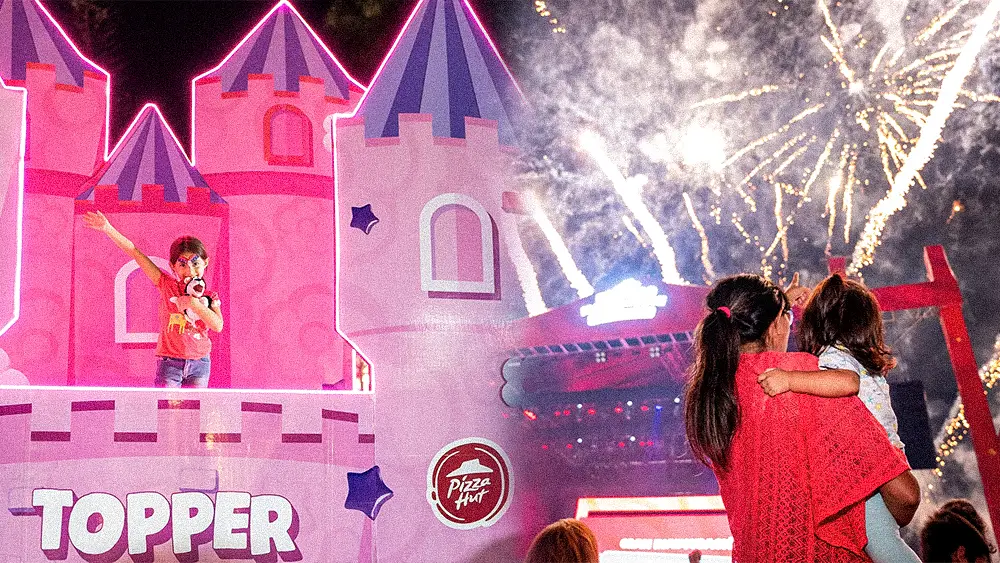
Pizza Hut's franchise operator in El Salvador had been paying to license the hit children's show Paw Patrol for its family and kids activations. The marketing team and agency proposed putting that money behind a character the chain already owned, a costumed pizza dog called Pizza Puch, and building it into a live entertainment world named Mundo Mágico de Pooch. Paw Patrol was already famous across Central America, so the question was never whether families would recognize the character. The case for the swap came down to what families in the market could reach on an ordinary weekend, and what the brand could credibly offer them. They decided to activate this live experience for an entire month, launching the national children’s day.
Orlando Alvarez is Chief Creative Officer at Publicidad Comercial MullenLowe in El Salvador, where he leads a large multidisciplinary team and serves on the regional executive committee of GCC Group, which supports agencies across Central America and the Caribbean. He has led award-winning campaigns across Latin America and the Hispanic US, including the first Cannes Lion in El Salvador's history, and he founded a healing platform built around animated stories by survivors of childhood sexual violence. A large part of his work involves deciding which parts of a local culture a brand has any business touching.
"We don't go for the traditional cultural pupusa thing. We go for what's socially relevant to the audience. That's mainly the difference: what's socially relevant instead of only culturally relevant," says Alvarez. The pupusa is the obvious marker of Salvadoran identity, eaten across the country every Sunday and reached for freely in advertising. The Pizza Hut campaign took a different route to that audience, as did an installation he built for a ministerial conference in Bogotá.
Owning the character
Alvarez's agency manages the Pizza Hut account for El Salvador and Guatemala. Pizza Puch is a costumed dog, a mascot that can appear in person at an event. Marketing team and agency took the character to the franchise operator with a proposal for the family budget. "Years before, they were paying for a license of Paw Patrol, which is a huge cartoon for kids," notes Alvarez. "We already had our own intellectual property, so we created the Mundo Mágico de Puch, the magic world of Puch."
Mundo Mágico de Puch ran as a live experience for an entire month, dressed and staffed so families could walk into a full world built around the character, so successful that its on its 4th year of implementation. Alvarez measured it against Disneyland, a trip that's an aspirational family milestone across the region. "In Central America, not everyone has the income to even dream of going to Disneyland," Alvarez explains. "Culturally, it was more relevant for that audience to bring Disneyland to them. This would be their Disneyland."
Alvarez treats conditions outside the product category as part of the brief, tracking what is happening around an audience socially and economically at the moment the work goes out. They changed what the Puch launch was being asked to deliver for families once they looked at the year it was arriving into. "The first year that we launched it, crime was de-escalating thanks to government actions," he says. "So this was a way for the brand to give happiness to their clients and the kids in the middle of a renewed social peace."
The credibility test
Alvarez makes a second decision after reading those conditions, choosing which cultural signal a brand borrows to speak into them. Every signal carries its own associations, and music is the most common borrowing in Latin American advertising, where a genre can move a campaign into an audience that would otherwise skip it.
Getting the choice right shows up in outcomes. A survey of 10,000 people across demographic segments found that those who saw an ad as culturally relevant were 2.7 times more likely to buy the brand for the first time and 2.8 times more likely to recommend it. Alvarez and his team runs every borrowed signal against the brand's own history before it reaches production. "You have to consider what is credible for the brand," he adds. "You're not going to use reggaeton for a brand whose personality or DNA has nothing to do with it, because it's going to backfire."
Alvarez checks what a brand says about the world the same way he checks a music cue. Some of his clients want the work to reach past the commercial account. He produced a global print campaign on press freedom for an international association of news publishers, made in El Salvador at a time when print at that scale rarely came out of the region. "When we talk about a brand's purpose, we mean what's going to be really logical for a brand to be doing," Alvarez notes. "If you have a brand that sells tacos, you're not going to be selling health, even though they have everything health-related in the production of their product."
Three rooms in Bogotá
Colombia and Sweden hosted the first global ministerial conference on ending violence against children in Bogotá in November 2024, with WHO, UNICEF and the UN Special Representative on Violence Against Children. Delegations from more than 130 countries attended, and satellite events ran in the days before the main program. Alvarez and his team built an installation for one of those events alongside the Latin American branch of Brave Movement, where a group of survivors wanted their proposals written into the government pledges. "Ministers and presidents go mainly to these things and end up watching endless PowerPoint presentations with numbers," says Alvarez. "Numbers are cold and they cannot transmit the reality of what we are trying for them to stop and prevent."
The team built 'Unsilenced Rooms' in the conference hallways, recreations of the bedrooms where three survivors from Honduras, Brazil and Peru were assaulted as children. Each survivor's account ran on the walls, with a QR code opening a recording of them setting out what they wanted from the pledges, and at the end of the corridor the three adults handed their proposals to ministers directly. "Knowing how to culturally or socially intercept something and make it relevant with your audience is really valuable," concludes Alvarez. "Not only from Central America, but across every country."