How Feeling Beats Targeting In The Race For Cultural Reach
Felipe Silva on why the campaigns that cross every border in 2026 start with authentic human emotion, from telenovelas to T-Mobile's Marcello Hernández spots.
Make brandbeat one of your go-to sources on Google

Get to the basic needs of the consumer. The basics of feeling love, feeling that someone is listening to you, that the brand knows what your fears are, what your dreams are.

Felipe Silva
Every June, the Croisette fills with work built to move people across languages, borders, and cultures at once. The campaigns that carry that far run on a few recognizable feelings: longing, pride, and the pull of a dream someone hasn't said out loud.
Felipe Silva has spent more than two decades finding those feelings and putting them on screen. He writes for telenovelas across Televisa and Telemundo. His writing on Buscando a Frida, winner of the 2022 International Emmy for Non-English Language U.S. Primetime Program, earned international recognition. Now a multimedia producer at TelevisaUnivision, he builds stories for audiences who span countries and generations, and as Founder and CEO of Storydreamz, the creative production company focused on the Hispanic market, he's got a working theory about why some brand messages cross over and others stall at the border.
"One of the most powerful tools that brands and marketing have is the connection with emotions, because emotions really cross the borders of languages and countries," Silva says. "It doesn't matter if you are speaking English or Spanish or Japanese. The emotions are universal."
Emotion is the widest door into any room
How can marketers successfully thread specificity and scale? "It depends what kind of objective the brand is trying to get," says Silva. News grabs attention with fear, and its biggest headlines run on it. A brand can reach for any color on the emotional spectrum, from fear to happiness, and pick the one that becomes its partner in reaching the consumer. The specificity lives in the feeling, and the feeling is what scales.
Coca-Cola is his reference point for a brand that has run this play for a century. "Coca-Cola is always talking about happiness, and they relate happiness, which is a very powerful and strong emotion, with the consumer," he says. The product rides underneath the feeling, which is why the association survives across every market the brand enters.
The pattern shows up in the measurement now, too. Marketing consultant Siobhan Hardacre told brandbeat that emotional spikes track directly to commercial return, describing how work that spikes emotionally drives sales, brand equity, and memory over a three-to-six-month window. What Silva learned by watching viewers respond to a character, brands can now watch land on a P&L.
Meet the basic need and the message does the rest
Silva's advice to brands strips the work down to something almost primal. "Get to the basic needs of the consumer. The basics of feeling love, feeling that someone is listening to you, that the brand knows what your fears are, what your dreams are," he says. Load a message with those elements and keep it simple, and it carries further than the version engineered to impress.
He puts the weight on simplicity, arguing the plainest version of a message travels the furthest. "Sometimes brands are trying to be very mathematical and analytical with the numbers and statistics. The simpler that message is, the more impact it can have in the market," he says. The data points the way toward the audience. The feeling is what walks through the door.
Physical media is built for this. A billboard or a transit takeover strips a message to its clearest emotional line and puts it in the path of someone's actual day, which suits the kind of clarity Silva describes. The experiential and out-of-home work generating the strongest emotional connection right now tends to trade complexity for presence, meeting people where the feeling can register without a scroll.
T-Mobile shows what a community looks like when a brand pays attention
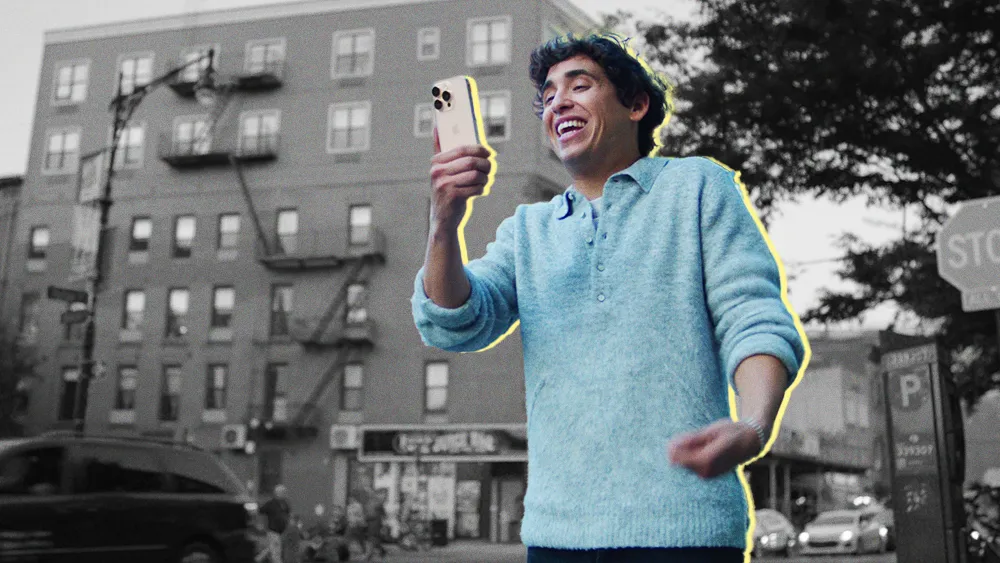
For a live example, Silva reaches for T-Mobile's work with SNL star Marcello Hernández. The carrier built its "Mom Knows" campaign around Hernández and his Cuban mother, a pairing that reads as personal because it is. "They are using characters related to the community, like Marcello Hernández," Silva says. "They did a campaign with him and his mom, and all those commercials connected with the Hispanic community."
What lands, in Silva's read, is the quiet argument underneath the spots. "They are taking this Latino guy who made his dream come true, working as a comedian on the most important show at NBC. Even if they don't say it, they are telling you that as a Latino, as a person with dreams, you can make your dreams come true, and they are using T-Mobile," he says. The brand attaches itself to an aspiration the audience already holds, then gets out of the way.
That approach mirrors how B2C emotional understanding is starting to reshape which partnerships brands chase and how they measure whether a cultural moment converts. The starting point is the feeling. Everything downstream, the placement, the talent, the media weight, serves it.
The oldest tool is still the sharpest one
Silva has watched representation move from stereotype to full character across his career, and he reads the shift as a rising expectation rather than a passing taste. Audiences now arrive at a story, or a spot, carrying a desire they expect to see met. "The viewers have a desire to satisfy. It doesn't matter if that desire is reading a short novel or watching a 30-second commercial," he says. "They have that desire, and the brand or the writer or the director just satisfies it."
The brands that satisfy it best are the ones building around a feeling first and reverse-engineering the rest. A character earns its way into a viewer's memory by being a person first. A brand earns its way in the same way, by knowing the fear or the dream a customer walked in with and speaking to it plainly. The winning campaign at next year's festival will be the one a stranger feels in their chest a half-second before they can name the brand behind it.